Today in News History
On June 20, several notable moments in the history of News stand out. In 1180, First Battle of Uji, starting the Genpei War in Japan. In 1622, The Battle of Höchst takes place during the Thirty Years' War. In 1863, American Civil War: West Virginia is admitted as the 35th U.S. state. In 1900, Boxer Rebellion: The Imperial Chinese Army begins a 55-day siege of the Legation Quarter in Beijing, China. In 1943, The Detroit race riot breaks out and continues for three more days. In 1944, World War II: During the Continuation War, the Soviet Union demands unconditional surrender from Finland during the beginning of partially successful Vyborg-Petrozavodsk Offensive. The Finnish government refuses. In 1944, World War II: The Battle of the Philippine Sea concludes with a decisive U.S. naval victory. The lopsided naval air battle is also known as the "Great Marianas Turkey Shoot". In 1973, Snipers fire upon left-wing Peronists in Buenos Aires, Argentina, in what is known as the Ezeiza massacre. At least 13 are killed and more than 300 are injured. In 1982, The Argentine Corbeta Uruguay base on Southern Thule surrenders to Royal Marine commandos in the final action of the Falklands War. In 1994, The 1994 Imam Reza shrine bomb explosion in Iran leaves at least 25 dead and 70 to 300 injured. Together, these milestones provide historical context for today's news news and ongoing narratives.
The end of a 100-day war

HAFIZABAD, Pakistan – After more than 100 days of intense fighting, the conflict officially entered its final chapter on June 15, when representatives of the United States and Iran signed a memorandum of understanding aimed at ending hostilities. While a final peace treaty is expected to follow a 60-day negotiation window, both sides have acknowledged that the active phase of the war has effectively concluded.
Narrative Intelligence Brief
This article was published by Tehran Times, a source frequently categorized with a lean right bias based in Iran. Our narrative intelligence engine continuously monitors coverage from this outlet to track framing, bias, and rhetorical patterns. Our initial algorithmic scan of this specific piece did not flag high-confidence rhetorical techniques, suggesting a generally straightforward reporting style or neutral framing. By understanding the editorial perspective of Tehran Times, readers can better contextualize the information presented and compare it across our broader media matrix to find the real narrative.
More from Tehran Times
June 20, 2026
15354
June 20, 2026
US-Israeli coalition reached strategic deadlock, Iranian commanders say
June 20, 2026
Iran, US set for technical talks in Switzerland
June 20, 2026
10 sobering lessons the war on Iran forced into the open
June 20, 2026
If Trump lacks the courage to restrain Netanyahu, Iran does
Analysis Methodology
This narrative analysis was generated using the CoDataLab Global Intelligence Engine. Our proprietary AI scans thousands of cross-border sources to identify sentiment patterns, framing techniques, and potential media bias. While AI provides the data-driven foundation, our objective is to empower readers with additional context beyond the standard headline.The content displayed above is a structured summary designed for rapid information processing. For the full original report, please visit the source outlet.More Coverage
Discussion
"cup"
Cold War Steve on … the arrival of the World Cup superheroes

Cape Verde’s Roberto Lopes was working at a bank when he was recruited on LinkedIn to play soccer—he thought it was spam, now he’s at the World Cup

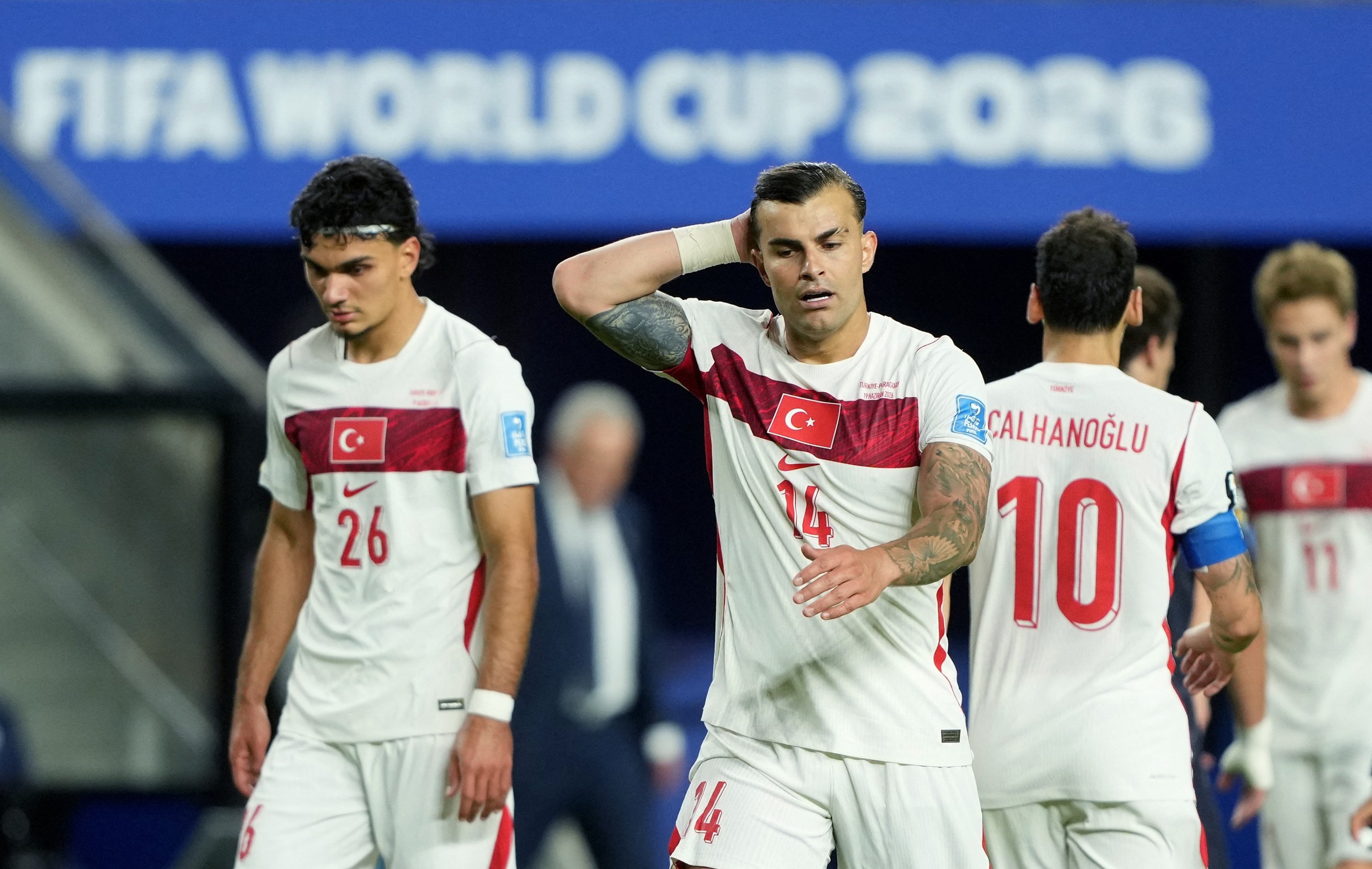
Türkiye eliminated from World Cup after 1-0 loss to Paraguay