Today in News History
On July 3, several notable moments in the history of News stand out. In 1754, French and Indian War: George Washington surrenders Fort Necessity to French forces. In 1849, France invades the Roman Republic and restores the Papal States. In 1928, Evelyn Anthony, English author (died 2018) was born. In 1932, Richard Mellon Scaife, American businessman (died 2014) was born. In 1933, Edward Brandt, Jr., American physician and mathematician (died 2007) was born. In 1940, World War II: The Royal Navy attacks the French naval squadron in Algeria, to ensure that it will not fall under German control. Of the four French battleships present, one is sunk, two are damaged, and one escapes back to France. In 1944, World War II: The Minsk Offensive clears German troops from the city. In 1988, The Fatih Sultan Mehmet Bridge in Istanbul, Turkey is completed, providing the second connection between the continents of Europe and Asia over the Bosphorus. In 2006, Joseph Goguen, American computer scientist, developed the OBJ programming language (born 1941) passed away. In 2013, President of Egypt Mohamed Morsi is removed from office by the military after four days of protests all over the country calling for his resignation, to which he did not respond. The president of the Supreme Constitutional Court of Egypt, Adly Mansour, is declared acting president until further elections are held. Together, these milestones provide historical context for today's news news and ongoing narratives.
The AI Trade Is Losing One of Its Key Signals
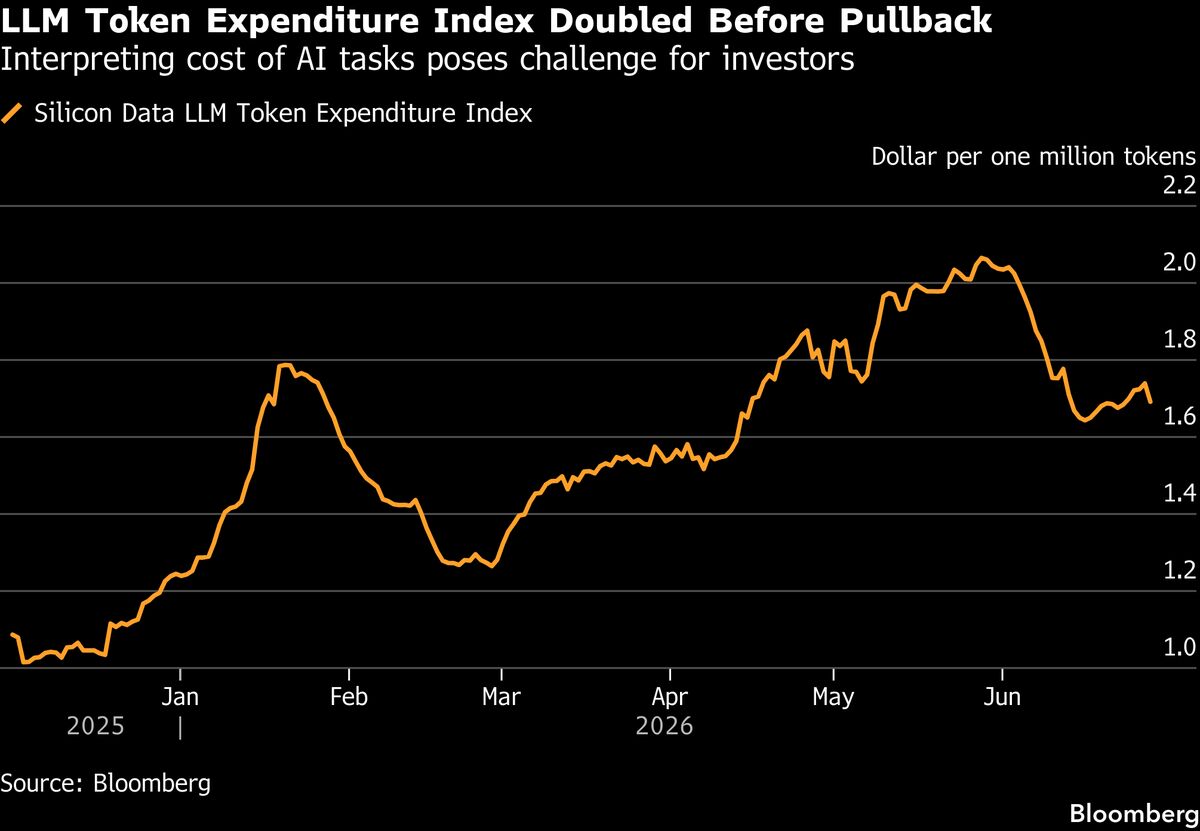
At a time when markets are growing uneasy over whether the enormous sums being poured into artificial intelligence will ever pay off, the prices the sector commands for each unit of usage are drifting lower.
Narrative Intelligence Brief
This article was published by Bloomberg, a source frequently categorized with a lean left bias based in United States of America. Our narrative intelligence engine continuously monitors coverage from this outlet to track framing, bias, and rhetorical patterns. Our initial algorithmic scan of this specific piece did not flag high-confidence rhetorical techniques, suggesting a generally straightforward reporting style or neutral framing. By understanding the editorial perspective of Bloomberg, readers can better contextualize the information presented and compare it across our broader media matrix to find the real narrative.
More from Bloomberg
July 3, 2026
France’s Lescure Wants 2027 Budget That Brings Deficit Below 5%
July 3, 2026
Yen Isn't Behaving Like a G10 Currency, Mizuho Says
July 3, 2026
TotalEnergies Offers Iraqi Oil to Asian Buyers as Supply Swells
July 3, 2026
Horizons Middle East & Africa 7/3/2026
July 3, 2026
AI Boom Cements HK's Role as Gateway to China | The China Show | 7/3/2026
Analysis Methodology
This narrative analysis was generated using the CoDataLab Global Intelligence Engine. Our proprietary AI scans thousands of cross-border sources to identify sentiment patterns, framing techniques, and potential media bias. While AI provides the data-driven foundation, our objective is to empower readers with additional context beyond the standard headline.The content displayed above is a structured summary designed for rapid information processing. For the full original report, please visit the source outlet.More Coverage
Discussion
"cup"
Markwayne Mullin’s celebration of Iran’s World Cup exit is worse than poor sportsmanship

Here’s why you get nervous watching penalty shootouts at the World Cup | Pitchside Episode 4

Fans Erupt After Team USA’s Star Player Ejected On Controversial Call