
Today in News History
On July 1, several notable moments in the history of News stand out. In 1287, Narathihapate, Burmese king (born 1238) passed away. In 1890, Canada and Bermuda are linked by telegraph cable. In 1948, Muhammad Ali Jinnah (Quaid-i-Azam) inaugurates Pakistan's central bank, the State Bank of Pakistan. In 1955, Li Keqiang, Chinese economist and politician, 7th Premier of the People's Republic of China (died 2023) was born. In 1962, Mokhzani Mahathir, Malaysian businessman was born. In 1968, The Treaty on the Non-Proliferation of Nuclear Weapons is signed in Washington, D.C., London and Moscow by sixty-two countries. In 1982, Fedi Nuril, Indonesian actor, model, and musician was born. In 1991, The Finnish operator Radiolinja is launched as the world's first GSM network. In 2003, Over 500,000 people protest against efforts to pass anti-sedition legislation in Hong Kong. In 2006, The first operation of Qinghai-Tibet Railway is conducted in China. Together, these milestones provide historical context for today's news news and ongoing narratives.
Thailand’s Bangchak fuels North Asia push with HK$2.1b Caltex petrol stations deal

One of Thailand’s largest energy conglomerates has bought Caltex petrol stations in Hong Kong in a HK2.1 billion (US270 million) deal, which the firm will use as a springboard into North Asia. Semi-privatised Bangchak Corporation Public Company on Tuesday completed the acquisition of 100 per cent of the shares of Chevron Hong Kong from Chevron Companies (China), according to a Bangchak statement. A source told the South China Morning Post that the sale was driven by a combination of factors,...
Narrative Intelligence Brief
This article was published by South China Morning Post, a source frequently categorized with a lean left bias based in Hong Kong. Our narrative intelligence engine continuously monitors coverage from this outlet to track framing, bias, and rhetorical patterns. Our initial algorithmic scan of this specific piece did not flag high-confidence rhetorical techniques, suggesting a generally straightforward reporting style or neutral framing. By understanding the editorial perspective of South China Morning Post, readers can better contextualize the information presented and compare it across our broader media matrix to find the real narrative.
More from South China Morning Post
July 1, 2026
US, Iran officials hold indirect talks in Qatar to try to end war: diplomat
July 1, 2026
Indonesian civil trainee deaths spur criticisms of Prabowo’s reliance on military drill
July 1, 2026
‘Upside potential’: World Gold Council counts on Asian buyers to curb price plunge
July 1, 2026
‘YMCA’ Village People singer Victor Willis dies at 74
July 1, 2026
Mainland Chinese tourists pack landmarks as Hong Kong marks 29th anniversary
Analysis Methodology
This narrative analysis was generated using the CoDataLab Global Intelligence Engine. Our proprietary AI scans thousands of cross-border sources to identify sentiment patterns, framing techniques, and potential media bias. While AI provides the data-driven foundation, our objective is to empower readers with additional context beyond the standard headline.The content displayed above is a structured summary designed for rapid information processing. For the full original report, please visit the source outlet.More Coverage
Discussion
"village people"
Village People's Victor Willis Dead at 74 After "Aggressive Illness”

Lead singer of Village People dies aged 74
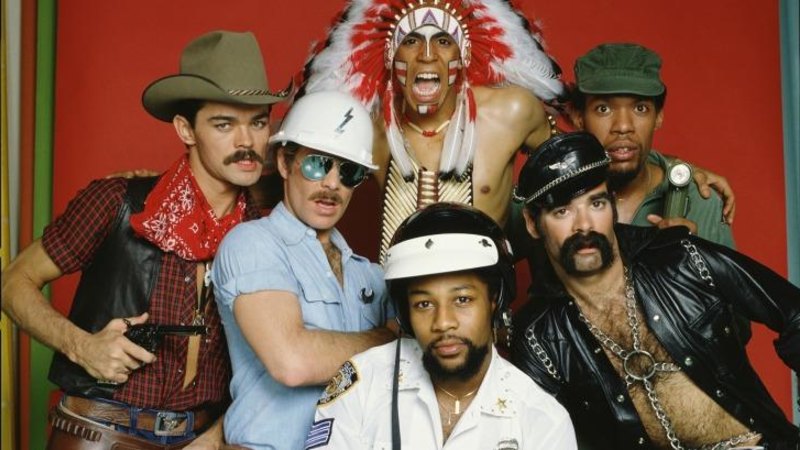
Trump honors Village People and ‘Y.M.C.A.’ singer Victor Willis after death announcement
