Today in News History
On July 1, several notable moments in the history of News stand out. In 1690, Glorious Revolution: Battle of the Boyne in Ireland (as reckoned under the Julian calendar). In 1862, American Civil War: The Battle of Malvern Hill takes place. It is the last of the Seven Days Battles, part of George B. McClellan's Peninsula Campaign. In 1863, American Civil War: The Battle of Gettysburg begins. In 1867, The British North America Act takes effect as the Province of Canada, New Brunswick, and Nova Scotia join into confederation to create the modern nation of Canada. John A. Macdonald is sworn in as the first Prime Minister of Canada. This date is commemorated annually in Canada as Canada Day, a national holiday. In 1870, The United States Department of Justice formally comes into existence. In 1881, General Order 70, the culmination of the Cardwell and Childers reforms of the British Army, comes into effect. In 1916, World War I: First day on the Somme: On the first day of the Battle of the Somme 19,000 soldiers of the British Army are killed and 40,000 wounded. In 1963, ZIP codes are introduced for United States mail. In 1968, The Treaty on the Non-Proliferation of Nuclear Weapons is signed in Washington, D.C., London and Moscow by sixty-two countries. In 2004, Saturn orbit insertion of Cassini-Huygens begins at 01:12 UTC and ends at 02:48 UTC. Together, these milestones provide historical context for today's news news and ongoing narratives.
Supreme Court Decides that ‘Day’ Does Not Mean Day in Watson v. RNC
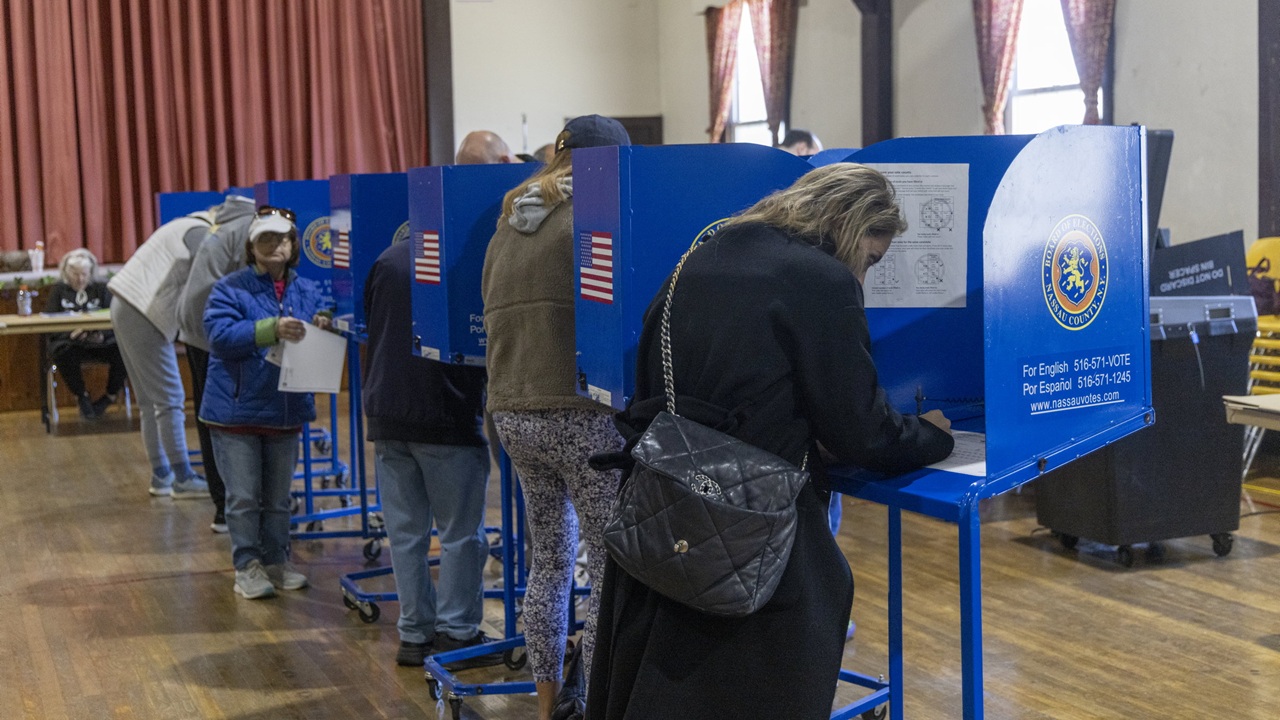
What’s in a word? Does “day” really mean day? That’s essentially the issue the Supreme Court was asked to decide in Watson v. RNC, where Justice Amy Coney Barrett wrote for a 5-4 majority that “Election Day,” as used in a statute passed by Congress, does not really mean a single day. Justice Samuel Alito,...
Narrative Intelligence Brief
This article was published by The Daily Signal, a source frequently categorized with a lean right bias based in United States of America. Our narrative intelligence engine continuously monitors coverage from this outlet to track framing, bias, and rhetorical patterns. Our initial algorithmic scan of this specific piece did not flag high-confidence rhetorical techniques, suggesting a generally straightforward reporting style or neutral framing. By understanding the editorial perspective of The Daily Signal, readers can better contextualize the information presented and compare it across our broader media matrix to find the real narrative.
More from The Daily Signal
June 30, 2026
Nothing in Commonwealth
June 30, 2026
Newsom Grew California’s Budget by 40%—Former State Senator Says It Got Squandered
June 30, 2026
The Racist Plot to Retire Caitlin Clark from the WNBA
June 30, 2026
Don’t Buy Ketanji Brown Jackson’s Sleight of Hand on Women’s Sports
June 30, 2026
Don’t Buy Ketanji Brown Jackson’s Sleight-of-Hand on Women’s Sports
Analysis Methodology
This narrative analysis was generated using the CoDataLab Global Intelligence Engine. Our proprietary AI scans thousands of cross-border sources to identify sentiment patterns, framing techniques, and potential media bias. While AI provides the data-driven foundation, our objective is to empower readers with additional context beyond the standard headline.The content displayed above is a structured summary designed for rapid information processing. For the full original report, please visit the source outlet.More Coverage
Discussion
"trump"
Angry Trump lambasts Supreme Court’s birthright citizenship decision, urges Congress to act: ‘too bad for our Country’

US-Iran talks wobble as senior clerics call for assassination of ‘criminal’ Trump

The Iran war was intended to remove obstacle to Trump’s new world order