
SpaceX’s rockets are creating a new air traffic headache for the FAA
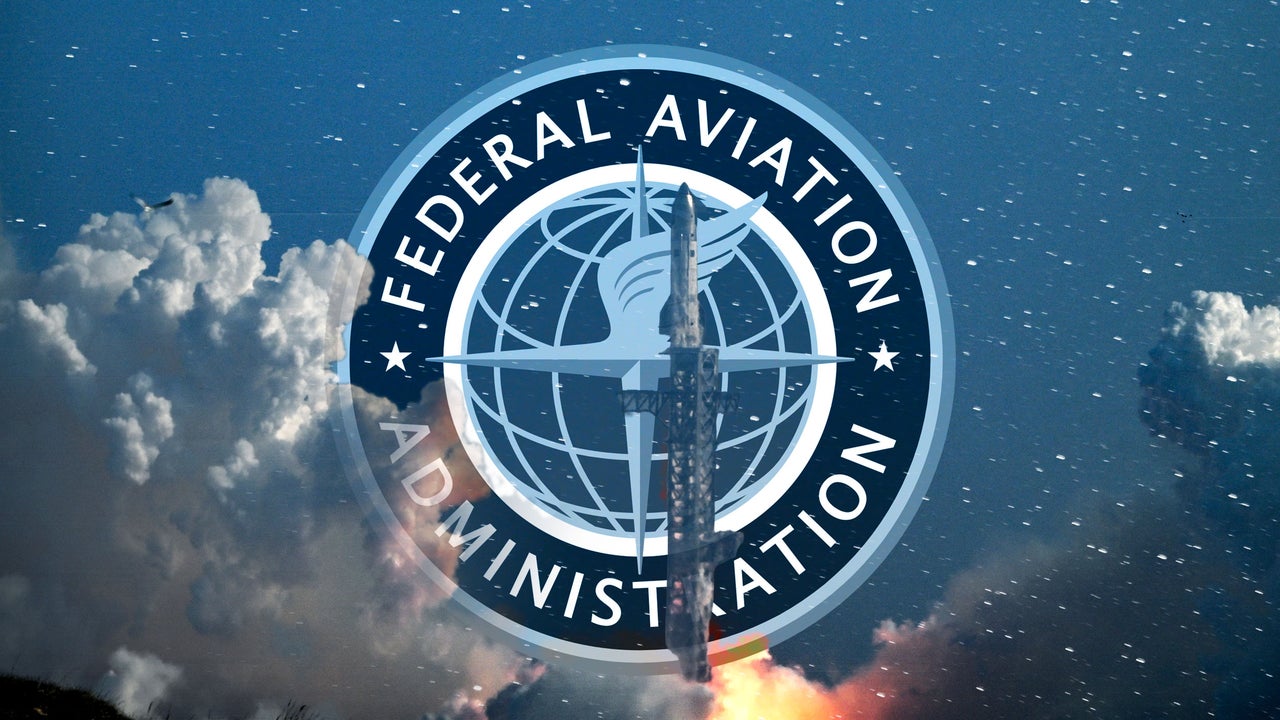
The new space race has given the Federal Aviation Administration a next-generation job: clearing planes out of the way for rocket launches. But as launches become more ambitious and more frequent, protecting aircraft traveling through affected airspace has become an international matter. While American companies like SpaceX and Blue Origin receive launch licenses from the FAA, their vehicles sometimes travel through, or risk shedding debris over, airspace monitored by foreign governments. As a result, rocket launches from the United States can directly affect air traffic over Canada, Mexico, and the Caribbean. Those concerns come on top of other space-related issues residents in those countries have already raised, including damage to local fish populations and rocket parts washing ashore. Letters of agreement recently obtained by Fast Company provide an expanded view into the knotty challenge of overseeing space launches in already congested skies. The documents detail what SpaceX was required to communicate to FAA air traffic control before a launch and offer insight into how the agency communicates with air traffic controllers about potential mishaps. They also reveal that not all countries are included in space launch preparations on the same terms. For instance, an FAA letter of agreement governing SpaceX Starship launches from Boca Chica, Texas—at the mouth of the Rio Grande and close to the Mexican border—includes Mexico as a party and references numerous Mexican air navigation officials. The letter was obtained by Fast Company. But no Caribbean country is mentioned, even though debris from Starship launches has sometimes dispersed over the region’s airspace. When asked about this, the FAA pointed to federal launch license requirements and said that “[a]greements exist between FAA’s ATO Space Operations, SpaceX, and foreign entities in compliance with this requirement.” (ATO stands for Air Traffic Organization, the FAA’s operational arm.) In comments to Fast Company, the FAA said preparations for a Starship launch begin months in advance and emphasized that the agency works with air traffic organizations in other countries. Before a launch, the agency said, a space operations team assesses how the mission could affect airspace, factoring in the proposed launch window, the planned flight trajectory, a flight safety analysis, and prior flight history. The agency also develops a temporary hazard area. It eventually distributes an airspace management plan to its own air traffic control facilities and to international air traffic control offices abroad, a process that involves collaboration with the State Department. “The FAA continues to work to improve the safe and efficient integration of space operations into the U.S. airspace system,” an agency spokesperson tells Fast Company. “With the commercial space industry growing at record pace, rockets launch multiple times a week and no public injuries or fatalities have occurred during any of the more than 1,150 FAA-licensed or permitted commercial space launch and reentry operations.” While that may be true, space launches are raising concerns for pilots, and at least one Starship mishap has forced flights to quickly divert from their planned trajectories. The coordination required to manage space launches is likely to grow even more demanding. SpaceX, which is preparing for an upcoming IPO, has said its future success depends on continuing to receive launch approvals from the FAA. The company needs those approvals to transform Starship, its most ambitious rocket yet, into a workhorse vehicle that can regularly launch into orbit. SpaceX did not respond to a request for comment. How the FAA prepares for launches Several offices within the FAA play a role in approving Starship launches. They include the Office of Commercial Space Transportation, which approves the licenses companies need to send vehicles into space when launching from the United States. There is also the Air Traffic Organization, which manages the airspace and clears launches to proceed at a given time. To prepare for these events, space companies sign letters of agreement with the ATO that establish procedures for monitoring a launch. A 2022 agreement covering SpaceX’s Starship and Super Heavy launches from Boca Chica, obtained by Fast Company, details preparations for both launches and booster returns. The document shows that many groups are involved in prelaunch discussions, including multiple U.S. air traffic control centers and Mexico’s air navigation agency. Kelvin Coleman, a former director of the Office of Commercial Space Transportation (known as AST from a previous name), says countries like Mexico are included when flights are expected to pass through their airspace. Space launches are coordinated well before liftoff. The FAA tells Fast Company that its air traffic office engages early with affected U.S. facilities and foreign air navigation providers, holding three or four premission briefings to discuss potential hazard areas and traffic plans. That is in addition to other significant preparations. Pilots, however, typically receive notice only a few days in advance, according to the Air Line Pilots Association, even though launches can force flights to adjust their routes many miles off course. Just before liftoff, the FAA opens a real-time hotline with the launch company, which stays active until the rocket hardware is either in orbit or back on Earth. If something goes wrong, SpaceX is supposed to relay the vehicle’s last known position, projected debris path, and expected impact areas as quickly as possible. The FAA can then close airspace, reroute planes, hold flights on the ground, and coordinate with U.S. and foreign air traffic authorities. Starship launches regularly impact the Caribbean All of these precautions mean that, like other space activity, Starship launches have a measurable impact on commercial flights. FAA environmental reviews note that some Starship launches, if they occur during periods of high traffic, could theoretically disrupt as many as 200 flights per hour. For example, one southerly trajectory used by the company stands to impact the airspace of not just Mexico, but also Cuba, Jamaica, and the Cayman Islands. All of these countries are expected to close their airspace, FAA documents note. A Starship test last month serves as a reminder that these flights affect people traveling throughout the region. For instance, one FAA advisory noted that Miami air traffic control warned that flights looking to avoid the closed-off flight area would not be allowed into foreign airspace and would need to “hold” until the airspace became “cold and traversable.” Another notice said that, should the launch fail, hazard and debris impact areas could be activated across the airspace surrounding Santo Domingo, in the Dominican Republic. Indeed, in advance of the launch, The Gleaner, Jamaica’s national newspaper, quoted the country’s aviation authority as warning that airspace could be limited. The air traffic authority of the Cayman Islands similarly flagged, in a social media post, that airspace regions would be closed. The Starship launch was a success, but several flights appear to have been affected, including one JetBlue flight that was on its way to Jamaica but was diverted back to its departure city in Florida, Fort Lauderdale. “Last-minute adjustments to a debris area or unplanned weather during a launch can cause flight diversions and refueling stops,” a JetBlue spokesperson tells Fast Company. “While we do all we can to plan ahead and minimize operational impacts, these events can lead to customer disruption, longer travel times, and increased operating costs.” Fast Company had previously reached out to about 20 airlines that sometimes fly routes through the Caribbean to ask how they prepare for Starship launches. Most did not reply, but a few, including Delta and Southwest, emphasized their work with the FAA and their focus on safety. The impact on flights is far more precarious when a launch is not successful. In January 2025, a Starship rocket exploded during a test launch and sprayed debris across the region’s airspace. Pilots flying across the region could see rocket parts flaming down from the sky from their cockpit windows. Some scrambled out of the way to avoid the debris path, the Wall Street Journal and ProPublica later reported. The FAA subsequently issued a broad safety notice emphasizing the risk rocket launches can pose to flights and expanded the hazard areas it closes off for launches. After the mishap last year, Coleman says, AST had a series of conversations with leaders from places like the Bahamas and the Turks and Caicos Islands, which pushed for more insight into how they might be affected by future accidents. Still, these countries were never integrated into that earlier agreement. As to whether they should be, he says: “That’s a good question.” “The Air Traffic Organization has done a pretty good job in trying to manage those conversations,” Coleman says. “But, you know, given the amount of conversations that need to occur and the amount of coordination that needs to happen. . . . It’s become something that I think the agency is taking a real close look at to see if there can be enhanced ways to move forward that don’t require as much labor on the part of the Air Traffic Organization.”
Narrative Intelligence Brief
This article was published by Fast Company, a source frequently categorized with a lean left bias based in United States of America. Our narrative intelligence engine continuously monitors coverage from this outlet to track framing, bias, and rhetorical patterns. Our initial algorithmic scan of this specific piece did not flag high-confidence rhetorical techniques, suggesting a generally straightforward reporting style or neutral framing. By understanding the editorial perspective of Fast Company, readers can better contextualize the information presented and compare it across our broader media matrix to find the real narrative.
Explore related topics: Stay informed with Real Narrative News as we track unfolding stories. Dive deeper into our coverage of pivotal topics including pay price, coupe monde, trump iran, iran pay, knife attack, donald trump, toy story, south africa, strikes iran, and northern ireland. Our intelligence streams continuously monitor these keywords to bring you unbiased analysis and real-time updates on topics like "SpaceX’s rockets are creating a new air traffic headache for the FAA".
More from Fast Company
June 10, 2026
Social Security recipients may see their payments drop by 22% in just six years
June 10, 2026
The Chase Sapphire Preferred card just got more valuable for road trips and summer travel: See what’s new
June 10, 2026
Heading to Europe this summer? Travelers say this new border rule is causing hours-long airport lines
June 10, 2026
Adidas designed these World Cup jerseys for elite athletes—and clever art buffs
June 10, 2026
SpaceX’s rockets are creating a new air traffic headache for the FAA
Analysis Methodology
This narrative analysis was generated using the CoDataLab Global Intelligence Engine. Our proprietary AI scans thousands of cross-border sources to identify sentiment patterns, framing techniques, and potential media bias. While AI provides the data-driven foundation, our objective is to empower readers with additional context beyond the standard headline.The content displayed above is a structured summary designed for rapid information processing. For the full original report, please visit the source outlet.More Coverage
Discussion