
Today in News History
On June 23, several notable moments in the history of News stand out. In 1810, John Jacob Astor forms the Pacific Fur Company. In 1922, Morris R. Jeppson, American lieutenant and physicist (died 2010) was born. In 1964, Nicolas Marceau, Canadian economist and politician was born. In 1969, IBM announces that effective January 1970 it will price its software and services separately from hardware thus creating the modern software industry. In 1981, Antony Costa, English singer-songwriter was born. In 1984, Levern Spencer, Saint Lucian high jumper was born. In 1990, Vasek Pospisil, Canadian tennis player was born. In 1994, NASA's Space Station Processing Facility, a new state-of-the-art manufacturing building for the International Space Station, officially opens at Kennedy Space Center. In 2013, Frank Kelso, American admiral and politician, United States Secretary of the Navy (born 1933) passed away. In 2014, The last of Syria's declared chemical weapons are shipped out for destruction. Together, these milestones provide historical context for today's news news and ongoing narratives.
SpaceX stock price drops again as post-IPO gains for retail investors get nearly wiped out
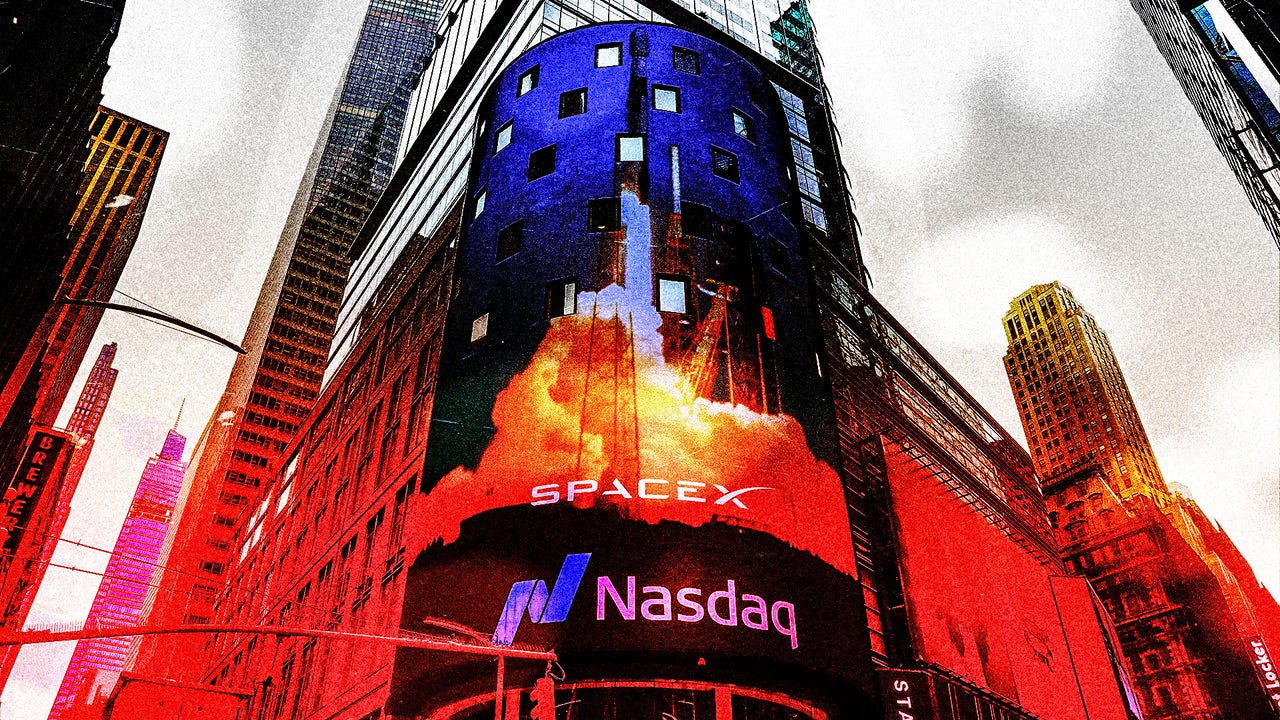
Shares of Elon Musk’s Space Exploration Technologies Corp. (Nasdaq: SPCX), better known as SpaceX, are having a bad week so far. On Monday, the stock price for Elon Musk’s space and AI company crashed by more than 16. That decline followed drops of around 3.6 and 5 last Wednesday and Thursday, respectively. (Markets were closed on Friday for the Juneteenth holiday.) And in premarket trading this morning, the company’s shares fell below a threshold that no investor wants to see. Here’s what you need to know. SpaceX shares dip below their opening price In premarket trading on Tuesday, SpaceX shares dipped 4, putting the company’s share price at just above 148.16. Not only is that over 75 lower than its all-time high share price of 225.64 just one week ago, but it also means that retail investors who got in on the ground floor of SPCX on its first day of trading could lose money on their investment (on paper, at least). To recap: Before its debut on the Nasdaq exchange earlier this month, SpaceX priced its shares at 135 each for its initial public offering. This is the price at which institutional investors and other insiders were able to buy the shares before they began trading in the public markets. SpaceX also reportedly allocated 20 of its IPO shares to retail investors, a high percentage though apparently not enough to meet demand. By selling its shares for 135 apiece, SpaceX raised 75 billion in its IPO—the most money ever raised in an initial public offering. But retail investors who needed to wait until the stock opened on June 12—its first day of trading on public markets—weren’t able to snap up SPCX shares for 135 each. By the time SPCX shares actually hit the market, pent-up demand had pushed the share price to 150. This price, known as the opening price, is the lowest price that many investors ever paid for SPCX shares. The stock rose even higher as the trading day proceeded. But in premarket trading this morning, shares dipped below their 150 opening price, which is not a good sign. As of this writing, the picture had improved slightly, which the stock hovering around 153 a share. IPO and early-stage investors are in the green—for now While retail investors who bought the stock at its opening price or higher are on the verge of seeing their gains wiped out, two other groups of investors are still seeing profits on their holdings. Even though SPCX shares dipped to 148 in premarket this morning, that’s still over 13 higher per share than what the company’s institutional IPO investors originally paid (135 per share). And of course, SpaceX’s early-stage investors and employees who acquired stock options over the company’s 20-plus-year history have still massively benefited on paper. Indeed, SpaceX’s IPO is believed to have minted more than 4,000 new millionaires, most of whom had held shares in the company for years before it went public. Still, it is again worth noting that any gains or losses investors of all stripes are experiencing with their SpaceX shares are only on paper until they sell their shares. And while retail and IPO investors can do so at any time, pre-IPO investors are currently subject to a lockout period, during which they are prevented from selling their shares for a set period. But many worry the end of that lockout period could cause trouble for the stock as well. SpaceX’s unique lockout period When a company’s shares go public, early pre-IPO investors are typically barred from selling their shares for a set period. This is done primarily to protect the company’s share price from plummeting right out of the gate. It also helps instill confidence in retail investors that they aren’t buying into an asset that long-term investors may suddenly flee. Most lockout periods last for about six months. But SpaceX’s lockout is different. Its lockup period expires on a rolling basis, meaning pre-IPO investors can begin selling a portion of their holdings before the usual six-month limit. It should be noted, however, that SpaceX’s largest shareholder, Elon Musk, is barred from selling any of his SPCX shares until June 13, 2027. Regardless, many analysts and financial experts are cautioning retail investors to beware. Once SpaceX’s lockout periods expire, the company’s employees and other pre-IPO investors can begin cashing out their shares, which may create a glut of supply in the market, sending SPCX shares significantly lower. But just how much SpaceX’s upcoming launch operations actually affect the share price, of course, remains to be seen.
Narrative Intelligence Brief
This article was published by Fast Company, a source frequently categorized with a lean left bias based in United States of America. Our narrative intelligence engine continuously monitors coverage from this outlet to track framing, bias, and rhetorical patterns. Our initial algorithmic scan of this specific piece did not flag high-confidence rhetorical techniques, suggesting a generally straightforward reporting style or neutral framing. By understanding the editorial perspective of Fast Company, readers can better contextualize the information presented and compare it across our broader media matrix to find the real narrative.
More from Fast Company
June 23, 2026
There’s a deadly heat wave in Europe: Experts are begging media outlets to stop making it look fun
June 23, 2026
AI chatbots are hitting the dating scene with advice on breaking the ice and breaking up
June 23, 2026
Tech stocks tank on Wall Street. Is the chip bubble finally popping?
June 23, 2026
As you approach retirement, take this simple step to protect yourself from unforeseen circumstances
June 23, 2026
Toss these recalled vegetarian chicken nuggets and sausage patties. They might contain pieces of plastic
Analysis Methodology
This narrative analysis was generated using the CoDataLab Global Intelligence Engine. Our proprietary AI scans thousands of cross-border sources to identify sentiment patterns, framing techniques, and potential media bias. While AI provides the data-driven foundation, our objective is to empower readers with additional context beyond the standard headline.The content displayed above is a structured summary designed for rapid information processing. For the full original report, please visit the source outlet.More Coverage
Discussion
"amazon prime"
I Buy Differin Every Amazon Prime Day—This Is the Lowest Price I’ve Ever Seen

Samsung SSD Prime Day Deals: Save On Portable And Internal Storage

TV Fire Sticks are at their lowest price ever! Stream TNT Sports for less with £25 Amazon Prime Day deal before it sells out - after free to air coverage is banned
