
Today in News History
On July 12, several notable moments in the history of News stand out. In 1488, Joseon Dynasty official Choe Bu returned to Korea after months of shipwrecked travel in China. In 1850, Robert Stevenson, Scottish engineer (born 1772) passed away. In 1879, Han Yong-un, Korean poet (died 1944) was born. In 1933, Victor Poor, American engineer, developed the Datapoint 2200 (died 2012) was born. In 1936, Jan Němec, Czech director and screenwriter (died 2016) was born. In 1938, Eiko Ishioka, Japanese art director and graphic designer (died 2012) was born. In 1970, Lee Byung-hun, South Korean actor, singer, and dancer was born. In 1988, Inbee Park, South Korean golfer was born. In 2015, Cheng Siwei, Chinese engineer, economist, and politician (born 1935) passed away. In 2020, Kelly Preston, American actress and model (born 1962) passed away. Together, these milestones provide historical context for today's news news and ongoing narratives.
South Korea to spend $1T on more memory chip production and humanoid robots
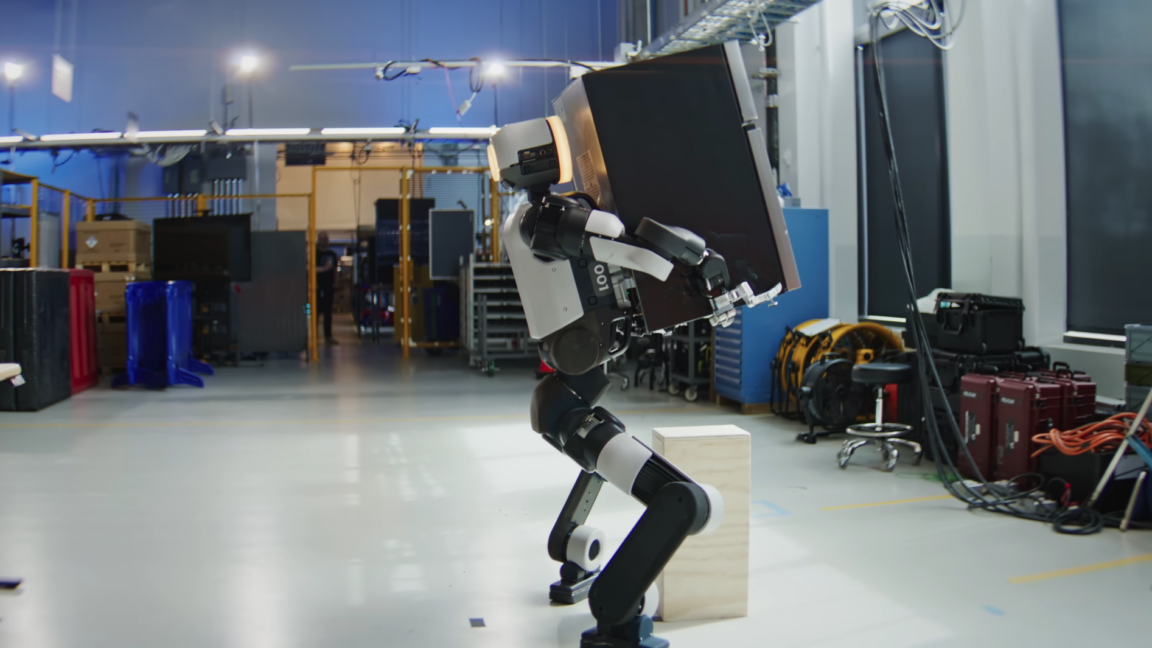
South Korea targets physical AI lead and commercial humanoid robots by 2028.
Narrative Intelligence Brief
This article was published by Ars Technica, a source frequently categorized with a Unknown bias based in United States of America. Our narrative intelligence engine continuously monitors coverage from this outlet to track framing, bias, and rhetorical patterns. Our initial algorithmic scan of this specific piece did not flag high-confidence rhetorical techniques, suggesting a generally straightforward reporting style or neutral framing. By understanding the editorial perspective of Ars Technica, readers can better contextualize the information presented and compare it across our broader media matrix to find the real narrative.
More from Ars Technica
July 11, 2026
A Jupiter-size planet that escaped its star's death
July 11, 2026
Overhaul of public lands grazing regulations seeks to cut public involvement
July 10, 2026
Quantum error correction can constantly recalibrate a processor
July 10, 2026
Increased drone surveillance of illegal July 4th fireworks led to $100K fine
July 10, 2026
China recovered its first reusable rocket and showed a new way to do it
Analysis Methodology
This narrative analysis was generated using the CoDataLab Global Intelligence Engine. Our proprietary AI scans thousands of cross-border sources to identify sentiment patterns, framing techniques, and potential media bias. While AI provides the data-driven foundation, our objective is to empower readers with additional context beyond the standard headline.The content displayed above is a structured summary designed for rapid information processing. For the full original report, please visit the source outlet.More Coverage
Discussion
"england"
Tuchel angry at 'lucky' England - but Bellingham defends players

Tuchel angry at 'lucky' England - but Bellingham defends players

‘A dangerous movie’: Glenn Beck warns ‘Citizen Vigilante’ signals a dark moral shift after Germany bans it

How other outlets are covering this story
Compare narratives across 6 related reports from 6 sources. Real Narrative News aggregates the coverage spectrum so you can see who emphasises what — bias tags reflect the outlet, not the story.
Coverage bias distribution
6 sources
Left 33%
Center 17%
Right 50%
The korea Herald News
· Jun 23, 2026
AI breaks Korea memory's boom-bust cycle: CLSA
South Korea's memory chip industry is moving beyond its traditional boom-and-bust cycle as artificial intelligence demand pushes major customers to lock in long-term supply at high prices, according to CLSA. Memory has long been highly cyclical: profits rise when supply is tight and fall when capacity catches up. But the rapid growth of high-bandwidth memory, or HBM, and AI servers is changing that pattern, said Sanjeev Rana, head of Korea research at CLSA. The fact that major memory customers
TRT World
· Jul 8, 2026
Robot-run stores taking over South Korea
The global robotics market is worth more than 88 billion dollars, and is forecast to grow to 218 billion over the next five years. As businesses turn to automation to cut costs and improve efficiency, robot-run stores are becoming a common sight in South Korea. Emre Boz reports.
The Hankyoreh
· Jun 30, 2026
Korea to invest more than $1 trillion into AI, chips in regions outside Seoul
Korea to invest more than $1 trillion into AI, chips in regions outside Seoul
Times of India
· Jul 2, 2026
From grief support to robot cafes & marriage prospects: How AI is transforming daily life in South Korea
South Korea is rapidly integrating AI and robotics into daily life, from recreating deceased loved ones to powering unstaffed businesses. This surge is driven by an aging population and a national strategy to become a global AI leader, with massive investments in chips and robotics. The AI boom is also reshaping careers, making semiconductor engineers highly sought-after and influencing educational choices.
The Next Web
· Jun 29, 2026
South Korea bets $880bn to win the AI era
South Korea has placed its biggest bet yet on the AI era. The plan commits at least 880bn over a decade to chips, data centres and robots. It is the boldest South Korea AI investment to date, and the government says speed is now the only way to survive. President Lee Jae Myung unveiled the [] This story continues at The Next Web
Yonhap News Agency
· Jul 1, 2026
GM Korea's June sales rise 6.6 pct on robust overseas demand
SEOUL, July 1 (Yonhap) -- GM Korea Co., the South Korean unit of General Motors ...
Topics:
Related coverage for "South Korea to spend $1T on more memory chip production and humanoid robots": The korea Herald News — AI breaks Korea memory's boom-bust cycle: CLSA. TRT World — Robot-run stores taking over South Korea. The Hankyoreh — Korea to invest more than $1 trillion into AI, chips in regions outside Seoul. Times of India — From grief support to robot cafes & marriage prospects: How AI is transforming daily life in South Korea. The Next Web — South Korea bets $880bn to win the AI era. Yonhap News Agency — GM Korea's June sales rise 6.6 pct on robust overseas demand