Today in News History
On June 19, several notable moments in the history of News stand out. In 1590, Philip Bell, British colonial governor (died 1678) was born. In 1820, Joseph Banks, English botanist and author (born 1743) passed away. In 1858, Sam Walter Foss, American poet and librarian (died 1911) was born. In 1861, José Rizal, Filipino journalist, author, and poet (died 1896) was born. In 1884, Juan Bautista Alberdi, Argentinian-French politician and diplomat (born 1810) passed away. In 1944, Chico Buarque, Brazilian singer, composer, writer and poet was born. In 1947, John Ralston Saul, Canadian philosopher and author was born. In 1960, Andrew Dilnot, English economist and academic was born. In 1978, Claudio Vargas, Dominican baseball player was born. In 1981, Mohammed Al-Khuwalidi, Saudi Arabian long jumper was born. Together, these milestones provide historical context for today's news news and ongoing narratives.
Scientists explain how this tropical fruit you could buy at supermarket could help with gum disease
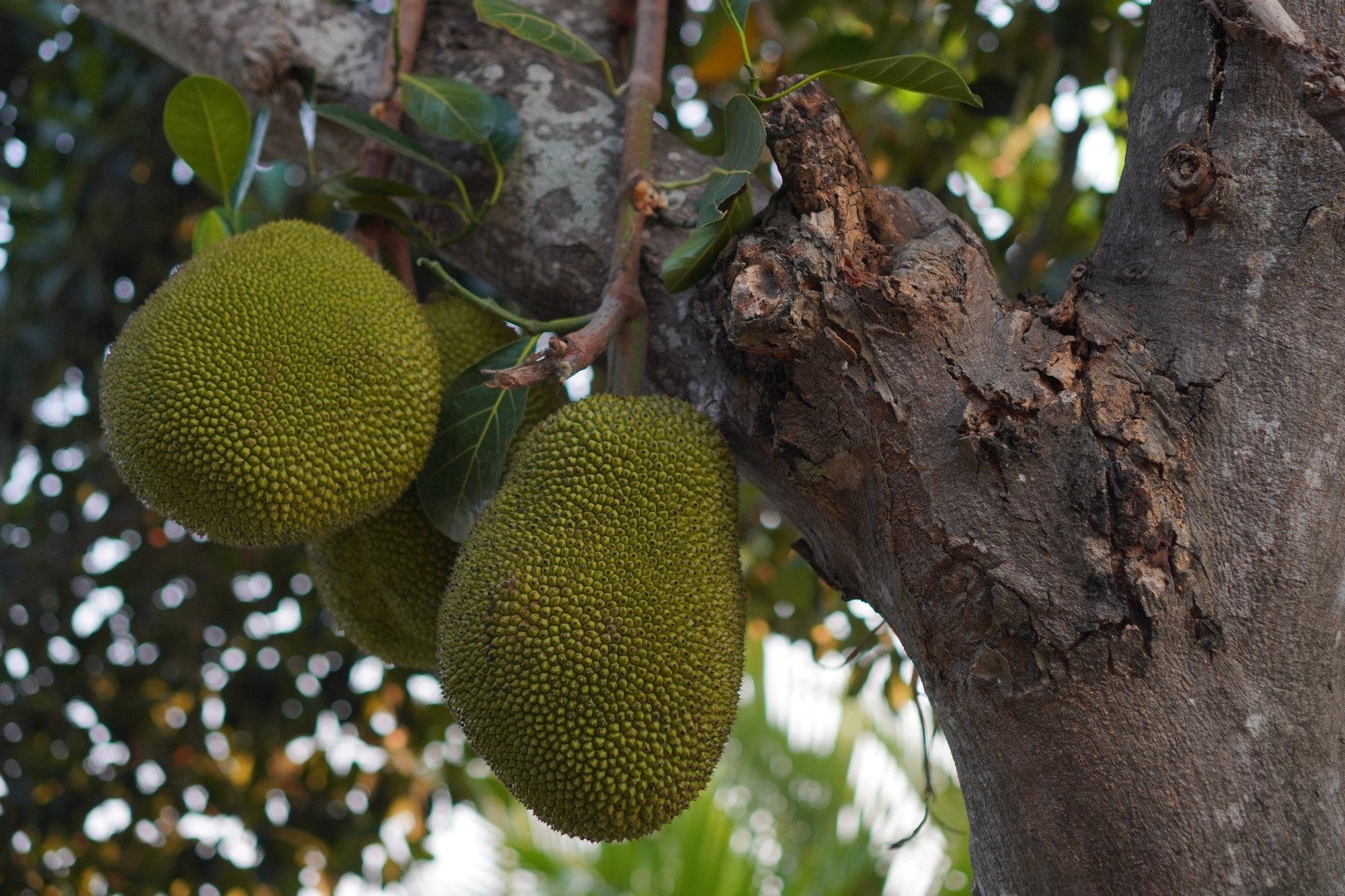
Scientists in Brazil have developed a novel biomaterial that could transform how severe gum disease is treated, offering hope for patients who have lost bone and tissue around their teeth.The material, created by researchers at the Pontifical Catholic University of São Paulo, combines an unusual trio of ingredients: latex extracted from jackfruit, pomegranate peel extract and simvastatin, a medication typically used to lower cholesterol.Early laboratory findings suggest this combination not only fights infection and reduces inflammation but may also stimulate the regrowth of damaged periodontal structures.The research was published today in the journal Polymer Bulletin. TRENDING Stories Videos Your Say Periodontitis is a chronic inflammatory condition triggered by bacterial infection that progressively destroys the supporting structures around teeth.Over time, patients experience significant bone deterioration and weakened connections between their teeth and the surrounding gum tissue.Existing treatments focus primarily on managing infection and controlling inflammation, but they typically offer little capacity to restore what has already been lost.Alternative methods such as guided tissue regeneration and bone grafting have been attempted, though outcomes remain inconsistent and often unpredictable.This gap in treatment options prompted the Brazilian team to explore natural bioactive substances capable of addressing multiple aspects of the disease simultaneously.The research team selected jackfruit latex specifically for its sticky characteristics, which could allow therapeutic compounds to remain at the treatment site for extended periods.We began to view latex extracted from jackfruit as an interesting alternative, as it has adhesive properties, explained Professor Eliana Aparecida de Rezende Duek, who coordinated the study. This led us to believe that it could remain longer at the site affected by periodontitis, promoting a more targeted release of therapeutic compounds and potentially reducing the need for systemic antibiotic use.Pomegranate peel extract was incorporated for its known germ-fighting properties when applied directly to tissue.LATEST DEVELOPMENTSMetal detectorist flabbergasted after uncovering 17th-century gold ring with mysterious motifScientists unveil shock truth behind Botticelli masterpiece after more than 500 yearsVikings melted down Islamic coins to make their own cash, new study revealsSimvastatin, meanwhile, has demonstrated anti-inflammatory effects and the ability to encourage bone formation in previous studies.The scientists tested their gel using human stem cells derived from fat tissue, incorporating simvastatin at three different concentrations: 0.3 per cent, 0.6 per cent, and 1.2 per cent.None of these levels compromised the gel's structural integrity, and all were deemed safe for potential use.Crucially, every concentration triggered osteoinduction — the biological process whereby cells transform into bone-forming tissue — within a fortnight, with effects intensifying by day 21.Overall, the results were very encouraging for us, said Professor Duek, although she emphasised considerable work remains before the treatment reaches patients.Despite these promising results, we're continuing to move forward with new studies to more thoroughly evaluate the efficacy and safety of the system, she added.Our Standards: The GB News Editorial Charter
Narrative Intelligence Brief
This article was published by GB News, a source frequently categorized with a lean right bias based in United States of America. Our narrative intelligence engine continuously monitors coverage from this outlet to track framing, bias, and rhetorical patterns. Our initial algorithmic scan of this specific piece did not flag high-confidence rhetorical techniques, suggesting a generally straightforward reporting style or neutral framing. By understanding the editorial perspective of GB News, readers can better contextualize the information presented and compare it across our broader media matrix to find the real narrative.
More from GB News
June 19, 2026
French pétanque player, 81, arrested after rival, 68, killed with metal boule
June 19, 2026
Trans women BANNED from female jails after landmark court judgement in Scotland
June 19, 2026
King Charles 'has an agreement' to see grandchildren Archie and Lilibet for the first time in four years'
June 19, 2026
'Questionable whether we can rely on Britain!' Keir Starmer accused of 'immense weakness' by Israel
June 19, 2026
Emma Raducanu opts out of wildcard pick to focus on Wimbledon preparations
Analysis Methodology
This narrative analysis was generated using the CoDataLab Global Intelligence Engine. Our proprietary AI scans thousands of cross-border sources to identify sentiment patterns, framing techniques, and potential media bias. While AI provides the data-driven foundation, our objective is to empower readers with additional context beyond the standard headline.The content displayed above is a structured summary designed for rapid information processing. For the full original report, please visit the source outlet.More Coverage
Discussion