
Today in News History
On June 18, several notable moments in the history of News stand out. In 908, Zhang Hao, general of Yang Wu passed away. In 1952, Tiiu Aro, Estonian physician and politician, Estonian Minister of Social Affairs was born. In 1955, Ed Fast, Canadian lawyer and politician was born. In 1957, Richard Powers, American novelist was born. In 1969, Christopher Largen, American journalist and author (died 2012) was born. In 1974, Sergey Sharikov, Russian fencer and coach (died 2015) was born. In 1998, Propair Flight 420 crashes near Montréal-Mirabel International Airport in Quebec, Canada, killing 11. In 2013, Michael Hastings, American journalist and author (born 1980) passed away. In 2013, Brent F. Anderson, American engineer and politician (born 1932) passed away. In 2015, Allen Weinstein, American historian and academic (born 1937) passed away. Together, these milestones provide historical context for today's news news and ongoing narratives.
Regulators back Trump’s plan to power AI data centers faster with grid connections
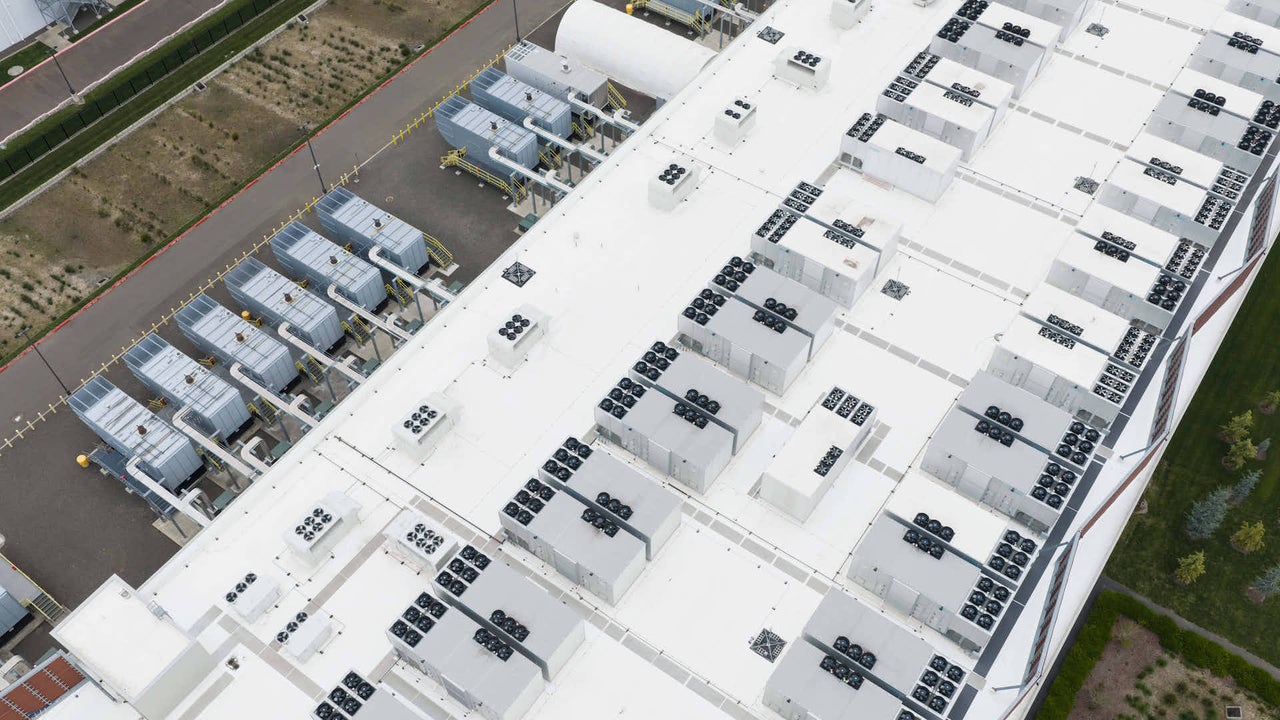
Federal regulators on Thursday agreed to let large energy users connect more quickly to the nation’s inefficient and electric transmission system to accommodate surging demand from power-hungry artificial intelligence data centers. Energy Secretary Chris Wright had urged the Federal Energy Regulatory Commission to act in an effort to help the United States better compete with China for superiority in the fast-growing AI sector. Tech companies and data center developers have welcomed the chances for faster connections to the country’s power supply. But utilities, states and regional grid operators worried that the Republican administration’s plan would remove their authority to manage the process. Clean energy advocates want the agency to advance, rather than undermine, state-level efforts to require the use of renewable energies. The commission’s actions come as a backlash grows against data centers over fears about rising electricity prices and concerns about the massive amounts of energy and water they use, polluting communities across the country and straining water resources and the electric grid. Unanimous vote and affordability FERC members voted unanimously to direct six regional grid operators to ensure that AI data centers and other large power users are “able to connect to the transmission system in a timely and orderly manner.” Laura Swett, an appointee of President Donald Trump who chairs the commission, called the vote historic and said it would push the country’s electricity market into the future while also protecting ratepayers from shouldering the costs of connecting big power users to the grid. “I know that Americans across the country are concerned about affordability, and so are we,” Swett said, referring to the five-member commission. “Many Americans are increasingly concerned about the interconnection of large (power) loads, and data centers will increase their bills in that stress,” Swett said. “As chairman, I am taking extremely seriously the mission that Congress has entrusted us to ensure that rates are reasonable and that Americans pay their fair share or less.” Data centers would pay the full cost of any grid upgrades needed for their connection, under the commission order. But that order can do little to address the tightening energy supplies that are driving up electricity bills in some areas and raising warnings of blackouts as the construction of data centers outpaces the speed of new power plants coming online to serve them. The vote comes eight months after Wright asked the independent agency to take more control over ensuring that the vast network of massive computing warehouses needed to power AI are connected quickly to high-voltage transmission lines. The six regional grid operators under the order serve 200 million Americans, or two-thirds of FERC’s jurisdiction. FERC, meanwhile, invited utilities that handle their regional transmission systems to also participate. A search for power Tech giants are scrambling to find enough power for their data centers and report that, in some places, it will take years to connect to the electric grid. Besides power bottlenecks, the tech industry is running into widespread opposition from communities Residents do not want to live next to or near a data center, citing fears about rising electricity prices, pollution and water consumption. There have been protests over losing open space, farmland or rural character. More than 4,000 data centers now operate in the U.S., according to one estimate, with an additional 3,000 planned or under construction, including some that consume more energy than a small city. Such facilities have ballooned in size to accommodate the demands of AI. Trump has tried to deflect public concerns about AI, seeing the fast-evolving technology as crucial for the U.S. to attract foreign investment and maintain its economic and military prowess. Trump signed an executive order this month that establishes a framework for the federal government to vet the national security risks of the most advanced AI systems for up to a month before their public release. In December, FERC took an earlier step to help data center operators get electricity quickly, voting to allow tech companies to effectively plug a data center directly into a power plant. Power demands from data centers Companies such as xAI, Google, Microsoft, Meta, Oracle, OpenAI and Amazon have signed Trump’s Ratepayer Protection Pledge, in which they agreed to build or buy new sources of power generation for their data centers and cover the expense of infrastructure upgrades. They also committed to making backup generation available to prevent blackouts in times of emergency, and to hire locally for their data center build out. Rob Gramlich, a Washington-based energy consultant, said the order leaves states in control of retail electric rates, terms and conditions. But, he said, they should quickly develop rules to accommodate large power users and prevent cost shifts to residential and business customers. FERC could assert broader jurisdiction over interconnection of large power users if states do not act quickly, Gramlich said. Data from the Electric Power Research Institute shows that data centers now account for about 5 of U.S. electricity demand, but could triple by 2035. In Virginia, data centers account more than 25 of overall demand and could rise to more than 40 by 2030. Tech companies have continued to raise their spending on data centers, but there is evidence that construction is lagging. A J.P. Morgan report last month said that, based on satellite images, over 60 of data center capacity planned for completion in 2027 hasn’t begun construction, and another 7 is delayed. It said the culprits are typically related to permitting and delays in getting gas turbines, transformers and skilled labor. —Matthew Daly and Marc Levy, Associated Press
Narrative Intelligence Brief
This article was published by Fast Company, a source frequently categorized with a lean left bias based in United States of America. Our narrative intelligence engine continuously monitors coverage from this outlet to track framing, bias, and rhetorical patterns. Our initial algorithmic scan of this specific piece did not flag high-confidence rhetorical techniques, suggesting a generally straightforward reporting style or neutral framing. By understanding the editorial perspective of Fast Company, readers can better contextualize the information presented and compare it across our broader media matrix to find the real narrative.
More from Fast Company
June 18, 2026
Meta CTO: Company morale is ‘probably one of the worst it’s ever been’ after layoffs
June 18, 2026
GoFundMe confirms campaign for dog fatally shot by LAPD is authentic as fundraising nears $190,000 mark
June 18, 2026
GoFundMe confirms campaign for dog shot by LAPD is authentic as fundraising nears $190,000 mark
June 18, 2026
Corporate America isn’t built for moms
June 18, 2026
U.S. jobless claims drop to 226,000 as unemployment rate stays at a historically low 4.3%
Analysis Methodology
This narrative analysis was generated using the CoDataLab Global Intelligence Engine. Our proprietary AI scans thousands of cross-border sources to identify sentiment patterns, framing techniques, and potential media bias. While AI provides the data-driven foundation, our objective is to empower readers with additional context beyond the standard headline.The content displayed above is a structured summary designed for rapid information processing. For the full original report, please visit the source outlet.More Coverage
Discussion
"vance"
Trump’s Private Rage at Republican Snubbing His Demands Exposed

“Country preparing for Gaganyaan, building its own space station”: PM Modi
J.D. Vance makes shock admission about the Epstein files, admits he’s ‘kind of a conspiracy theorist’
