
Today in News History
On July 12, several notable moments in the history of News stand out. In 1908, Milton Berle, American comedian and actor (died 2002) was born. In 1909, Herbert Zim, American naturalist, author, and educator (died 1994) was born. In 1920, Randolph Quirk, Manx linguist and academic (died 2017) was born. In 1947, Richard C. McCarty, American psychologist and academic was born. In 1951, Brian Grazer, American screenwriter and producer, founded Imagine Entertainment was born. In 1955, Timothy Garton Ash, English historian and author was born. In 1959, Karl J. Friston, English psychiatrist and neuroscientist was born. In 1964, Gaby Roslin, English television host and actress was born. In 1992, Caroline Pafford Miller, American journalist and author (born 1903) passed away. In 2007, Stan Zemanek, Australian radio and television host (born 1947) passed away. Together, these milestones provide historical context for today's news news and ongoing narratives.
On 'cognitive presence'
Clark, Learnlets, Jul 08, 2026 I thought maybe Clark Quinn would sharpen or clarify the concept, but no. Instead, he says that while he likes it, he's worried that executives might not understand it. So he's scoring about for another term. Now I have my issues with the CoI framework it comes from, but this is not one. Web: [Direct Link] [This Post]
Narrative Intelligence Brief
This article was published by Stephen's Web ~ OLDaily, a source frequently categorized with a center bias based in Canada. Our narrative intelligence engine continuously monitors coverage from this outlet to track framing, bias, and rhetorical patterns. Our initial algorithmic scan of this specific piece did not flag high-confidence rhetorical techniques, suggesting a generally straightforward reporting style or neutral framing. By understanding the editorial perspective of Stephen's Web ~ OLDaily, readers can better contextualize the information presented and compare it across our broader media matrix to find the real narrative.
More from Stephen's Web ~ OLDaily
July 10, 2026
A visual introduction to information theory
July 10, 2026
Guidelines for Designing AI Technologies to Support Adult Learning
July 10, 2026
Before you build AI agents, build your company brain first
July 10, 2026
Thinking Like a Network 2.0
July 10, 2026
Game Design + Pedagogy + Leadership = Experiential Leadership
Analysis Methodology
This narrative analysis was generated using the CoDataLab Global Intelligence Engine. Our proprietary AI scans thousands of cross-border sources to identify sentiment patterns, framing techniques, and potential media bias. While AI provides the data-driven foundation, our objective is to empower readers with additional context beyond the standard headline.The content displayed above is a structured summary designed for rapid information processing. For the full original report, please visit the source outlet.More Coverage
Discussion
"wimbledon"
Back-To-Back! Jannik Sinner Keeps Hold of His Wimbledon Crown

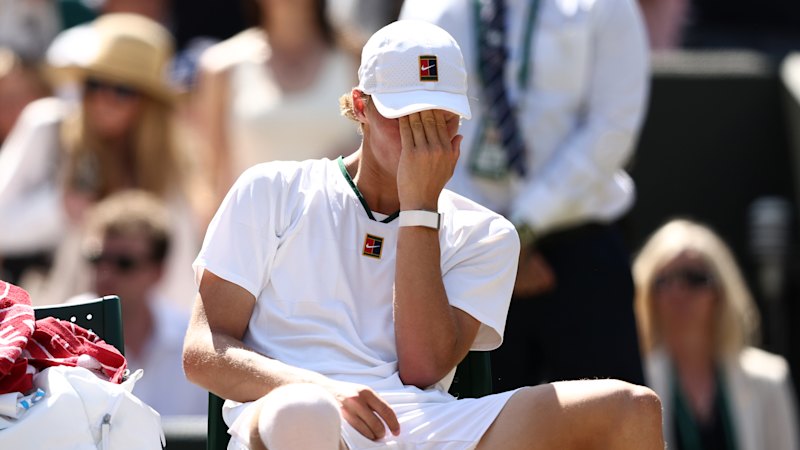
Heartbreak for Cruz Hewitt as teen loses Wimbledon boys’ final thriller
Jannik Sinner wins Wimbledon: Top seed beats Alexander Zverev in thrilling men's final to claim back-to-back titles

How other outlets are covering this story
Compare narratives across 6 related reports from 6 sources. Real Narrative News aggregates the coverage spectrum so you can see who emphasises what — bias tags reflect the outlet, not the story.
Coverage bias distribution
6 sources
Left 33%
Center 33%
Right 0%
Sweden Herald
· Jul 3, 2026
Six counterintuitive summer reading and viewing tips to beat boredom
Six counterintuitive summer reading and viewing tips to beat boredom
NL Times
Quarter of young Dutch AI-users share more with chatbot than friends, family
Over half (51 percent) of young Dutch people who use AI discuss personal matters like dating, social situations, and mental health with the chatbot.
The 74
· Jul 10, 2026
Opinion: Are We Asking the Wrong Question in the Screen Time Debate?
For years, the conversation around young children and screens has been dominated by a fear of too much time, too little interaction and too many missed opportunities for real learning. In many cases, those concerns are justified. After all, research consistently shows that children’s excessive or passive screen use, especially of entertainment-heavy content, can negatively []
The Independent
· Jun 26, 2026
Sephora introduces major change to present a ‘calmer shopping environment’
Most neurodivergent shoppers say Quiet Hours significantly improved their Sephora experience, the company says
Scientific American
· Jun 29, 2026
How to spot an AI-generated face, according to science
Training people to pay attention to the right visual cues nearly doubled how accurately they could spot AI-generated faces
Irish Mirror
· Jun 29, 2026
Boox Go 10.3 Gen II Lumi e-ink tablet review: lightweight e-reader with Android apps
Digital note-taker and sharp e-reader is great for anyone looking for distraction-free experiences
Topics:
Related coverage for "On 'cognitive presence'": Sweden Herald — Six counterintuitive summer reading and viewing tips to beat boredom. NL Times — Quarter of young Dutch AI-users share more with chatbot than friends, family. The 74 — Opinion: Are We Asking the Wrong Question in the Screen Time Debate?. The Independent — Sephora introduces major change to present a ‘calmer shopping environment’. Scientific American — How to spot an AI-generated face, according to science. Irish Mirror — Boox Go 10.3 Gen II Lumi e-ink tablet review: lightweight e-reader with Android apps