
Today in News History
On July 12, several notable moments in the history of News stand out. In 70, The armies of Titus attack the walls of Jerusalem after a six-month siege. Three days later they breach the walls, which enables the army to destroy the Second Temple. In 1191, Third Crusade: Saladin's garrison surrenders to Philip Augustus, ending the two-year siege of Acre. In 1801, British ships inflict heavy damage on Spanish and French ships in the Second Battle of Algeciras. In 1943, World War II: Battle of Kursk: German and Soviet forces engage in the Battle of Prokhorovka, one of the largest armored engagements of all time. In 1961, Indian city Pune floods due to failure of the Khadakwasla and Panshet dams, killing at least two thousand people. In 1961, ČSA Flight 511 crashes at Casablanca-Anfa Airport in Morocco, killing 72. In 2006, The 2006 Lebanon War begins. In 2007, U.S. Army Apache helicopters engage in airstrikes against armed insurgents in Baghdad, Iraq, where civilians are killed; footage from the cockpit is later leaked to the Internet. In 2012, A tank truck explosion kills more than 100 people in Okobie, Nigeria. In 2012, Syrian Civil War: Government forces target the homes of rebels and activists in Tremseh and kill anywhere between 68 and 150 people. Together, these milestones provide historical context for today's news news and ongoing narratives.
Oil Prices Rise Further After Another Round of Strikes in the Gulf
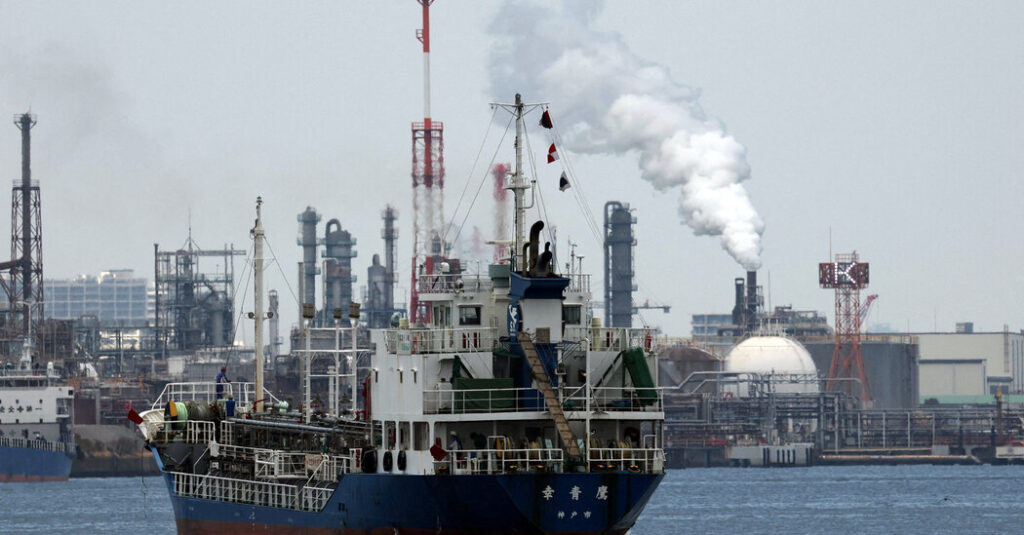
Oil prices continued to climb on Thursday, as U.S. and Iranian military forces traded a second round of strikes around the Persian Gulf. Choppy trading in stocks and bonds reflected anxiety among investors about the effects of the war. President Trump said the latest strikes, which targeted around 90 sites along Iran’s coast, were “retribution” []
Narrative Intelligence Brief
This article was published by DNyuz, a source frequently categorized with a lean right bias based in Armenia. Our narrative intelligence engine continuously monitors coverage from this outlet to track framing, bias, and rhetorical patterns. Our initial algorithmic scan of this specific piece did not flag high-confidence rhetorical techniques, suggesting a generally straightforward reporting style or neutral framing. By understanding the editorial perspective of DNyuz, readers can better contextualize the information presented and compare it across our broader media matrix to find the real narrative.
More from DNyuz
July 12, 2026
Graham Platner’s scandal-scarred campaign was proof Dems will overlook anything in search for their ‘Everyman’
July 12, 2026
‘Forbidden from taking deep breaths’: Report exposes alarming tactics used on DHS staff
July 12, 2026
British police release man arrested in killing of former politician Ann Widdecombe
July 12, 2026
Oil Prices Set for More Volatility After Latest Iranian Attack on Ship in Gulf
July 12, 2026
U.S. Strikes Iran After Iran Fires on Ship in Strait of Hormuz
Analysis Methodology
This narrative analysis was generated using the CoDataLab Global Intelligence Engine. Our proprietary AI scans thousands of cross-border sources to identify sentiment patterns, framing techniques, and potential media bias. While AI provides the data-driven foundation, our objective is to empower readers with additional context beyond the standard headline.The content displayed above is a structured summary designed for rapid information processing. For the full original report, please visit the source outlet.More Coverage
Discussion
"jude bellingham"
Tuchel angry at 'lucky' and 'sloppy' England – can 'mentality' be enough?

Tuchel angry at 'lucky' and 'sloppy' England – can 'mentality' be enough?

2026 World Cup Golden Boot Odds: Jude Bellingham Skyrockets After Brace

How other outlets are covering this story
Compare narratives across 6 related reports from 6 sources. Real Narrative News aggregates the coverage spectrum so you can see who emphasises what — bias tags reflect the outlet, not the story.
Coverage bias distribution
6 sources
Left 17%
Center 17%
Right 67%
Seeking Alpha
· Jun 29, 2026
Commodities: Oil Market Shrugs Off Persian Gulf Escalation
Commodities: Oil Market Shrugs Off Persian Gulf Escalation
Kathimerini
· Jul 8, 2026
ATHEX: Mini sell-off after fresh Gulf tension
The resumption of military action in the Persian Gulf had an immediate impact on markets, with oil rates jumping and bourse indexes slumping.
Quartz
· Jul 7, 2026
Things are getting worse in the Strait of Hormuz — again
New attacks, the largest number of such incidents since a U.S.-Iran interim deal took effect, pushed oil prices up more than 3
BOL News
· Jul 8, 2026
Oil surges after U.S. launches strikes on Iran
WASHINGTON: Oil prices jumped Wednesday after the U.S. military launched a series of strikes against Iran in retaliation for attacks on three commercial vessels in the Strait of Hormuz, raising tensions just weeks after a fragile ceasefire reopened the critical waterway. West Texas Intermediate crude for August delivery rose 2.87 to settle at 72.46 per ... Read more The post Oil surges after U.S. launches strikes on Iran appeared first on BOL News.
The Standard
· Jul 8, 2026
US launches fresh wave of strikes on Iran after Trump declares ceasefire over
Renewed hostilities over the strategic Strait of Hormuz waterway have led to another spike in oil prices
Iran Herald
· Jul 10, 2026
Oil markets brace for more turbulence ahead amid geopolitical risks, supply-demand dynamics
BEIJING, July 10 (Xinhua) -- Middle East tensions flared anew on Wednesday, sending oil prices sharply higher after the U.S. military resumed strikes on Iran. Brent crude futures jumped more than 5 percent, nearing 80 U.S. dollars a barrel.Investors were quick to price in the risk of further supply disruptions through the Strait of Hormuz, one of the world's most important energy shipping routes, though analysts
Topics:
Related coverage for "Oil Prices Rise Further After Another Round of Strikes in the Gulf": Seeking Alpha — Commodities: Oil Market Shrugs Off Persian Gulf Escalation. Kathimerini — ATHEX: Mini sell-off after fresh Gulf tension. Quartz — Things are getting worse in the Strait of Hormuz — again. BOL News — Oil surges after U.S. launches strikes on Iran. The Standard — US launches fresh wave of strikes on Iran after Trump declares ceasefire over. Iran Herald — Oil markets brace for more turbulence ahead amid geopolitical risks, supply-demand dynamics