Today in News History
On June 19, several notable moments in the history of News stand out. In 1785, The Boston King's Chapel adopts James Freeman's revised prayer book, without the Nicene Creed, establishing it as the first Unitarian congregation in the United States. In 1850, David Jayne Hill, American historian and politician, 24th United States Assistant Secretary of State (died 1932) was born. In 1907, Clarence Wiseman, Canadian 10th General of the Salvation Army (died 1985) was born. In 1939, John F. MacArthur, American minister and theologian was born. In 1947, John Ralston Saul, Canadian philosopher and author was born. In 1959, Christian Wulff, German lawyer and politician, 10th President of Germany was born. In 1968, James Joseph Sweeney, American bishop (born 1898) passed away. In 1968, Timothy Morton, American philosopher and academic was born. In 1979, Paul Popenoe, American explorer and scholar, founded Relationship counseling (born 1888) passed away. In 2009, Mass riots involving over 10,000 people and 10,000 police officers break out in Shishou, China, over the dubious circumstances surrounding the death of a local chef. Together, these milestones provide historical context for today's news news and ongoing narratives.
Ninth Circuit to weigh if religious ministries can limit hiring to like-minded employees
Narrative Analysis: Name Calling
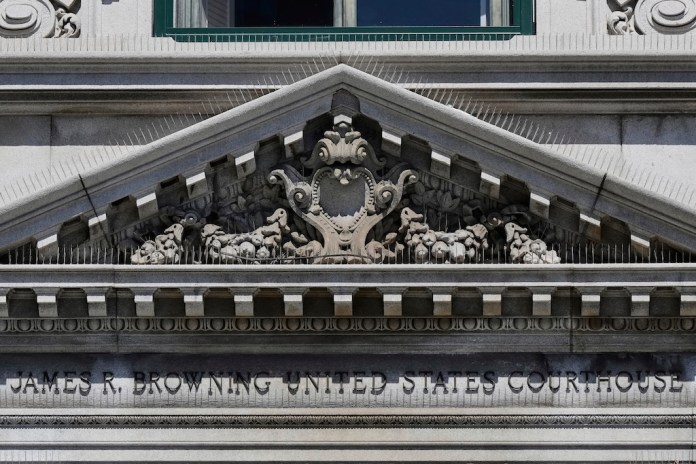
The U.S. Court of Appeals for the Ninth Circuit will hear a case over whether a religious ministry can limit who it hires to people who share its beliefs, in the latest hotly contested test of religious liberty, which could make its way to the Supreme Court. The full bench of the federal appeals court []
Narrative Intelligence Brief
This article was published by Washington Examiner, a source frequently categorized with a lean right bias based in United States of America. Our narrative intelligence engine continuously monitors coverage from this outlet to track framing, bias, and rhetorical patterns. In this specific piece, our systems detected the potential use of the "Name Calling" technique. This narrative approach is often used to shape reader perception by highlighting specific emotional or rhetorical angles. By understanding the editorial perspective of Washington Examiner, readers can better contextualize the information presented and compare it across our broader media matrix to find the real narrative.
More from Washington Examiner
June 19, 2026
Florida subpoenas MLB for ‘selectively enforcing’ uniform rules to reprimand Christian pitchers
June 19, 2026
Minneapolis residents are still paying the price for the Black Lives Matter riots
June 19, 2026
Democrats fear Maine swing district ‘off the board’ after Matt Dunlap victory
June 19, 2026
Newsom rejects scaled-back billionaires tax as ballot fight looms
June 19, 2026
The emperor’s nuclear clothes: Trump Iran deal and the naked king
Reliability Insights
P
Technique: Name Calling
System analysis detected use of specific narrative techniques in this piece.Analysis Methodology
This narrative analysis was generated using the CoDataLab Global Intelligence Engine. Our proprietary AI scans thousands of cross-border sources to identify sentiment patterns, framing techniques, and potential media bias. While AI provides the data-driven foundation, our objective is to empower readers with additional context beyond the standard headline.The content displayed above is a structured summary designed for rapid information processing. For the full original report, please visit the source outlet.More Coverage
Discussion