Today in News History
On July 5, several notable moments in the history of News stand out. In 905, Dugu Sun, Chinese chancellor passed away. In 1316, The Burgundian and Majorcan claimants of the Principality of Achaea meet in the Battle of Manolada. In 1941, World War II: Operation Barbarossa: German troops reach the Dnieper river. In 1943, World War II: German forces begin a massive offensive against the Soviet Union at the Battle of Kursk, also known as Operation Citadel. In 1950, Korean War: Task Force Smith: American and North Korean forces first clash, in the Battle of Osan. In 1956, Horacio Cartes, Paraguayan businessman and politician, President of Paraguay was born. In 1965, Porfirio Rubirosa, Dominican race car driver, polo player, and diplomat (born 1909) passed away. In 1968, Susan Wojcicki, Polish-American technology executive (died 2024) was born. In 2003, The World Health Organization announces that the 2002-2004 SARS outbreak has been contained. In 2006, North Korea tests four short-range missiles, one medium-range missile and a long-range Taepodong-2. The long-range Taepodong-2 reportedly fails in mid-air over the Sea of Japan. Together, these milestones provide historical context for today's news news and ongoing narratives.
Minefields, stalled talks keep Strait of Hormuz in strategic limbo
Narrative Analysis: Plain Folks
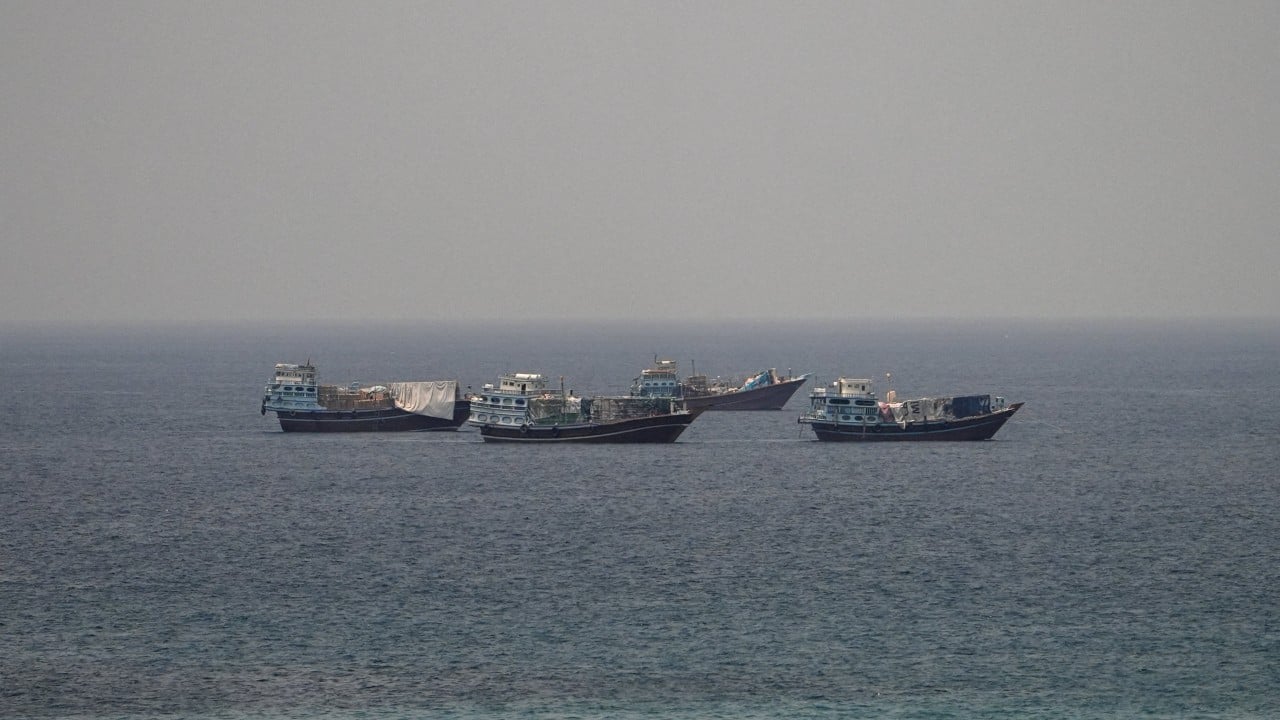
The future of energy exports through the Strait of Hormuz hangs in the balance after negotiations between Iran and the United States in Doha this week ended without an agreement on releasing frozen funds to the Islamic Republic. With Tehran also failing to begin demining the strait, and still threatening to attack ships attempting to leave the Gulf without its permission, neither side has yet met the two key obligations under their June 17 memorandum of understanding (MOU) to freeze the conflict...
Narrative Intelligence Brief
This article was published by South China Morning Post, a source frequently categorized with a lean left bias based in Hong Kong. Our narrative intelligence engine continuously monitors coverage from this outlet to track framing, bias, and rhetorical patterns. In this specific piece, our systems detected the potential use of the "Plain Folks" technique. This narrative approach is often used to shape reader perception by highlighting specific emotional or rhetorical angles. By understanding the editorial perspective of South China Morning Post, readers can better contextualize the information presented and compare it across our broader media matrix to find the real narrative.
More from South China Morning Post
July 5, 2026
Hong Kong must brace for AI bubble risk and quantum computer threat: HKMA chief
July 5, 2026
Doctor given 9‑month ban over misconduct in case that left boy disabled for life
July 5, 2026
Vance hopes Burnham delivers ‘structural change’ amid ‘broken’ UK politics
July 5, 2026
Chinese foreign minister calls on Sweden to help rebuild trust between the countries
July 5, 2026
At Khamenei’s funeral, Iranian poet says ‘world is no longer a good place’ for Trump
Reliability Insights
P
Technique: Plain Folks
System analysis detected use of specific narrative techniques in this piece.Analysis Methodology
This narrative analysis was generated using the CoDataLab Global Intelligence Engine. Our proprietary AI scans thousands of cross-border sources to identify sentiment patterns, framing techniques, and potential media bias. While AI provides the data-driven foundation, our objective is to empower readers with additional context beyond the standard headline.The content displayed above is a structured summary designed for rapid information processing. For the full original report, please visit the source outlet.More Coverage
Discussion