Today in News History
On July 5, several notable moments in the history of News stand out. In 905, Pei Shu, Chinese chancellor (born 841) passed away. In 905, Wang Pu, Chinese chancellor passed away. In 936, Xu Ji, Chinese official and chancellor passed away. In 1653, Thomas Pitt, English businessman and politician (died 1726) was born. In 1953, Caryn Navy, American mathematician and computer scientist was born. In 1975, Ai Sugiyama, Japanese tennis player was born. In 1987, Ji Chang-wook, South Korean actor was born. In 2009, A series of violent riots break out in Ürümqi, the capital city of the Xinjiang Uyghur Autonomous Region in China. In 2013, Bud Asher, American lawyer and politician (born 1925) passed away. In 2015, Yoichiro Nambu, Japanese-American physicist and academic, Nobel Prize laureate (born 1921) passed away. Together, these milestones provide historical context for today's news news and ongoing narratives.
Hong Kong must brace for AI bubble risk and quantum computer threat: HKMA chief
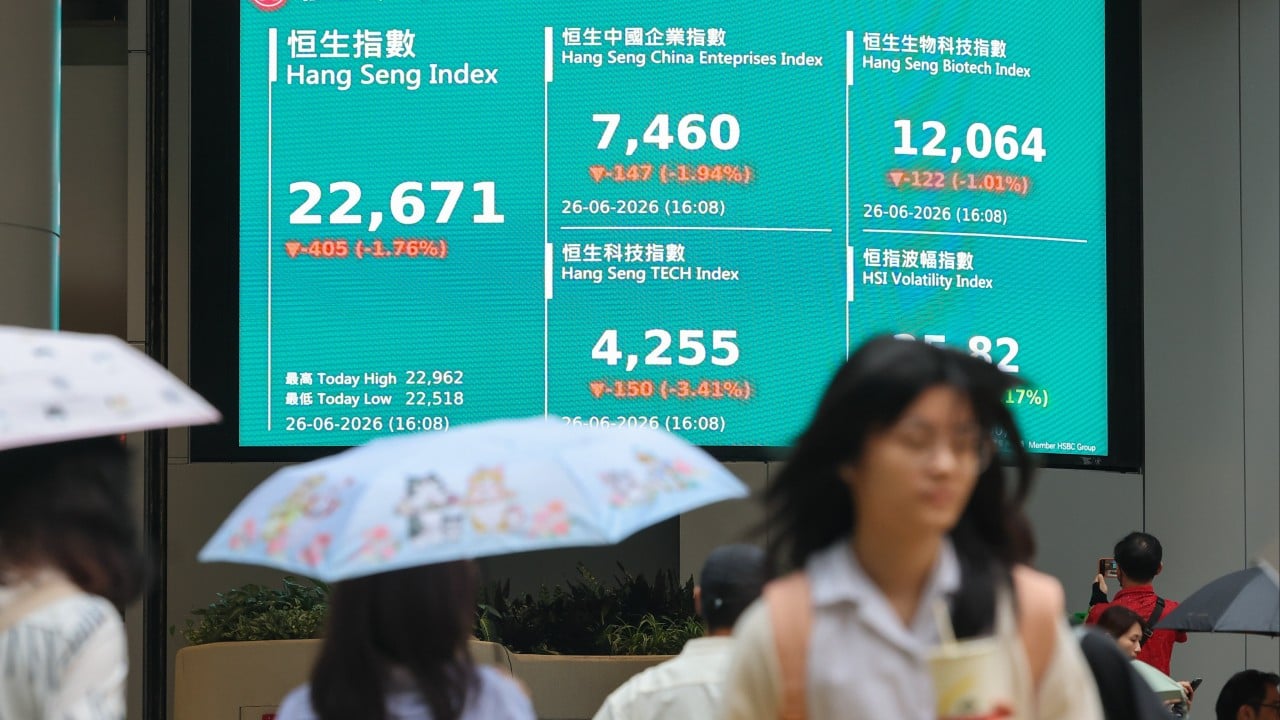
Hong Kong has to brace for the emerging risks of an artificial intelligence (AI) bubble bursting and quantum computers capable of hacking encrypted financial systems, the city’s de facto central banker has warned. Eddie Yue Wai-man, chief executive of the Hong Kong Monetary Authority (HKMA), also said on Sunday that the banking regulator would focus on expanding the internationalisation of the yuan in the next few years. Speaking on a radio show, Yue cautioned that current euphoria surrounding...
Narrative Intelligence Brief
This article was published by South China Morning Post, a source frequently categorized with a lean left bias based in Hong Kong. Our narrative intelligence engine continuously monitors coverage from this outlet to track framing, bias, and rhetorical patterns. Our initial algorithmic scan of this specific piece did not flag high-confidence rhetorical techniques, suggesting a generally straightforward reporting style or neutral framing. By understanding the editorial perspective of South China Morning Post, readers can better contextualize the information presented and compare it across our broader media matrix to find the real narrative.
More from South China Morning Post
July 5, 2026
Chinese scientists’ horse-head discovery sheds light on ancient elite sacrificial traditions
July 5, 2026
First money, now ‘loyalty’: Trump’s demands test Nato chief’s flattery tactics
July 5, 2026
Doctor given 9‑month ban over misconduct in case that left boy disabled for life
July 5, 2026
Vance hopes Burnham delivers ‘structural change’ amid ‘broken’ UK politics
July 5, 2026
Chinese foreign minister calls on Sweden to help rebuild trust between the countries
Analysis Methodology
This narrative analysis was generated using the CoDataLab Global Intelligence Engine. Our proprietary AI scans thousands of cross-border sources to identify sentiment patterns, framing techniques, and potential media bias. While AI provides the data-driven foundation, our objective is to empower readers with additional context beyond the standard headline.The content displayed above is a structured summary designed for rapid information processing. For the full original report, please visit the source outlet.More Coverage
Discussion
"trump"
Severe storms disrupt Trump’s 250th speech and force DC evacuation

Performer calls for Trump’s death at funeral for Ayatollah Ali Khamenei

Storm threat triggers chaotic evacuation ahead of Trump’s speech (VIDEOS)