Today in News History
On June 27, several notable moments in the history of News stand out. In 1864, American Civil War: Confederate forces defeat Union forces during the Battle of Kennesaw Mountain during the Atlanta Campaign. In 1899, Juan Trippe, American businessman, founded Pan American World Airways (died 1981) was born. In 1927, Prime Minister of Japan Tanaka Giichi convenes an eleven-day conference to discuss Japan's strategy in China. The Tanaka Memorial, a forged plan for world domination, is later claimed to be a secret report leaked from this conference. In 1941, World War II: German troops capture the city of Białystok during Operation Barbarossa. In 1950, The United States decides to send troops to fight in the Korean War. In 1950, Milada Horáková, Czech politician, victim of judicial murder (born 1901) passed away. In 1957, Hurricane Audrey makes landfall near the Texas-Louisiana border, killing over 400 people, mainly in and around Cameron, Louisiana. In 1988, The Gare de Lyon rail accident in Paris, France, kills 56 people. In 2007, The Brazilian Military Police invades the favelas of Complexo do Alemão in an episode which is remembered as the Complexo do Alemão massacre. In 2014, At least fourteen people are killed when a Gas Authority of India Limited pipeline explodes in the East Godavari district of Andhra Pradesh, India. Together, these milestones provide historical context for today's news news and ongoing narratives.
Millions use Roundup. The Supreme Court just made a major decision about it
Narrative Analysis: Bandwagon
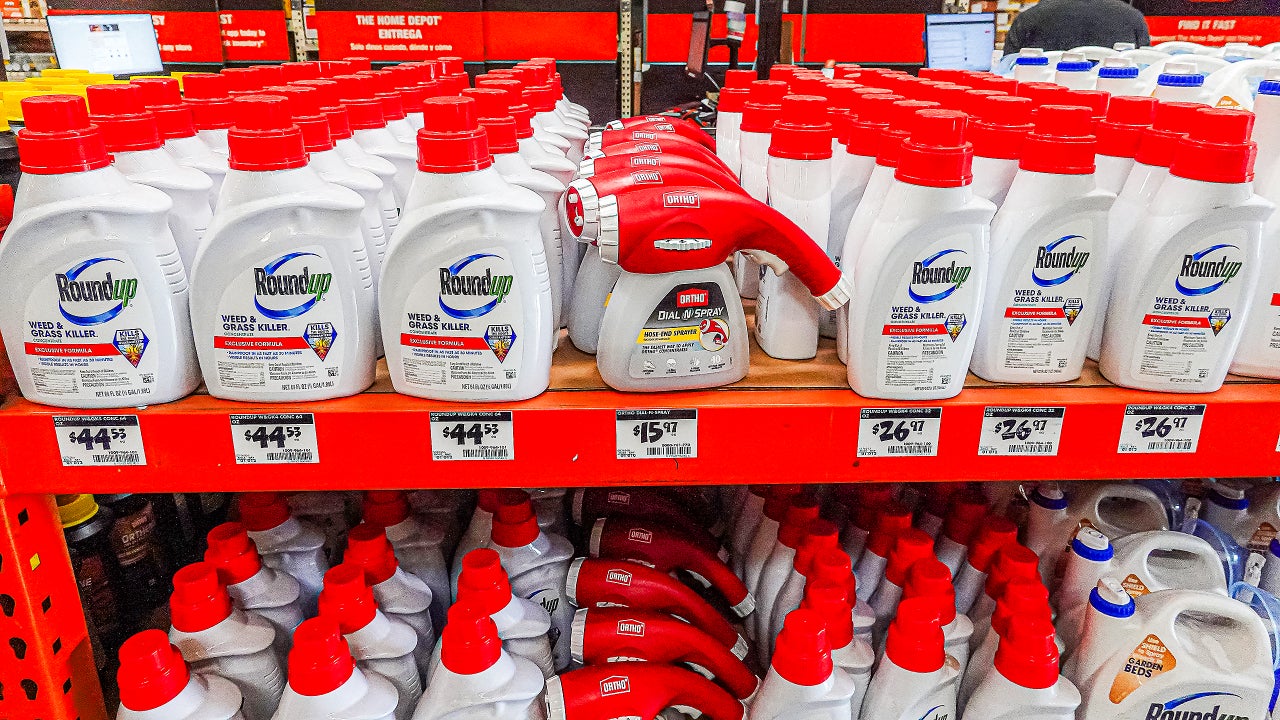
Thousands of people who say Roundup caused their cancer were dealt a blow in court this week when the Supreme Court opted to protect the weedkiller’s parent company from a flood of lawsuits. In a 7-2 decision issued on Thursday, the country’s highest court said that the German pharmaceutical company Bayer can’t be sued at the state level over claims that it did not sufficiently warn consumers about cancer risks associated with the herbicide Roundup. Bayer owns Monsanto, which makes Roundup. The Supreme Court sided with Bayer, ruling that federal regulations preempt state-level lawsuits involving Roundup, the popular brand name for the herbicide glyphosate. The EPA does not require products including glyphosate to be sold with a cancer warning and Bayer complies with the agency’s guidelines for its top-selling herbicide. The Supreme Court decision elevated a case from Missouri resident John Durnell, who claimed that two decades of exposure to Roundup caused his non-Hodgkin’s lymphoma, a form of blood cancer. Durnell filed a successful state lawsuit against Monsanto in 2019, arguing that the company’s product should come with a warning label addressing cancer risks. After an appeal, the case made its way to the Supreme Court. In its majority opinion, the court sided with Monsanto on the grounds that federal laws take precedence over the state law that Durnell’s lawsuit hinged on and “expressly pre-empt” Durnell’s claim. Justice Ketanji Brown Jackson and Justice Neil Gorsuch dissented in the decision. “Importantly, EPA’s regulations require a pesticide manufacturer such as Monsanto to use the EPA-approved pesticide label—here, the Roundup label without a cancer warning—unless and until EPA approves or requires a different label,” Justice Brett Kavanaugh wrote. Because the EPA regulates pesticides under a law known as the Federal Insecticide, Fungicide, and Rodenticide Act (FIFRA), states can’t put their own additional or substitute warning labels on products like Roundup, according to the decision. A mountain of lawsuits The Supreme Court’s decision is a massive win for Bayer, which faces more than 180,000 claims over Roundup. The lawsuits have prompted Bayer to pull glyphosate out of many products under the Roundup brand, though the chemical remains very popular in farming. While the EPA has deemed glyphosate safe if applied as directed, that opinion isn’t universal. More than 10 years ago, the World Health Organization’s cancer agency classified the chemical as a substance likely to cause cancer in humans, though those findings faced scrutiny a few years later over reports that the published version differed from a draft. Earlier this year, a landmark study determining that glyphosate didn’t pose a risk to human health was retracted, more than two decades after its publication. The retraction, prompted by emails revealing Monsanto’s influence on the science, casts doubt on regulations that have cited the key research for decades. Bayer acquired Roundup maker Monsanto in 2018 for 63 billion, betting that owning a major player in the agriculture business would help it tap into a lucrative boom in farming supplies. In the years since, the opposite has been true, with Monsanto’s tidal wave of costly Roundup-related litigation dragging its parent company down. Today, Bayer is worth 10 billion less than the price it once paid for Monsanto, though the company’s shares did jump dramatically following the Supreme Court decision.
Narrative Intelligence Brief
This article was published by Fast Company, a source frequently categorized with a lean left bias based in United States of America. Our narrative intelligence engine continuously monitors coverage from this outlet to track framing, bias, and rhetorical patterns. In this specific piece, our systems detected the potential use of the "Bandwagon" technique. This narrative approach is often used to shape reader perception by highlighting specific emotional or rhetorical angles. By understanding the editorial perspective of Fast Company, readers can better contextualize the information presented and compare it across our broader media matrix to find the real narrative.
More from Fast Company
June 26, 2026
We’re afraid to show you the NSFW statue of Lionel Messi
June 26, 2026
A new court ruling could shape how Americans vote in the next election
June 26, 2026
Streaming live World Cup soccer games on airplanes is becoming a reality
June 26, 2026
AI doesn’t scale by removing people
June 26, 2026
Billionaire investor Leon Black defends $158 million paid to Epstein
Reliability Insights
P
Technique: Bandwagon
System analysis detected use of specific narrative techniques in this piece.Analysis Methodology
This narrative analysis was generated using the CoDataLab Global Intelligence Engine. Our proprietary AI scans thousands of cross-border sources to identify sentiment patterns, framing techniques, and potential media bias. While AI provides the data-driven foundation, our objective is to empower readers with additional context beyond the standard headline.The content displayed above is a structured summary designed for rapid information processing. For the full original report, please visit the source outlet.More Coverage
Discussion