Today in News History
On July 7, several notable moments in the history of News stand out. In 1865, David Herold (born 1842) passed away. In 1913, Edward Burd Grubb Jr., American general and diplomat, United States Ambassador to Spain (born 1841) passed away. In 1916, The New Zealand Labour Party was founded in Wellington. In 1941, The US occupation of Iceland replaces the UK's occupation. In 1944, Ian Wilmut, English-Scottish embryologist and academic (died 2023) was born. In 1944, Glenys Kinnock, English educator and politician (died 2023) was born. In 2005, A series of four explosions occurs on London's transport system, killing 56 people, including four suicide bombers, and injuring over 700 others. In 2012, At least 172 people are killed in a flash flood in the Krasnodar Krai region of Russia. In 2022, Boris Johnson announces his resignation as leader of the Conservative Party following days of pressure from the Members of Parliament (MPs) during the July 2022 United Kingdom government crisis. In 2024, Jane McAlevey, American labor organizer and author (born 1964) passed away. Together, these milestones provide historical context for today's news news and ongoing narratives.
Migrant care workers still bringing dozens of family members to UK despite clampdown
Narrative Analysis: Appeal to Fear
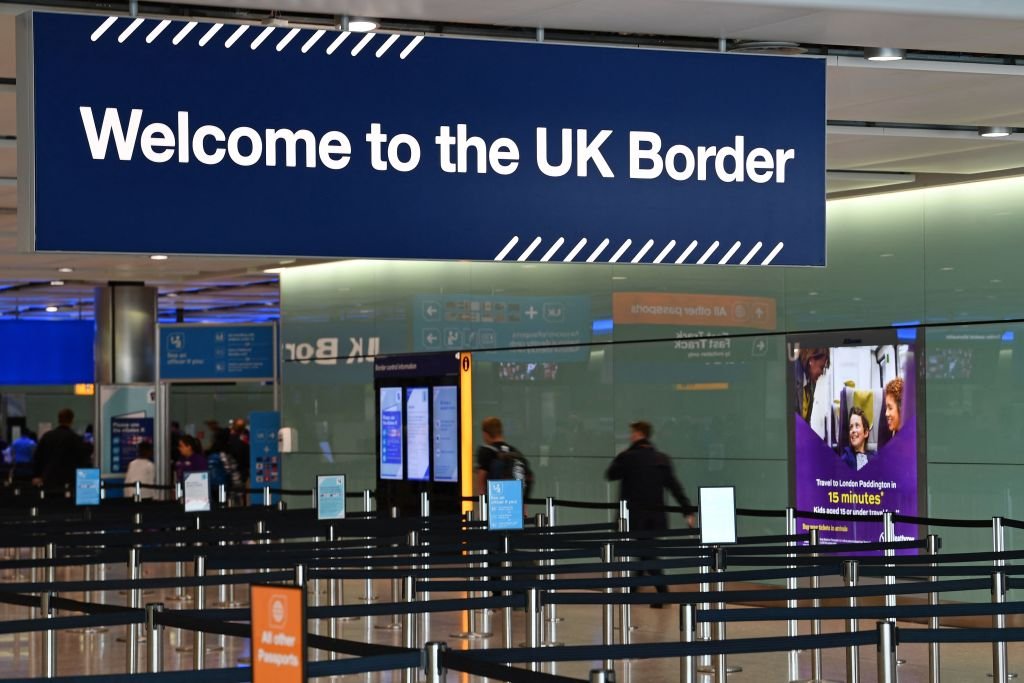
New Home Office figures have revealed migrant workers are ignoring restrictions by bringing in family members at a ratio as high as 15 for every worker.The new statistics have revealed a total of 180 visas were issued to family members of migrants from Cameroon, despite just 12 health and care visas being issued to workers from the central African country.Meanwhile, there were 257 health and care worker visas issued to workers from Ghana in the same period, and 2,131 visas issued to family members.According to the figures, 2,395 workers from India were joined by 10,504 family members, with 139 Bangladeshis granted visas and 747 family members joining main applicants. TRENDING Stories Videos Your Say A total of 1,029 skilled worker visas were issued to workers from Pakistan, who in turn brought in 6,155 dependants, while Nigerians had nearly five times as many dependants as main applicants, 1,114 family members joining 230 workers on skilled worker visas.Care workers were officially barred from bringing in family members by the former Conservative government in March 2024.Last year, the Home Office extended the ban to all migrant workers unless they had a job at degree level or above.However, those who were already here before the restrictions were introduced can still bring dependants to the UK.The Tories reacted to the new figures by announcing a new policy that would extend the ban on dependants to care workers already in the country.Shadow Home Secretary Chris Philp told The Times: These shocking figures show far too many family members, including the family of people working in kebab shops and vape stores, are being let into the UK. The number of dependants is unacceptably high, the burden of supporting them all too often falls on the British taxpayer. Worker visas should not be a route to let in thousands more family members. It is an abuse of the system. Far too many people entered the UK on social care visas and the previous Conservative government [was] right to put a stop to it. But today’s revelations show those already here on social care visas are still bringing in large numbers [of] dependants. This must be urgently stopped.LATEST DEVELOPMENTSMigration crisis: Andy Burnham's immigration U-turn to 'cost British families £1.8k each'Home Office finally admits staggering true cost of 'Boriswave' migrant floodMigrant crisis: Reform UK pledges to hold national inquiry into 'Boriswave' migration surgeMr Philp continued: Social care workers already here should not be able to receive new visas for new dependants. We have seen hundreds of thousands of dependants of care workers come here, more than the number of actual care workers, and this must now urgently stop.On average, the ratio was 1.3 dependants for every worker, as Europeans issued with skilled worker visas brought in significantly fewer than one family member each. French workers were one of the main European recipients of such visas and in the last year 1,804 workers brought in 701 family members, a ratio of 0.4 for each worker.Research for the Home Office from the migration advisory committee revealed around 85 per cent of migrants who arrived in 2019 stayed for at least five years, a jump up from the 74 per cent of those who arrived in 2014.Migrants from countries across Africa, southern Asia and non-EU European countries had the highest rates of long-term stay.The higher “stay rates” have increased the likelihood of migrant workers obtaining indefinite leave to remain (ILR). The policy grants the right for foreign workers to live, work, study and claim benefits in Britain permanently.Home Secretary Shabana Mahmood's planned changes to rules governing indefinite leave to remain (ILR) have drawn criticism from some Labour MPs, with Sir Keir’s likely successor Andy Burnham facing calls to scrap them.A Home Office spokesman said: We have taken significant action to reduce the number of dependants joining workers in the UK, steps which have contributed to overall net migration falling by 82 per cent in just three years. This has included restricting dependants for all occupations below degree-level, increasing language requirements and ending overseas recruitment for care workers.Visa numbers for foreign workers are down 50 per cent from their peak in 2023 as these reforms take effect, and we will double the route to settlement from five to ten years, ensuring it is earned through contribution and integration. Our Standards: The GB News Editorial Charter
Narrative Intelligence Brief
This article was published by GB News, a source frequently categorized with a lean right bias based in United States of America. Our narrative intelligence engine continuously monitors coverage from this outlet to track framing, bias, and rhetorical patterns. In this specific piece, our systems detected the potential use of the "Appeal to Fear" technique. This narrative approach is often used to shape reader perception by highlighting specific emotional or rhetorical angles. By understanding the editorial perspective of GB News, readers can better contextualize the information presented and compare it across our broader media matrix to find the real narrative.
More from GB News
July 6, 2026
British tourists warned toxic fish that ‘can bite through bone’ lurking in Mediterranean as Greece erects floating barrier
July 6, 2026
Labour eyes emergency laws to kick Rochdale grooming gang leader out of Britain
July 6, 2026
Met Office declares third heatwave of the year with temperatures set to reach scorching 35C
July 6, 2026
Scott Mills' husband takes apparent swipe at BBC as Sara Cox launches Radio 2 Breakfast Show
July 6, 2026
Albanian gangs offer migrants ‘same day’ trips to UK on yachts for £15,000
Reliability Insights
P
Technique: Appeal to Fear
System analysis detected use of specific narrative techniques in this piece.Analysis Methodology
This narrative analysis was generated using the CoDataLab Global Intelligence Engine. Our proprietary AI scans thousands of cross-border sources to identify sentiment patterns, framing techniques, and potential media bias. While AI provides the data-driven foundation, our objective is to empower readers with additional context beyond the standard headline.The content displayed above is a structured summary designed for rapid information processing. For the full original report, please visit the source outlet.More Coverage
Discussion