
Today in News History
On July 7, several notable moments in the history of News stand out. In 1124, The city of Tyre falls to the Venetian Crusade after a siege of nineteen weeks. In 1575, The Raid of the Redeswire is the last major battle between England and Scotland. In 1730, Olivier Levasseur, French pirate (born 1690) passed away. In 1911, The United States, UK, Japan, and Russia sign the North Pacific Fur Seal Convention of 1911 banning open-water seal hunting, the first international treaty to address wildlife preservation issues. In 1934, Robert McNeill Alexander, British zoologist (died 2016) was born. In 1941, Marco Bollesan, Italian rugby player and coach (died 2021) was born. In 1952, The ocean liner SS United States passes Bishop Rock on her maiden voyage, breaking the transatlantic speed record to become the fastest passenger ship in the world. In 1954, Simon Anderson, Australian surfer was born. In 1984, Minas Alozidis, Greek hurdler was born. In 2012, At least 172 people are killed in a flash flood in the Krasnodar Krai region of Russia. Together, these milestones provide historical context for today's news news and ongoing narratives.
British tourists warned toxic fish that ‘can bite through bone’ lurking in Mediterranean as Greece erects floating barrier
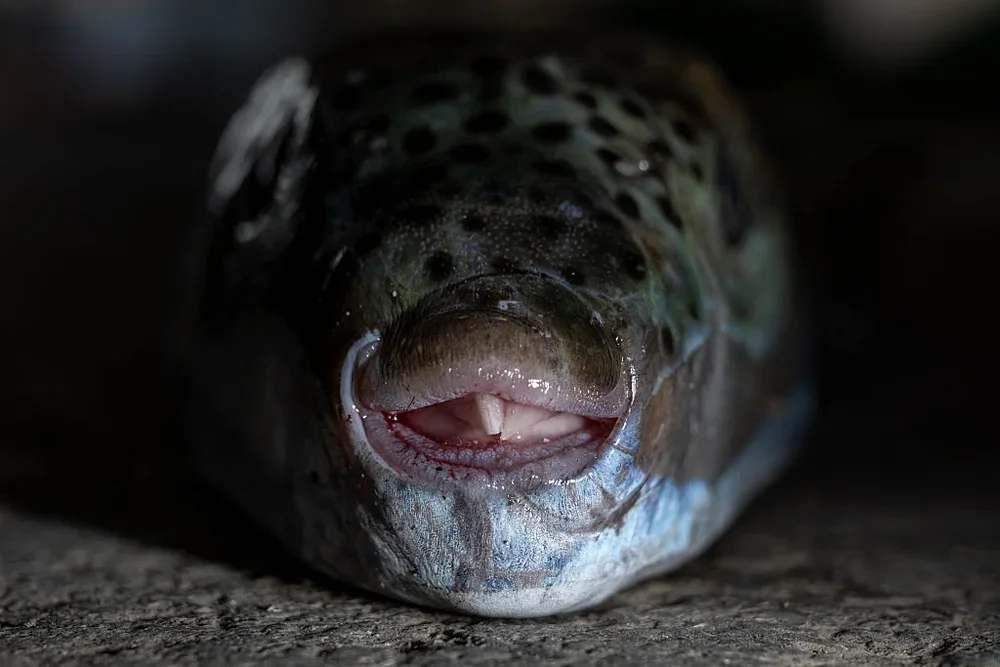
British tourists have been warned a toxic fish capable of causing devastating injuries is spreading through waters around some of the Mediterranean's most popular holiday hotspots.The silver-cheeked toadfish has been appearing in increasing numbers along the Greek coastline, prompting the Hellenic Red Cross to issue fresh safety advice.Native to the Indian Ocean, the species is believed to have entered the Mediterranean through the Suez Canal before spreading rapidly as sea temperatures increased.The fish is equipped with powerful, beak-like jaws capable of inflicting devastating bite injuries, with scientists documenting cases in which swimmers suffered partial finger amputations. TRENDING Stories Videos Your Say Its flesh also contains tetrodotoxin, a potent neurotoxin that makes every part of the fish unsafe to eat.Greek authorities have responded by installing floating safety barriers anchored to the seabed around the island of Evia to create protected swimming areas.Antonis Spanos, vice-mayor of Chalkida, said: Our duty and primary concern has to be the safety of our citizens. It's better to be safe than sorry.A further seven kilometres of protective netting is due to be installed.Local diving instructor Nikos Choulieris expressed confidence the barriers would withstand the invasive fish.I don't think anything will be able to get through that net, not even the fangs of a pufferfish, he told The Guardian.It's very tightly knit and very durable.The Hellenic Red Cross warned the fish's flesh contains tetrodotoxin, a powerful neurotoxin that makes it extremely dangerous to consume.GREECE - READ THE LATEST:Ryanair passengers left stranded 3,000 miles away from home after pilot left 50 holidaymakers behindBritish teenager dies after swimming off red-flagged beach in Greek holiday hotspotRyanair passengers stranded in Greece after 'mega-queue' piles up thanks to EU border chaosOfficials said no part of the fish could be considered safe to eat because toxin levels vary throughout its body.Although the fish does not inject venom through its bite, its powerful jaws can cause severe wounds and significant blood loss.Anyone bitten is advised to clean the wound immediately before seeking urgent medical treatment, which may include stitches and a tetanus vaccination.Research published in the journal Acta Ichthyologica et Piscatoria found the species has spread steadily across the Mediterranean since first being recorded there in 2003.Scientists said the fish has now reached the Adriatic Sea and warned it has displayed aggressive behaviour towards swimmers in the southern and eastern Mediterranean.The invasive species is now firmly established in the waters around Greece, Turkey, Cyprus, Egypt, Lebanon, Malta and Tunisia.Greek authorities have also introduced a bounty scheme paying fishermen 5.33 (£4.56) per kilogram for every silver-cheeked toadfish handed in.The new measures come just weeks after a Greek pensioner was left hurt after a suspected bite in the coastal town of Varkiza, near Athens.The elderly woman was attacked after the pufferfish reportedly lunged at her unprovoked - forcing her to hospital for stitches.Our Standards: The GB News Editorial Charter
Narrative Intelligence Brief
This article was published by GB News, a source frequently categorized with a lean right bias based in United States of America. Our narrative intelligence engine continuously monitors coverage from this outlet to track framing, bias, and rhetorical patterns. Our initial algorithmic scan of this specific piece did not flag high-confidence rhetorical techniques, suggesting a generally straightforward reporting style or neutral framing. By understanding the editorial perspective of GB News, readers can better contextualize the information presented and compare it across our broader media matrix to find the real narrative.
More from GB News
July 7, 2026
Chaos erupts on California beach as 400 arrested during 'TikTok takeover'
July 7, 2026
Dutch women 'kidnapped and gang-raped' after travelling to Pakistan to meet 'investors'
July 6, 2026
Labour eyes emergency laws to kick Rochdale grooming gang leader out of Britain
July 6, 2026
Met Office declares third heatwave of the year with temperatures set to reach scorching 35C
July 6, 2026
Scott Mills' husband takes apparent swipe at BBC as Sara Cox launches Radio 2 Breakfast Show
Analysis Methodology
This narrative analysis was generated using the CoDataLab Global Intelligence Engine. Our proprietary AI scans thousands of cross-border sources to identify sentiment patterns, framing techniques, and potential media bias. While AI provides the data-driven foundation, our objective is to empower readers with additional context beyond the standard headline.The content displayed above is a structured summary designed for rapid information processing. For the full original report, please visit the source outlet.More Coverage
Discussion
"trump"
Tens of millions face being pushed into hunger crisis by Trump’s Iran war fallout
Burnham must avoid Starmer’s Trump mistake

Trump’s patriotism shines through with brutal attack against communism
