Today in News History
On June 19, several notable moments in the history of News stand out. In 1862, Congress prohibits slavery in all current and future United States territories, and President Lincoln quickly signs the legislation. In 1874, Peder Oluf Pedersen, Danish physicist and engineer (died 1941) was born. In 1886, Finley Hamilton, American lawyer and politician (died 1940) was born. In 1910, Sydney Allard, English race car driver, founded the Allard Company (died 1966) was born. In 1941, Václav Klaus, Czech economist and politician, 2nd President of the Czech Republic was born. In 1970, Rahul Gandhi, Indian politician was born. In 1974, Mustaque Ahmed Ruhi, Bangladeshi member of parliament was born. In 1982, Chris Vermeulen, Australian motorcycle racer was born. In 2005, Following a series of Michelin tire failures during the United States Grand Prix weekend at Indianapolis, and without an agreement being reached, 14 cars from seven teams in Michelin tires withdrew after completing the formation lap, leaving only six cars from three teams on Bridgestone tires to race. In 2009, Mass riots involving over 10,000 people and 10,000 police officers break out in Shishou, China, over the dubious circumstances surrounding the death of a local chef. Together, these milestones provide historical context for today's news news and ongoing narratives.
Labour urged to keep 2030 car ban as EV drivers face 'two-tier transition' and rising costs
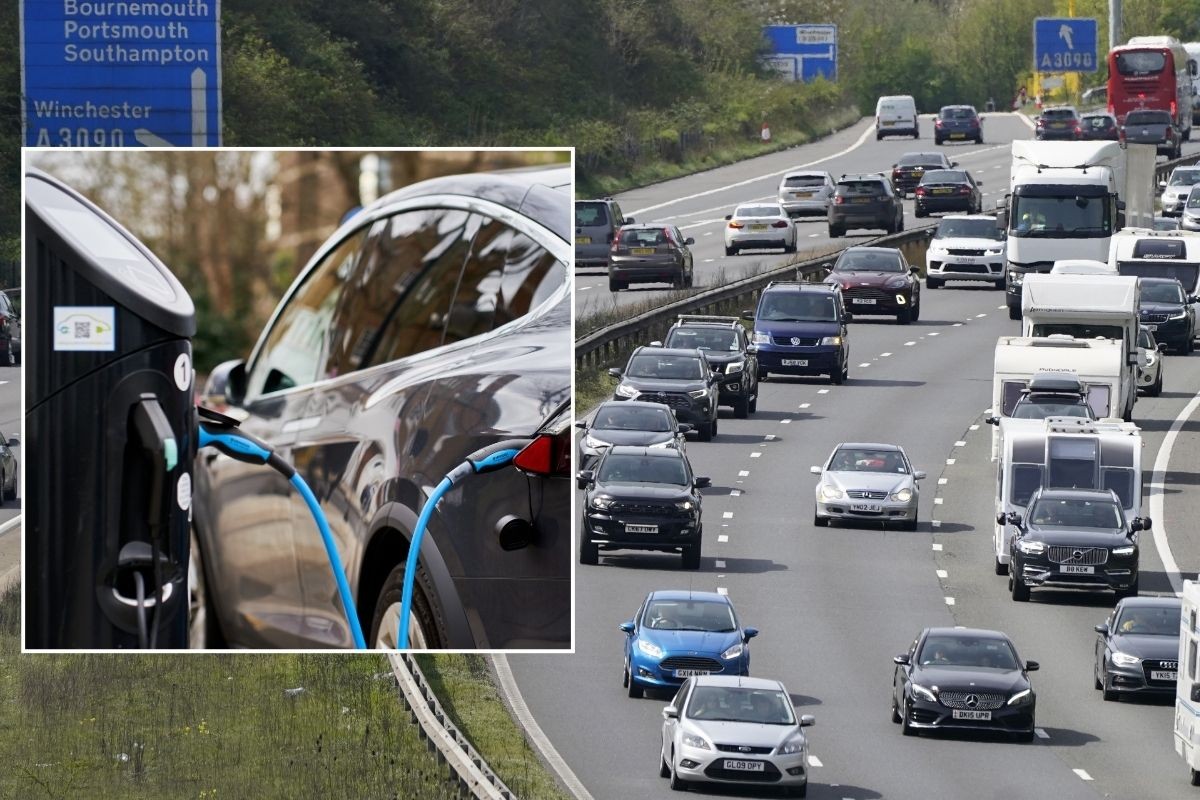
Labour has been urged not to amend the UK's Zero Emission Vehicle Mandate after warnings any weakening of the policy could damage driver confidence and slow the shift to electric cars. The warning comes from the UK's main independent consumer organisation for electric vehicle drivers, EVA England, which has written directly to Transport Secretary Heidi Alexander calling for an urgent meeting.In an open letter sent this week, the group's Chief Executive, Vicky Edmonds, raised concerns following recent speculation ministers could scale back or amend the ZEV Mandate. The organisation said ongoing uncertainty risks undermining confidence at a critical stage in the UK's electric vehicle rollout. TRENDING Stories Videos Your Say Alongside the letter, EVA England submitted a new report titled Putting the Driver First, which sets out real-world barriers facing motorists trying to switch to electric vehicles. The group argued consumer concerns are not being properly reflected in policy discussions, despite being central to whether the transition succeeds. A key issue highlighted was cost. EVA England warned the upfront price of electric vehicles remains the biggest obstacle for households, particularly those on lower and middle incomes who may otherwise be open to switching. Charging access is also flagged as a major problem. The organisation estimates around 40 per cent of UK households do not have access to a driveway, meaning they cannot easily charge at home.Instead, these drivers rely on the public charging network, which EVA England said is often more expensive and, in some areas, unreliable or difficult to access. The report warned this was creating what it calls a two-tier transition between drivers who can charge at home and those who cannot. It also highlighted cost differences already emerging. According to EVA England, half of electric vehicle drivers without off-street parking are currently paying more to run their EV than they did with petrol or diesel cars.Despite these concerns, the organisation stresses public attitudes towards electric vehicles remain broadly positive. The letter states: British motorists are not opposed to electric cars, with many already weighing them up as they would any significant household purchase.LATEST DEVELOPMENTSDrivers risk new parking bans as bin lorries struggle to reach streetsDrivers face £5,000 fine for breaking major Highway Code motorway rule as 'careless' driving impacts safetyDVSA confirm new changes for driving test waiting times - 'The public deserve to know'It also points to strong satisfaction among current EV owners. EVA England's research found 95 per cent of electric vehicle owners would not return to petrol or diesel.However, the group warned the transition is now moving beyond early adopters and into a more difficult phase, where cost pressures and infrastructure gaps become more significant barriers. The organisation also raised concerns about potential changes to future taxation, including reforms to Vehicle Excise Duty and the possible introduction of pay-per-mile charging for electric vehicles. It argued bringing in additional costs too early could risk slowing adoption, particularly among price-sensitive households who are still considering whether to switch.EVA England also highlighted electric vehicles currently account for just 5.5 per cent of cars on UK roads, while around four in 10 consumers still say they are sceptical about making the switch.The group warned public debate around new taxes risks being interpreted by motorists as a direct penalty on EV ownership. In its report, EVA England sets out three main recommendations for ministers.First, for more targeted financial support for lower-income households and stronger measures to grow the used EV market. This includes extending Benefit-in-Kind tax rates beyond 2030 and introducing battery health standards to improve trust in second-hand electric cars.Second, it urged a national strategy for the estimated 40 per cent of households without private parking. This would include cheaper public charging, faster rollout of workplace and on-street charging, and tougher rules to ensure public chargers are reliable.Finally, it called on the Government to delay any new EV-related road charging or changes to Vehicle Excise Duty until at least 2030, arguing the market needs time to mature before additional costs are introduced. Our Standards: The GB News Editorial Charter
Narrative Intelligence Brief
This article was published by GB News, a source frequently categorized with a lean right bias based in United States of America. Our narrative intelligence engine continuously monitors coverage from this outlet to track framing, bias, and rhetorical patterns. Our initial algorithmic scan of this specific piece did not flag high-confidence rhetorical techniques, suggesting a generally straightforward reporting style or neutral framing. By understanding the editorial perspective of GB News, readers can better contextualize the information presented and compare it across our broader media matrix to find the real narrative.
More from GB News
June 19, 2026
Green council sparks fury after calling for ale and cider festival to be CANCELLED because it 'should not support alcohol'
June 19, 2026
Giorgia Meloni slams Donald Trump for ‘completely fabricated’ claims in video message as diplomatic row erupts
June 19, 2026
POLL: Do you want Andy Burnham as the next PM? YOU DECIDE
June 19, 2026
William reveals heartwarming hobby that George, Charlotte and Louis enjoy behind closed doors
June 19, 2026
Princess of Wales releases personal on 'creating the conditions for love to flourish'
Analysis Methodology
This narrative analysis was generated using the CoDataLab Global Intelligence Engine. Our proprietary AI scans thousands of cross-border sources to identify sentiment patterns, framing techniques, and potential media bias. While AI provides the data-driven foundation, our objective is to empower readers with additional context beyond the standard headline.The content displayed above is a structured summary designed for rapid information processing. For the full original report, please visit the source outlet.More Coverage
Discussion