
Today in News History
On June 23, several notable moments in the history of News stand out. In 1934, Virbhadra Singh, Indian politician (died 2021) was born. In 1936, Costas Simitis, Greek economist, lawyer, and politician, 180th Prime Minister of Greece (died 2025) was born. In 1937, Alan Haselhurst, English academic and politician was born. In 1973, A fire at a house in Hull, England, which kills a six-year-old boy is passed off as an accident; it later emerges as the first of 26 deaths by fire caused over the next seven years by serial arsonist Peter Dinsdale. In 1973, Gerry Birrell, Scottish race car driver (born 1944) passed away. In 1980, Sanjay Gandhi, Indian engineer and politician (born 1946) passed away. In 1990, Harindranath Chattopadhyay, Indian poet, actor, and politician (born 1898) passed away. In 2012, James Durbin, English economist and statistician (born 1923) passed away. In 2014, The last of Syria's declared chemical weapons are shipped out for destruction. In 2017, A series of terrorist attacks take place in Pakistan, resulting in 96 deaths and wounding 200 others. Together, these milestones provide historical context for today's news news and ongoing narratives.
Labour risks thousands of jobs as changes to 2030 petrol and diesel ban may hammer auto sector
Narrative Analysis: Appeal to Fear
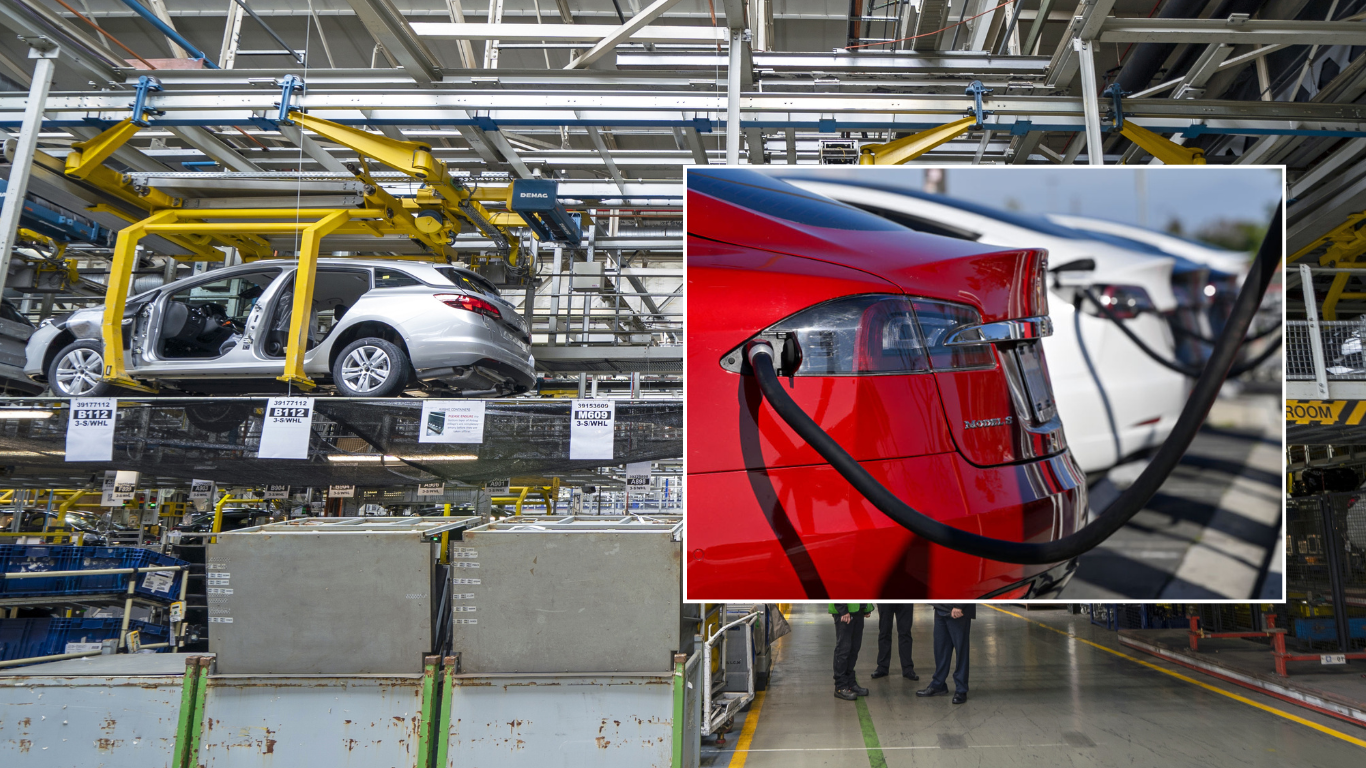
Labour has been urged not to weaken its Zero Emission Vehicle mandate, warning that any changes could put billions of pounds of investment at risk.In a letter sent to 10 Downing Street, electric vehicle charge point operator Believ warned that the current rules give investors the confidence they need to fund the expansion of Britain's public charging network.Believ warned that uncertainty over future EV policies could slow down the rollout of charging infrastructure, particularly in rural areas and communities where installation costs are higher. The company has committed more than £300million to public EV charging projects across the UK, although it warned that the Government needed to provide a stable regulatory environment. TRENDING Stories Videos Your Say The ZEV mandate requires all new petrol and diesel car sales to be electric by 2030, with at least 33 per cent electric by the end of this year.Believ said weakening the policy could increase borrowing costs and make investors think twice about backing future projects. With more than two million electric vehicles now on UK roads, Believ argued that the industry needs certainty to keep pace with growing demand for charging facilities. Research cited in the letter suggests the EV charging industry could generate £15.5billion in direct economic value by 2035 and create up to 334,000 jobs nationwide.The analysis also estimates the wider economic impact could be worth as much as £385billion over the same period. Believ said these figures demonstrate how private investment in EV infrastructure can help drive economic growth while supporting the Government's ambitions for cleaner transport.The company added that many of its current projects have been developed alongside local authorities, including councils in Suffolk and Hampshire, with investments made on the expectation that demand for electric vehicles will continue to grow. Guy Bartlett, chief executive of Believ, said: The ZEV mandate gives industry the long-term confidence needed to invest, build and deliver at scale. Weakening it now would risk slowing infrastructure rollout at the very moment private investment is accelerating.LATEST DEVELOPMENTSCyclists in Cumbrian village awarded huge £600,000 investment to install new cyclewayBYD to debut eight new models at iconic Goodwood Festival of Speed including car that 'SWIMS'Millions of drivers risk huge fines for using everyday item in cars under 'stricter' rulesHe explained that the UK has a real opportunity to strengthen its position as a stable, investable market for EV infrastructure.Alongside maintaining the mandate, complementary measures such as reducing charging costs can help support demand and make the transition easier for drivers, he added. Mr Bartlett said the Government should focus on making public charging more affordable while keeping existing EV targets in place.The company warned that changing the mandate could result in chargers being concentrated in the most profitable locations, while rural and lower-income communities are left behind.Believ said this would undermine efforts to ensure all parts of the country benefit from the transition to electric transport.The operator said its goal is to bring cleaner air to communities across Britain and argued that no region should miss out on access to charging infrastructure.According to the company, weakening the mandate could make it harder to attract the private investment needed to build charging facilities at the scale required. Our Standards: The GB News Editorial Charter
Narrative Intelligence Brief
This article was published by GB News, a source frequently categorized with a lean right bias based in United States of America. Our narrative intelligence engine continuously monitors coverage from this outlet to track framing, bias, and rhetorical patterns. In this specific piece, our systems detected the potential use of the "Appeal to Fear" technique. This narrative approach is often used to shape reader perception by highlighting specific emotional or rhetorical angles. By understanding the editorial perspective of GB News, readers can better contextualize the information presented and compare it across our broader media matrix to find the real narrative.
More from GB News
June 23, 2026
France shuts down nuclear reactor over fears 46C heatwave could cause disaster
June 23, 2026
HMRC reveals record number of families now using tax trick worth up to £2,000 a year
June 23, 2026
Prince William's Earthshot Prize makes major announcements at London Climate Action Week
June 23, 2026
Nigel Farage branded ‘hypocrite’ over Andy Burnham demand
June 23, 2026
Lightning and thunder batter Britain overnight ahead of 'extreme' heat weather warning
Reliability Insights
P
Technique: Appeal to Fear
System analysis detected use of specific narrative techniques in this piece.Analysis Methodology
This narrative analysis was generated using the CoDataLab Global Intelligence Engine. Our proprietary AI scans thousands of cross-border sources to identify sentiment patterns, framing techniques, and potential media bias. While AI provides the data-driven foundation, our objective is to empower readers with additional context beyond the standard headline.The content displayed above is a structured summary designed for rapid information processing. For the full original report, please visit the source outlet.More Coverage
Discussion
"cup"
DHS’ bizarre post about the U.S. men’s World Cup advancement got it all wrong

Jeremy Doku’s Belgium World Cup return date confirmed as presenter apologises for "completely useless" comment
/https%3A%2F%2Fsportsmole-media-prod.s3.gra.io.cloud.ovh.net%2Fuploads%2F2026%2F06%2Faaa-jd-6a3a27296adb3055463402.jpg)
Granddaughter spent $6,000 on 89-year-old grandpa’s dream to watch World Cup match; he was left outside in tears
