Today in News History
On July 3, several notable moments in the history of News stand out. In 1442, Emperor Go-Tsuchimikado of Japan (died 1500) was born. In 1886, Raymond A. Spruance, American admiral and diplomat, United States Ambassador to the Philippines (died 1969) was born. In 1898, Stefanos Stefanopoulos, Greek politician, Prime Minister of Greece (died 1982) was born. In 1965, Shinya Hashimoto, Japanese wrestler (died 2005) was born. In 1970, The Troubles: The "Falls Curfew" begins in Belfast, Northern Ireland. In 1978, Mizuki Noguchi, Japanese runner was born. In 1986, Kisenosato Yutaka, Japanese sumo wrestler was born. In 1988, United States Navy warship USS Vincennes shoots down Iran Air Flight 655 over the Persian Gulf, killing all 290 people aboard. In 2014, Jini Dellaccio, American photographer (born 1917) passed away. In 2020, Saroj Khan, Indian dance choreographer (born 1948) passed away. Together, these milestones provide historical context for today's news news and ongoing narratives.
Japan’s disaster plans fail to keep pace with tourist boom
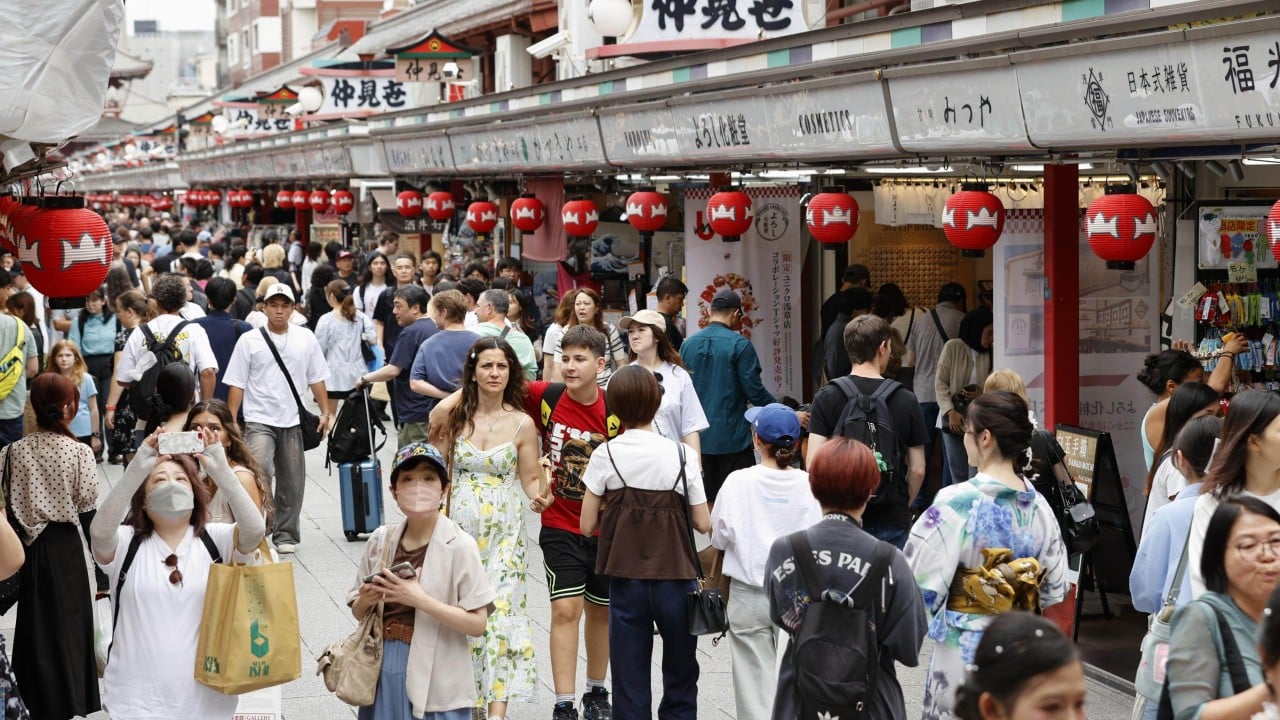
When the ground shook off Iwate prefecture at 9pm on Wednesday, the magnitude 6.0 jolt – the latest in a series of sizeable tremors – barely registered in a country still mopping up after two powerful typhoons and bracing for a fresh bout of torrential rain and landslides. Natural disasters have long been a fact of life in Japan, where schoolchildren rehearse earthquake evacuations the way other nations hold fire drills. Every September 1, in a ritual as much of collective memory as civil...
Narrative Intelligence Brief
This article was published by South China Morning Post, a source frequently categorized with a lean left bias based in Hong Kong. Our narrative intelligence engine continuously monitors coverage from this outlet to track framing, bias, and rhetorical patterns. Our initial algorithmic scan of this specific piece did not flag high-confidence rhetorical techniques, suggesting a generally straightforward reporting style or neutral framing. By understanding the editorial perspective of South China Morning Post, readers can better contextualize the information presented and compare it across our broader media matrix to find the real narrative.
More from South China Morning Post
July 3, 2026
CUHK suspends lawmaker William Wong after drink-driving, hit-and-run arrest
July 3, 2026
Bali, Phuket or Sentosa? Singapore’s grand 20-year resort plan
July 3, 2026
Australia expects to gain extra US$26 billion from exports after Iran war raises prices
July 3, 2026
Suicide risk and the danger of Hong Kong’s children not feeling loved
July 3, 2026
Hong Kong to keep T1 until at least 6pm as Tropical Storm Maysak comes closer
Analysis Methodology
This narrative analysis was generated using the CoDataLab Global Intelligence Engine. Our proprietary AI scans thousands of cross-border sources to identify sentiment patterns, framing techniques, and potential media bias. While AI provides the data-driven foundation, our objective is to empower readers with additional context beyond the standard headline.The content displayed above is a structured summary designed for rapid information processing. For the full original report, please visit the source outlet.More Coverage
Discussion
"cristiano ronaldo"
¡Así festejó Roberto Martínez el penal de Cristiano Ronaldo para el empate de Portugal!

Portugal snatch controversial late World Cup victory over Croatia

Is Cristiano Ronaldo Retiring? Portugal Star Gives Update On Future