
Today in News History
On June 23, several notable moments in the history of News stand out. In 1305, A peace treaty between the Flemish and the French is signed at Athis-sur-Orge. In 1919, Mohamed Boudiaf, Algerian politician, President of Algeria (died 1992) was born. In 1941, The Lithuanian Activist Front declares independence from the Soviet Union and forms the Provisional Government of Lithuania; it lasts only briefly as the Nazis will occupy Lithuania a few weeks later. In 1951, Angelo Falcón, Puerto Rican-American political scientist, activist, and academic, founded the National Institute for Latino Policy (died 2018) was born. In 1953, Armen Sarkissian, Armenian physicist, politician and President of Armenia was born. In 1980, Francesca Schiavone, Italian tennis player was born. In 1996, Andreas Papandreou, Greek economist and politician, 174th Prime Minister of Greece (born 1919) passed away. In 2000, Peter Dubovský, Slovak footballer (born 1972) passed away. In 2012, Frank Chee Willeto, American soldier and politician, 4th Vice President of the Navajo Nation (born 1925) passed away. In 2014, The last of Syria's declared chemical weapons are shipped out for destruction. Together, these milestones provide historical context for today's news news and ongoing narratives.
Israel fears Trump is strengthening Iran's hand in Lebanon
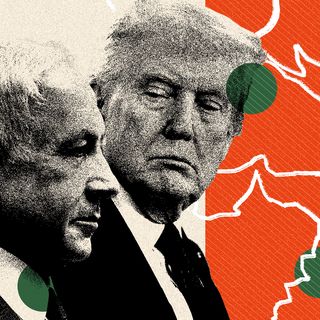
Israel's government is concerned that the U.S. is effectively legitimizing Iran's influence in Lebanon and eroding Israel's freedom of operation there through new understandings reached in Switzerland and the memorandum of understanding signed with Iran last week, two Israeli sources told Axios.Why it matters: Iran has managed to wrap the situation in Lebanon into its negotiations with the U.S. in order to support its proxy, Hezbollah. The Trump administration accepts that it must now contain Israel's actions in Lebanon in order to advance its diplomacy with Iran.Israeli officials worry the new understandings will undermine months of efforts by the U.S. and Israel to weaken Hezbollah and decrease Iran's influence in Lebanon.More immediately, they're also worried about pushback from D.C. each time they want to conduct a strike on Lebanese soil, or pressure from Trump to withdraw from southern Lebanon while the Hezbollah threat still exists.Driving the news: The U.S.-Iran MOU stipulates that both countries and their allies will end all hostilities, including in Lebanon, and ensure the country's territorial integrity and sovereignty — which are undermined by Israel's ongoing occupation in southern Lebanon.There were several rounds of fighting in the days after it was signed, though the latest ceasefire renewal has held since Saturday.Iran threatened to close the Strait of Hormuz and to skip the Switzerland talks if Israel continued its attacks.Once the talks actually began on Sunday, Lebanon was one of the key issues discussed. The parties agreed to create a new deconfliction cell, together with Lebanon and the Pakistani and Qatari mediators, to ensure the ceasefire holds.Between the lines: Israeli sources claim that new U.S.-Iran agreements on Lebanon erode previous understandings reached between the Netanyahu government and the Biden administration in 2024, which were blessed by the incoming Trump administration.Under the Nov. 2024 Lebanon ceasefire agreement, brokered by the Biden administration, Israel retained the right to act against both imminent threats and emerging threats posed by Hezbollah. Under the current conditions, Israel's freedom of action appears to be limited to imminent threats only.And while the previous ceasefire-monitoring mechanism involved Israel, Lebanon, the U.S., and France, this time Israel is not a direct participant, while Iran is.Furthermore, the Biden-era monitoring mechanism was focused on coordination to dismantle Hezbollah's military infrastructure in southern Lebanon, while this one will focus on de-confliction between the Israeli military and Hezbollah.Behind the scenes: An Israeli source said that while the nuclear elements of the U.S.-Iran deal concerned Prime Minister Benjamin Netanyahu, he is currently much more worried about the Lebanon part.One reason is that Israel's actions against Hezbollah have enormous domestic political salience ahead of October's election.Bibi is hysterical about it, the source said, referring to Netanyahu by his nickname.In recent days, Netanyahu asked his close confidant Ron Dermer, who left government several months ago, to urgently use his relationships within Trump's team to try to influence the U.S.-Iran talks on Lebanon, according to the same Israeli source.The source claimed Dermer's involvement helped lead to a Truth Social post in which Trump threatened to strike Iran if it didn't restrain Hezbollah.A U.S. official confirmed Dermer's participation and said U.S. negotiators in Switzerland spoke to him several times on Sunday to brief him on the Iran talks and get his input. We were transparent with them, the official said.The other side: Lebanese President Joseph Aoun is willing to accept the new mechanism as long as it is led by the U.S., according to a Lebanese official.Vice President Vance and Trump's envoy Jared Kushner briefed Aoun on the deconfliction mechanism in a call on Monday morning.What they're saying: A senior U.S. official contended that Iran has been deeply involved in Lebanon for decades and claimed Israel doesn't have to be concerned about the new mechanism for Lebanon. Israel is not out of the mechanism, because the U.S. is in the mechanism. We are so close and coordinated that a direct channel between the U.S. and Iran over Lebanon will only benefit Israel, the U.S. official said.Friction point: The deconfliction mechanism in Lebanon envisioned by the Trump administration doesn't include Israel and in my view is a major misstep, Sen. Lindsey Graham (R-S.C.), one of Netanyahu's closest allies in Congress, told Axios.On Monday, Netanyahu issued an unusual joint statement with his Defense Minister Israel Katz and Israel Defense Forces chief of staff Gen. Eyal Zamir stressing the IDF will continue to act decisively to neutralize threats to our soldiers and citizens, destroy terrorist infrastructure, and maintain the security zone in southern Lebanon.Notably, he did not claim Israel had full freedom of operation in Lebanon.Asked about Netanyahu's comments, Trump said: I'm a problem solver, I get problems solved real fast — including with Bibi.What to watch: Israeli and Lebanese diplomats will hold another round of direct talks on Tuesday at the State Department, mediated by Secretary of State Marco Rubio and his team.The parties are trying to move forward with a plan that includes a gradual Israeli withdrawal from parts in southern Lebanon in return for deployment of the Lebanese army in those areas to prevent Hezbollah from reconstituting.Graham claimed the new U.S.-Iran understandings regarding Lebanon undermine what Rubio has been trying to achieve.To expect anyone to reach an agreement between Israel and Lebanon at the same time that Iran is demanding Lebanon be included in its own negotiations with the U.S. is highly unrealistic, he said.The senior U.S. official said Rubio and his team were in the loop on the new deconfliction mechanism, and argued it will help the efforts to mediate between Israel and Lebanon by preventing new escalation and getting Iran to restrain Hezbollah.It creates bigger opportunity for the Israel-Lebanon talks to succeed. If Israel and Lebanon work together and get a deal they will have a stronger hand to get Hezbollah to disarm, the U.S. official said.Reality check: The prospect of an Israel-Lebanon deal that actually leads to the disarming of Hezbollah currently appears a long way off.
Narrative Intelligence Brief
This article was published by Axios, a source frequently categorized with a center bias based in United States of America. Our narrative intelligence engine continuously monitors coverage from this outlet to track framing, bias, and rhetorical patterns. Our initial algorithmic scan of this specific piece did not flag high-confidence rhetorical techniques, suggesting a generally straightforward reporting style or neutral framing. By understanding the editorial perspective of Axios, readers can better contextualize the information presented and compare it across our broader media matrix to find the real narrative.
More from Axios
June 23, 2026
People Inc. CEO accuses Google of abusing its market power with web crawling
June 23, 2026
Haberman and Swan's "Regime Change": How Trump became "untethered" in second term
June 23, 2026
Ten years after Brexit, the U.K. marks a lost decade
June 23, 2026
Google takes the hit in AI's talent war
June 23, 2026
The most costly primaries you've never heard of are raging on D.C.'s doorstep
Analysis Methodology
This narrative analysis was generated using the CoDataLab Global Intelligence Engine. Our proprietary AI scans thousands of cross-border sources to identify sentiment patterns, framing techniques, and potential media bias. While AI provides the data-driven foundation, our objective is to empower readers with additional context beyond the standard headline.The content displayed above is a structured summary designed for rapid information processing. For the full original report, please visit the source outlet.More Coverage
Discussion


