
Today in News History
On July 12, several notable moments in the history of News stand out. In 981, Xue Juzheng, Chinese scholar-official and historian passed away. In 1335, Pope Benedict XII issues the papal bull Fulgens sicut stella matutina to reform the Cistercian Order. In 1394, Ashikaga Yoshinori, Japanese shōgun (died 1441) was born. In 1879, Han Yong-un, Korean poet (died 1944) was born. In 1900, Marcel Paul, French communist politician and Holocaust survivor (died 1982) was born. In 1914, Mohammad Moin, Iranian linguist and lexicographer (died 1971) was born. In 1916, Lyudmila Pavlichenko, Ukrainian-Russian soldier and sniper (died 1974) was born. In 1917, Satyendra Narayan Sinha, Indian statesman (died 2006) was born. In 1924, Michel d'Ornano, French politician (died 1991) was born. In 1961, ČSA Flight 511 crashes at Casablanca-Anfa Airport in Morocco, killing 72. Together, these milestones provide historical context for today's news news and ongoing narratives.
Is the Rules-Based International Order Dead?
The world is undergoing what might be the greatest geopolitical transformation since the end of World War II. The rule-based liberal international order that developed in the post-war era based on free trade, peaceful conflict resolution, collective security, and multilateral cooperation governed by international law is under increasing attack. While threats and challenges have existed [] The post Is the Rules-Based International Order Dead? appeared first on Modern Diplomacy.
Narrative Intelligence Brief
This article was published by Modern Diplomacy, a source frequently categorized with a right bias based in Bulgaria. Our narrative intelligence engine continuously monitors coverage from this outlet to track framing, bias, and rhetorical patterns. Our initial algorithmic scan of this specific piece did not flag high-confidence rhetorical techniques, suggesting a generally straightforward reporting style or neutral framing. By understanding the editorial perspective of Modern Diplomacy, readers can better contextualize the information presented and compare it across our broader media matrix to find the real narrative.
More from Modern Diplomacy
July 12, 2026
Starved of Silicon: China Built Its Own
July 12, 2026
Is a Turkey–Israel War Actually Coming?
July 12, 2026
Morocco’s partnership with Beijing shifts economic power from Europe to China
July 12, 2026
Telephone Justice at the World Cup: America’s Red Card to Republican Morality
July 12, 2026
Lavrov Holds Talks with AUC Chair Mahmoud Youssouf
Analysis Methodology
This narrative analysis was generated using the CoDataLab Global Intelligence Engine. Our proprietary AI scans thousands of cross-border sources to identify sentiment patterns, framing techniques, and potential media bias. While AI provides the data-driven foundation, our objective is to empower readers with additional context beyond the standard headline.The content displayed above is a structured summary designed for rapid information processing. For the full original report, please visit the source outlet.More Coverage
Discussion
"lindsey graham"
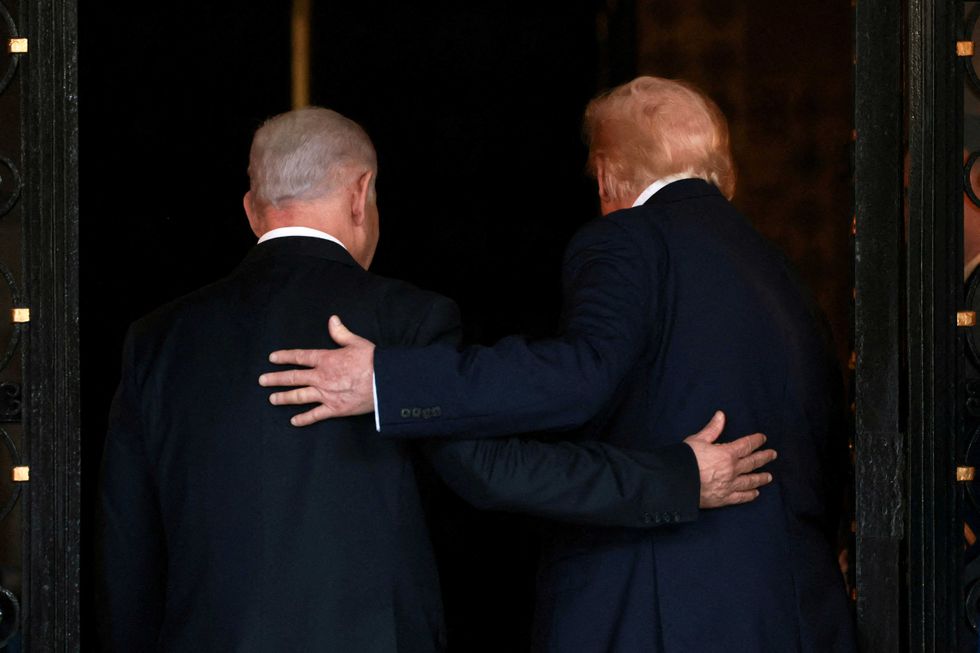
Outrage as Trump and Netanyahu accused of using Lindsey Graham’s death to promote agendas
'Meet the Press’ Host Addresses Lindsey Graham's Death After Interview Plan

"No Conspiracy": Former Israeli Consul Dismisses Conspiracy Theories about Lindsey Graham's Death

How other outlets are covering this story
Compare narratives across 6 related reports from 6 sources. Real Narrative News aggregates the coverage spectrum so you can see who emphasises what — bias tags reflect the outlet, not the story.
Coverage bias distribution
6 sources
Left 17%
Center 17%
Right 50%
SundayTimes
· Jul 1, 2026
The international legal order is broken: two key shifts needed to fix it
As the post-WWII international legal order fails to stop wars, genocides and economic crises, the path forward isn't abandoning international law but rebuilding it
The korea Herald News
· Jun 22, 2026
[Vitit Muntarbhorn] New cogs in international law
Recently, a conference on international law was held by the Ministry of Foreign Affairs in Bangkok to provide space to a young generation of lawyers. It was a timely reminder that even though the international system is fragile, Thailand should engage actively with what remains of that system. There are also new cogs in the wheel of that spectrum. International law is basically the set of rules to guide the conduct between states and between states and other international actors. Traditionally,
The Postil Magazine
· Jul 1, 2026
What Happens to International Institutions When Major Powers Stop Cooperating?
Introduction: The Unraveling of a Post-War Consensus The question of what happens to international institutions when major powers cease cooperation
EUobserver
· Jul 10, 2026
The EU can ban trade with illegal Israeli settlements. Here’s how
Drawing on months of research and consultations with lawyers, trade experts and former and current EU officials, we propose a regulation under the EU's Common Commercial Policy. Such regulation should aim at ensuring that EU trade complies with international law and does not help sustain the illegal settlements economically.
The Register
· Jul 9, 2026
Scientist models way to make sure no one's violating the ban on nuclear weapons in space
There is a long-standing international treaty in place but we can't be the only ones side-eyeing world's current crop of politicos
Western Standard
· Jun 21, 2026
BARBER: The biggest lie in global politics is the ‘Rules-Based International Order’
The legal system in developed countries has, in short, two key aspects that make it function: a structure for adjudicating legal disputes and a robust enforcement mechanism. If a person is suspected of violating a law, there is a detailed process for summoning that person to court. If they refuse to comply with a court order, police are dispatched to enforce it. On the other hand, if courts decline to prosecute violations or police choose not to execute court orders, the law effectively ceases to exist. Politicians and civic organizations may condemn violations, demand action, and hold meetings, but such rhetoric becomes meaningless when the institutions are unwilling to act. We have seen this dynamic play out in some US cities in recent years. Rules are followed only when they are enforced — and enforcement may require the credible threat or use of force.
Topics:
Related coverage for " Is the Rules-Based International Order Dead?": SundayTimes — The international legal order is broken: two key shifts needed to fix it. The korea Herald News — [Vitit Muntarbhorn] New cogs in international law. The Postil Magazine — What Happens to International Institutions When Major Powers Stop Cooperating?. EUobserver — The EU can ban trade with illegal Israeli settlements. Here’s how. The Register — Scientist models way to make sure no one's violating the ban on nuclear weapons in space. Western Standard — BARBER: The biggest lie in global politics is the ‘Rules-Based International Order’