
Today in News History
On July 12, several notable moments in the history of News stand out. In 1916, Alexander Prokhorov, Australian-Russian physicist and academic, Nobel Prize laureate (died 2002) was born. In 1927, Theodore Maiman, American-Canadian physicist and engineer (died 2007) was born. In 1950, Pervez Hoodbhoy, Pakistani physicist and academic was born. In 1962, Project Apollo: At a press conference, NASA announces lunar orbit rendezvous as the means to land astronauts on the Moon, and return them to Earth. In 1968, Michael Geist, Canadian journalist and academic was born. In 1987, Yaakov Yitzchok Ruderman, American rabbi and scholar (born 1901) passed away. In 1995, Yugoslav Wars: Srebrenica massacre begins; lasts until 22 July. In 2006, Mumbai train bombings: 209 people are killed in a series of bomb attacks in Mumbai, India. In 2014, John Seigenthaler, American journalist and academic (born 1927) passed away. In 2021, Richard Branson becomes the first civilian to be launched into space via his Virgin Galactic spacecraft. Together, these milestones provide historical context for today's news news and ongoing narratives.
Scientist models way to make sure no one's violating the ban on nuclear weapons in space

There is a long-standing international treaty in place but we can't be the only ones side-eyeing world's current crop of politicos
Narrative Intelligence Brief
This article was published by The Register, a source frequently categorized with a Unknown bias based in United Kingdom. Our narrative intelligence engine continuously monitors coverage from this outlet to track framing, bias, and rhetorical patterns. Our initial algorithmic scan of this specific piece did not flag high-confidence rhetorical techniques, suggesting a generally straightforward reporting style or neutral framing. By understanding the editorial perspective of The Register, readers can better contextualize the information presented and compare it across our broader media matrix to find the real narrative.
More from The Register
July 12, 2026
It's an AI web, and we're just rats in the walls
July 11, 2026
AI customers are coming around to the idea that small is beautiful
July 11, 2026
Irish datacenters now guzzle 23% of the country's electricity
July 10, 2026
Slothful summer app lets you scroll simply by tilting your head
July 10, 2026
Destructive Windows backdoor stuffs multiple wipers and ransomware code into a single package
Analysis Methodology
This narrative analysis was generated using the CoDataLab Global Intelligence Engine. Our proprietary AI scans thousands of cross-border sources to identify sentiment patterns, framing techniques, and potential media bias. While AI provides the data-driven foundation, our objective is to empower readers with additional context beyond the standard headline.The content displayed above is a structured summary designed for rapid information processing. For the full original report, please visit the source outlet.More Coverage
Discussion
"cup semifinal"
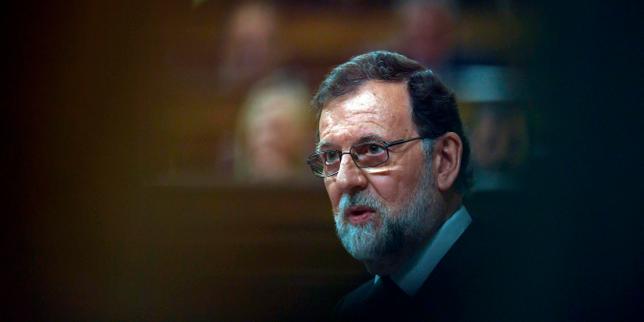
Former Spanish PM Mariano Rajoy makes racist remarks about France's football team
[Photo] JUST IN: 🇦🇷 Argentina officially advances to the FIFA World Cup semifinal after defeat [...]

Argentina's hero: "We are just two steps away from the goal"

How other outlets are covering this story
Compare narratives across 6 related reports from 6 sources. Real Narrative News aggregates the coverage spectrum so you can see who emphasises what — bias tags reflect the outlet, not the story.
Coverage bias distribution
6 sources
Left 17%
Center 33%
Right 33%
Scientific American
· Jul 8, 2026
Detecting hidden nuclear weapons in space may be possible using cosmic rays
For almost 60 years, a global ban on nuclear weapons in space has held up. But the growing number of satellites and increasing geopolitical tension has scientists worried the moratorium could fail
The Hill
· Jul 2, 2026
US moves to eliminate longtime radiation safety principle for nuclear power
The federal government is proposing to overhaul radiation safety regulations for nuclear power, including by eliminating a long-term principle for nuclear safety. The Nuclear Regulatory Commission (NRC) this week proposed to get rid of the requirement for nuclear plants to ensure that radiation exposure is “as low as is reasonably achievable.” Proponents of the change say just...
Modern Diplomacy
· Jul 3, 2026
Influence Without Arms: The New Logic of Nuclear Deterrence – Book Review
Influence Without Arms: The New Logic of Nuclear Deterrence tackles a pressing question in international security: why do states that have the technological capacity to build nuclear weapons choose not to do so? Mathew Fuhrmann introduces the concept of “nuclear latency.” It is the ability to produce fissile material, such as enriched uranium or plutonium, [] The post Influence Without Arms: The New Logic of Nuclear Deterrence – Book Review appeared first on Modern Diplomacy.
Off The Press
· Jul 10, 2026
Some see Ukraine war’s drone escalation as prelude to nuclear war
The use of nuclear weapons is becoming increasingly likely as the Russian and Ukrainian militaries continue to blindly scramble up the escalation ladder through deep strikes into Russia, with alleged involvement from a NATO member country, military analysts warned on Monday. Russian Ambassador to the UN Vassily Nebenzia has accused Latvia of planning to launch []...Click to read more
Gizmodo
· Jul 8, 2026
A Hidden Nuclear Weapon Could Already Be Orbiting Earth. This MIT Physicist Has a Plan to Find It
The Outer Space Treaty bans nuclear weapons in orbit—but we currently have no way to verify that satellites aren't carrying them.
The Eastern Herald
· Jul 8, 2026
Kremlin Warns Baltic States That Hosting Nuclear Weapons Would Increase Risks, Not Security
MOSCOW, July 8: The Kremlin on Wednesday warned that any decision by the Baltic states to hosting nuclear weapons would increase security risks in the region rather than strengthen them, saying Russia would respond with countermeasures to protect its national interests. The warning came after Lithuanian media reported that the country’s parliament is considering lifting the constitutional ban on hosting nuclear weapons. The proposal follows Finland’s decision to remove its own legislative restrictions on the import and storage of nuclear weapons, a move that has drawn strong criticism from Moscow. According to Lithuanian media reports. Speaking to reporters, Kremlin spokesman
Topics:
Related coverage for "Scientist models way to make sure no one's violating the ban on nuclear weapons in space": Scientific American — Detecting hidden nuclear weapons in space may be possible using cosmic rays. The Hill — US moves to eliminate longtime radiation safety principle for nuclear power. Modern Diplomacy — Influence Without Arms: The New Logic of Nuclear Deterrence – Book Review. Off The Press — Some see Ukraine war’s drone escalation as prelude to nuclear war. Gizmodo — A Hidden Nuclear Weapon Could Already Be Orbiting Earth. This MIT Physicist Has a Plan to Find It. The Eastern Herald — Kremlin Warns Baltic States That Hosting Nuclear Weapons Would Increase Risks, Not Security