
How to ask for and take time off without getting penalized
Narrative Analysis: Plain Folks
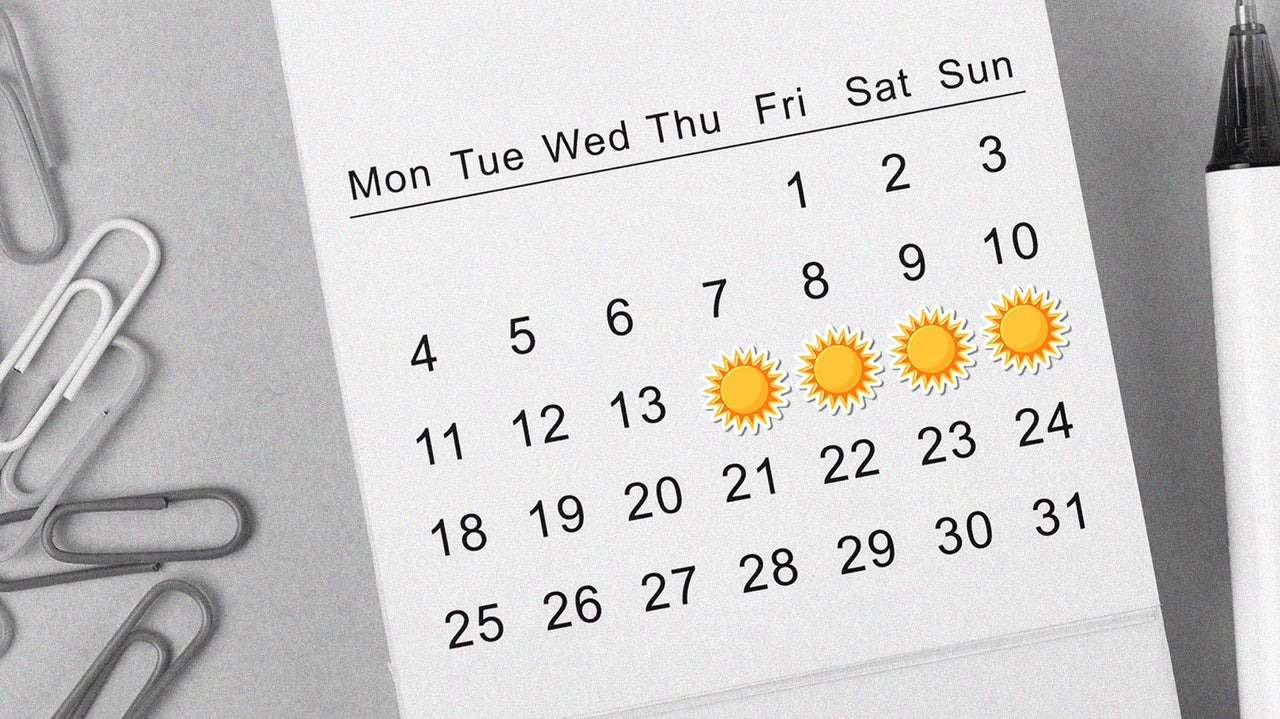
Summer is here. Even though most workplaces are not on an academic calendar, summer is still a time that many people choose to take vacations. Some of that decision is pragmatic—families with school-age children can bring their kids with them on a trip over the summer more easily than during the school year. Some of it is just that summer feels like a time when vacations ought to happen. If you’re worried about taking time off, you’re not alone. People often do not use all of their allocated vacation time, and companies that enable employees to take as much time off as they would like find that their employees don’t take many vacations. Breaks from work are important. Vacations are good for your mental health. Getting time away from work to reconnect with important people in your life and to change up your routine is important. It helps to prevent burnout, strengthens your relationships, and can also make your work more productive. That said, there are a few things to consider as you think about how to request time off and to take it without causing disruptions at work. 1. Pay attention to local norms If you worry about asking for time off, start by paying attention to what other people are doing. Get a feel for the amount of time that people typically take off and the size of those chunks. Are people taking a week at a time? Are there folks who take longer vacations? You want to know what is typical so that you know whether you’re asking for something that your supervisor might think is out of the ordinary. If you’d like to take a two-week vacation and nobody ever seems to do that, then you may want to prepare a little extra justification with your request. If that is a common thing for people in your workplace to do, then you don’t need so much framing around the request. But when you do ask for time off, do it with confidence. You are not asking your employer for a favor. You are doing something that is part of your benefits package, and your workplace should respect that. If they don’t respect your vacation time, then you should think carefully about whether this a place you want to work in the long run. 2. Let your team know in advance Being away from work influences the work of the people around you. There are others who rely on the work you do. Team members may need to take on extra responsibilities in your absence. To minimize the impact of your absence, communicate clearly about your planned vacation starting a week or two in advance. If there are key responsibilities that need to be shifted to someone else while you’re gone, then make sure you talk with those people and ensure that they will be around and will have the bandwidth to handle your work. (If not, chat with your supervisor to get help figuring out who can take on those tasks.) If the work you do requires some additional expertise, make sure you bring your replacement up to speed on your work so that things are done well while you’re gone. You may need to plan some extra time to train your substitute in the weeks before you head out. That preparation work will allow you to take your vacation without worrying that balls will get dropped while you’re away. After all, when you’re on vacation, you’d like to be on vacation. Of course, if you are in a supervisory role, you want to leave clear instructions about when you should be contacted while you’re on vacation. In my academic leadership roles, I did not want to check emails regularly on vacation to avoid thinking about work. But, I did have clear instructions about the kinds of situations my team should text me about. The advantage of having a system like that is that you can ignore your email while you’re away, because you know that anything very serious will be brought to your attention. 3. Leave projects in good shape Even if there aren’t people filling in for you directly, your contributions are likely to be relevant to ongoing projects at work. That means you’d like to ensure that your colleagues can continue to make progress while you’re away. Try to minimize the aspects of your work that are partially finished. In general, it is better to complete a few tasks and leave others for your return than to start a bunch of things and leave them all with additional work that needs to be done. In the days before you leave, document any aspects of projects for which there are things you know that other people might not. Document the context of ongoing conversations or concerns that particular clients may have raised. Put yourself in your colleagues’ shoes and ask yourself what you’d want to know to do the work they will likely do during your time off. Let that guide the notes you leave. Doing these things will minimize the number of things waiting in your inbox when you return from your vacation. Plus, your colleagues will appreciate those efforts. Enjoy your vacation!
Narrative Intelligence Brief
This article was published by Fast Company, a source frequently categorized with a lean left bias based in United States of America. Our narrative intelligence engine continuously monitors coverage from this outlet to track framing, bias, and rhetorical patterns. In this specific piece, our systems detected the potential use of the "Plain Folks" technique. This narrative approach is often used to shape reader perception by highlighting specific emotional or rhetorical angles. By understanding the editorial perspective of Fast Company, readers can better contextualize the information presented and compare it across our broader media matrix to find the real narrative.
Explore related topics: Stay informed with Real Narrative News as we track unfolding stories. Dive deeper into our coverage of pivotal topics including york knicks, nba finals, nba title, win nba, knicks win, nba championship, donald trump, fifa cup, coupe monde, and jalen brunson. Our intelligence streams continuously monitor these keywords to bring you unbiased analysis and real-time updates on topics like "How to ask for and take time off without getting penalized".
More from Fast Company
June 14, 2026
How to ask for and take time off without getting penalized
June 14, 2026
How to make the most of a hallway chat
June 14, 2026
Your global strategy is broken if it starts with English
June 13, 2026
Meet the designer behind NYC’s charming World Cup campaign
June 13, 2026
This is the surprising thing that creates the happiest couples
Reliability Insights
P
Technique: Plain Folks
System analysis detected use of specific narrative techniques in this piece.Analysis Methodology
This narrative analysis was generated using the CoDataLab Global Intelligence Engine. Our proprietary AI scans thousands of cross-border sources to identify sentiment patterns, framing techniques, and potential media bias. While AI provides the data-driven foundation, our objective is to empower readers with additional context beyond the standard headline.The content displayed above is a structured summary designed for rapid information processing. For the full original report, please visit the source outlet.More Coverage
Discussion