Today in News History
On June 29, several notable moments in the history of News stand out. In 1170, A major earthquake hits Syria, badly damaging towns such as Hama and Shaizar and structures such as the Krak des Chevaliers and the cathedral of St. Peter in Antioch. In 1659, At the Battle of Konotop the Ukrainian armies of Ivan Vyhovsky defeat the Russians led by Prince Trubetskoy. In 1864, At least 99 people, mostly German and Polish immigrants, are killed in Canada's worst railway disaster after a train fails to stop for an open drawbridge and plunges into the Rivière Richelieu near St-Hilaire, Quebec. In 1915, The North Saskatchewan River flood of 1915 is the worst flood in Edmonton history. In 1924, Philip H. Hoff, American politician (died 2018) was born. In 1950, Korean War: U.S. President Harry S. Truman authorizes a sea blockade of Korea. In 1972, A Convair CV-580 and De Havilland Canada DHC-6 Twin Otter collide above Lake Winnebago near Appleton, Wisconsin, killing 13. In 1994, Kurt Eichhorn, German conductor and educator (born 1908) passed away. In 2002, Naval clashes between South Korea and North Korea lead to the death of six South Korean sailors and sinking of a North Korean vessel. In 2021, Donald Rumsfeld, American captain and politician, 13th United States Secretary of Defense (born 1932) passed away. Together, these milestones provide historical context for today's news news and ongoing narratives.
Hormuz Traffic Declines as Ship Attacks Spark New Concerns
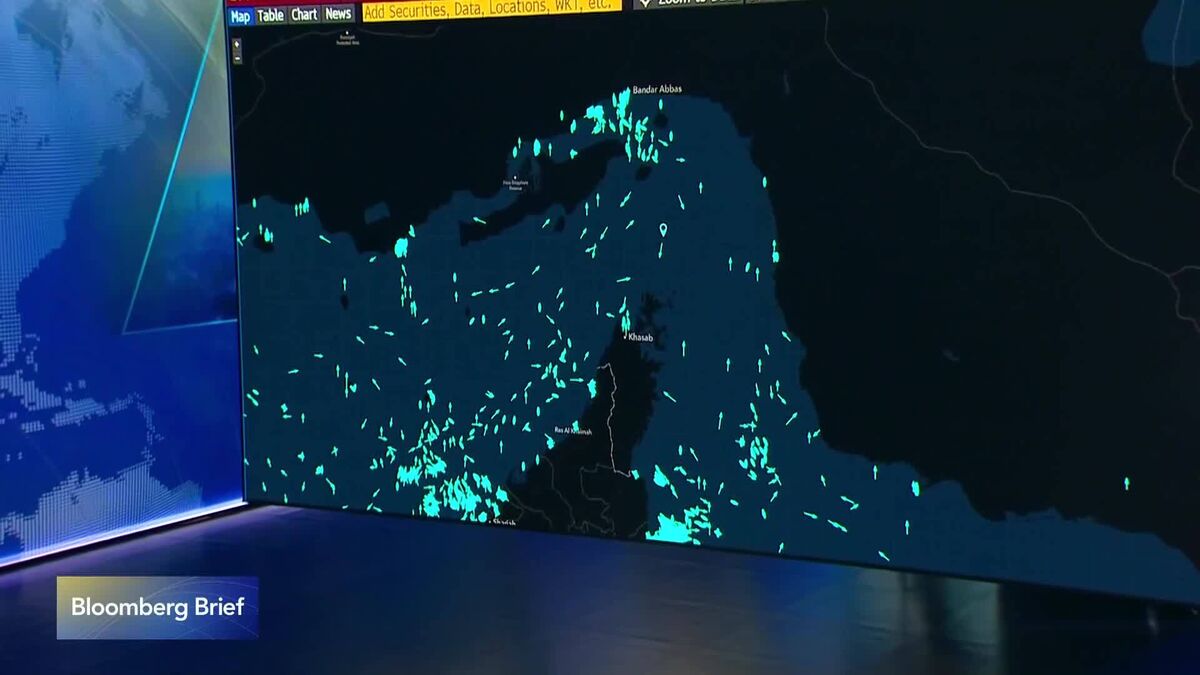
Commercial traffic through the Strait of Hormuz this weekend persisted at a reduced level as a handful of vessels made open transits. Traffic was still higher than for most of the US-Iran war, but attacks on two ships raised fresh concerns about the ability and willingness of shipowners to traverse the waterway. Alaric Nightingale reports on Bloomberg Television. (Source: Bloomberg)
Narrative Intelligence Brief
This article was published by Bloomberg, a source frequently categorized with a lean left bias based in United States of America. Our narrative intelligence engine continuously monitors coverage from this outlet to track framing, bias, and rhetorical patterns. Our initial algorithmic scan of this specific piece did not flag high-confidence rhetorical techniques, suggesting a generally straightforward reporting style or neutral framing. By understanding the editorial perspective of Bloomberg, readers can better contextualize the information presented and compare it across our broader media matrix to find the real narrative.
More from Bloomberg
June 29, 2026
Microsoft’s $570 Billion Rout Sets Up Its Worst Month Since 2000
June 29, 2026
Hormuz Recovery Hits a Bumpy Patch After Fresh Attacks on Ships
June 29, 2026
Mercuria Signs First Uranium Financing Deal With Malawi Miner
June 29, 2026
Tech Stocks Rebound; US, Iran Halt Attacks; South Korea's Big AI Push | Bloomberg Brief 6/29/2026
June 29, 2026
Nigerian Government Seeks Advisers for Planned Eurobond Offering
Analysis Methodology
This narrative analysis was generated using the CoDataLab Global Intelligence Engine. Our proprietary AI scans thousands of cross-border sources to identify sentiment patterns, framing techniques, and potential media bias. While AI provides the data-driven foundation, our objective is to empower readers with additional context beyond the standard headline.The content displayed above is a structured summary designed for rapid information processing. For the full original report, please visit the source outlet.More Coverage
Discussion