Today in News History
On June 29, several notable moments in the history of News stand out. In 1764, Ralph Allen, English businessman and philanthropist (born 1693) passed away. In 1864, At least 99 people, mostly German and Polish immigrants, are killed in Canada's worst railway disaster after a train fails to stop for an open drawbridge and plunges into the Rivière Richelieu near St-Hilaire, Quebec. In 1897, Fulgence Charpentier, Canadian journalist and publisher (died 2001) was born. In 1915, The North Saskatchewan River flood of 1915 is the worst flood in Edmonton history. In 1995, The Sampoong Department Store collapses in the Seocho District of Seoul, South Korea, killing 502 and injuring 937. In 2000, Jane Birdwood, Baroness Birdwood, Canadian-English publisher and politician (born 1913) passed away. In 2002, Naval clashes between South Korea and North Korea lead to the death of six South Korean sailors and sinking of a North Korean vessel. In 2007, Apple Inc. releases its first mobile phone, the iPhone. In 2007, Joel Siegel, American journalist and critic (born 1943) passed away. In 2012, A derecho sweeps across the eastern United States, leaving at least 22 people dead and millions without power. Together, these milestones provide historical context for today's news news and ongoing narratives.
Microsoft’s $570 Billion Rout Sets Up Its Worst Month Since 2000
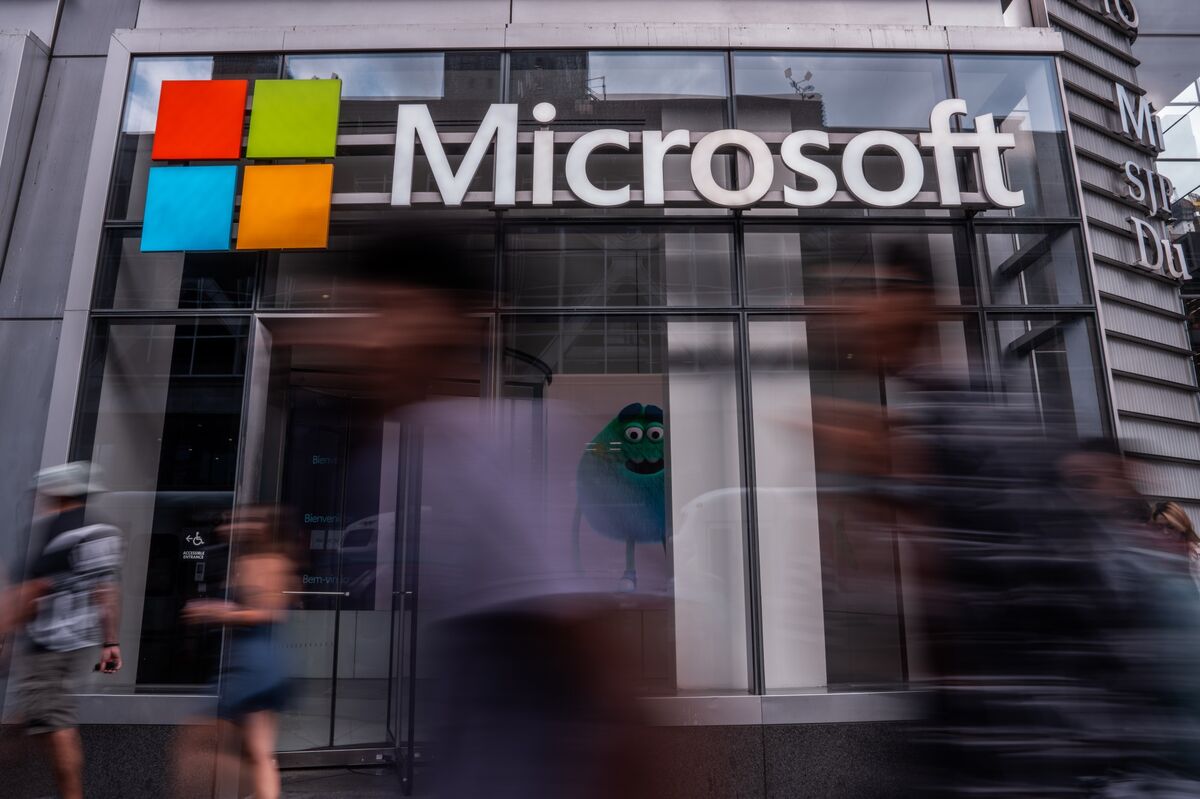
Microsoft Corp. shares are heading for their worst month since the dot-com era as investors continue to fret about how the software giant will fare in a world marked by artificial intelligence.
Narrative Intelligence Brief
This article was published by Bloomberg, a source frequently categorized with a lean left bias based in United States of America. Our narrative intelligence engine continuously monitors coverage from this outlet to track framing, bias, and rhetorical patterns. Our initial algorithmic scan of this specific piece did not flag high-confidence rhetorical techniques, suggesting a generally straightforward reporting style or neutral framing. By understanding the editorial perspective of Bloomberg, readers can better contextualize the information presented and compare it across our broader media matrix to find the real narrative.
More from Bloomberg
June 29, 2026
Europe’s Boldest Tech Startups Are Reaching for US SPACs Again
June 29, 2026
Poor Pod Counts Signal Sharp Drop in Ivory Coast Cocoa Crop
June 29, 2026
Investors Snub a 1,400 Basis-Point Outperformance in Small Caps
June 29, 2026
US Futures Up as Dip Buyers Lift Tech, US-Iran Hostilities Fade
June 29, 2026
SpaceX Pushes US Share Sales to Record $251 Billion at Midyear
Analysis Methodology
This narrative analysis was generated using the CoDataLab Global Intelligence Engine. Our proprietary AI scans thousands of cross-border sources to identify sentiment patterns, framing techniques, and potential media bias. While AI provides the data-driven foundation, our objective is to empower readers with additional context beyond the standard headline.The content displayed above is a structured summary designed for rapid information processing. For the full original report, please visit the source outlet.More Coverage
Discussion