Today in News History
On June 28, several notable moments in the history of News stand out. In 202, Yuan Shao, Chinese warlord passed away. In 1940, Muhammad Yunus, Bangladeshi economist and academic, Nobel Prize laureate was born. In 1947, Stanislav Kostka Neumann, Czech writer, poet and journalist (born 1875) passed away. In 1956, Amira Hass, Israeli journalist and author was born. In 1967, Zhong Huandi, Chinese runner was born. In 1970, Mike White, American actor, director, producer, and screenwriter was born. In 1971, Elon Musk, South African-born American entrepreneur was born. In 1972, Ngô Bảo Châu, Vietnamese-French mathematician and academic was born. In 1991, Kang Min-hyuk, South Korean singer, drummer, and actor was born. In 2004, Iraq War: Sovereign power is handed to the interim government of Iraq by the Coalition Provisional Authority, ending the U.S.-led rule of that nation. Together, these milestones provide historical context for today's news news and ongoing narratives.
Hong Kong’s AI push needs a broader vision and more realistic goals

Hong Kong cannot be faulted for not working hard enough to catch up in the global artificial intelligence (AI) race. Government funding is flowing generously towards projects focused on AI adoption. In recent years, the government has pumped billions into building the necessary infrastructure, including HK2.84 billion (US364 million) for a semiconductor centre, HK3 billion for an AI subsidy scheme and another HK1 billion allocated for an advanced AI RD institute. In March, the government...
Narrative Intelligence Brief
This article was published by South China Morning Post, a source frequently categorized with a lean left bias based in Hong Kong. Our narrative intelligence engine continuously monitors coverage from this outlet to track framing, bias, and rhetorical patterns. Our initial algorithmic scan of this specific piece did not flag high-confidence rhetorical techniques, suggesting a generally straightforward reporting style or neutral framing. By understanding the editorial perspective of South China Morning Post, readers can better contextualize the information presented and compare it across our broader media matrix to find the real narrative.
More from South China Morning Post
June 28, 2026
Iranian drones target Bahrain after US offensive, straining ceasefire
June 28, 2026
What Beijing hopes to achieve with new ethnic unity law that targets people overseas
June 28, 2026
‘Too late’: why some Malukans say a Dutch apology isn’t enough
June 28, 2026
Devoted police dog moves millions in China by waiting for injured handler, refusing food
June 28, 2026
Financial products or illicit gambling? Can Hong Kong regulate prediction markets?
Analysis Methodology
This narrative analysis was generated using the CoDataLab Global Intelligence Engine. Our proprietary AI scans thousands of cross-border sources to identify sentiment patterns, framing techniques, and potential media bias. While AI provides the data-driven foundation, our objective is to empower readers with additional context beyond the standard headline.The content displayed above is a structured summary designed for rapid information processing. For the full original report, please visit the source outlet.More Coverage
Discussion
"cup"
This nuclear message is built to stomp MAGA — and it isn't corruption

Ghana showed what they are capable of — just far too late against Croatia to avoid a damaging defeat
/https%3A%2F%2Fsportsmole-media-prod.s3.gra.io.cloud.ovh.net%2Fuploads%2F2026%2F06%2Fimago1078920974-1-6a406682ac983771606326.jpg)
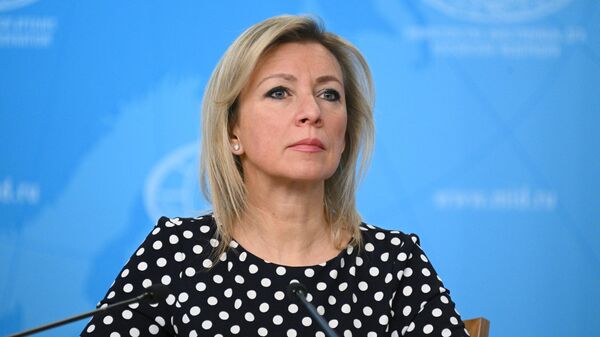
Russia Will Not Leave Russia Flag Ban at Romania Competition Unanswered – MFA Spox