Today in News History
On June 28, several notable moments in the history of News stand out. In 202, Yuan Shao, Chinese warlord passed away. In 1194, Xiao Zong, Chinese emperor (born 1127) passed away. In 1936, The Japanese puppet state of Mengjiang is formed in northern China. In 1950, Korean War: The Korean People's Army kills almost a thousand doctors, nurses, inpatient civilians and wounded soldiers in the Seoul National University Hospital massacre. In 1950, Korean War: Suspected communist sympathizers (between 60,000 and 200,000) are executed in the Bodo League massacre. In 1956, In Poznań, workers from HCP factory go to the streets, sparking one of the first major protests against communist government both in Poland and Europe. In 1964, Malcolm X forms the Organization of Afro-American Unity. In 1967, Zhong Huandi, Chinese runner was born. In 1969, Stonewall riots begin in New York City, marking the start of the Gay Rights Movement. In 1976, The Angolan court sentences US and UK mercenaries to death sentences and prison terms in the Luanda Trial. Together, these milestones provide historical context for today's news news and ongoing narratives.
What Beijing hopes to achieve with new ethnic unity law that targets people overseas
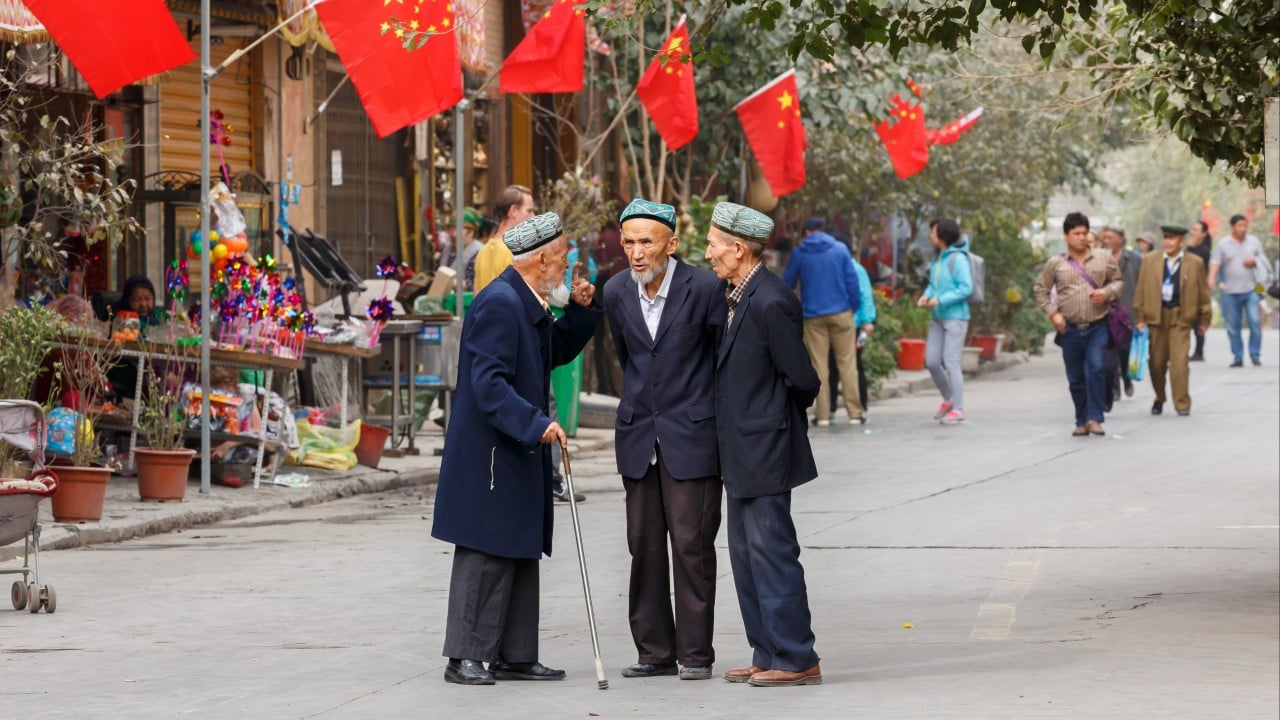
A new Chinese law that pledges to hold overseas individuals and organisations responsible for undermining ethnic unity is mainly intended to have a “deterrent effect”, according to analysts. The Law on Promoting Ethnic Unity and Progress was passed in March and is set to take effect next month, with Article 63 at the heart of the controversy about targeting people outside China. The law provides a new framework which analysts said was designed to counter Western ideological influence and provide...
Narrative Intelligence Brief
This article was published by South China Morning Post, a source frequently categorized with a lean left bias based in Hong Kong. Our narrative intelligence engine continuously monitors coverage from this outlet to track framing, bias, and rhetorical patterns. Our initial algorithmic scan of this specific piece did not flag high-confidence rhetorical techniques, suggesting a generally straightforward reporting style or neutral framing. By understanding the editorial perspective of South China Morning Post, readers can better contextualize the information presented and compare it across our broader media matrix to find the real narrative.
More from South China Morning Post
June 28, 2026
Liberal Islam in Indonesia is sliding into irrelevance
June 28, 2026
Steeper prices ahead after Qatar gas supply cut off, HK Electric tells customers
June 28, 2026
Inside the Singapore travel trend that’s swarming China’s furniture capital
June 28, 2026
Widen mental health support for Hong Kong youth beyond high-risk cases, adviser urges
June 28, 2026
Why are Chinese audiences going for Korean musicals rather than Western shows?
Analysis Methodology
This narrative analysis was generated using the CoDataLab Global Intelligence Engine. Our proprietary AI scans thousands of cross-border sources to identify sentiment patterns, framing techniques, and potential media bias. While AI provides the data-driven foundation, our objective is to empower readers with additional context beyond the standard headline.The content displayed above is a structured summary designed for rapid information processing. For the full original report, please visit the source outlet.More Coverage
Discussion
"trump"
All HELL BREAKS LOOSE as Trump BOMBS IRAN…AGAIN!!!

New York’s socialist insurgency raises alarm among anxious Democrats

'No-kill' animal sanctuary in California investigated after 117 dogs found in gruesome mass grave