Today in News History
On July 4, several notable moments in the history of News stand out. In 940, Wang Jianli, Chinese general (born 871) passed away. In 1054, A supernova, called SN 1054, is seen by Chinese Song dynasty, Arab, and possibly Amerindian observers near the star Zeta Tauri. For several months it remains bright enough to be seen during the day. Its remnants form the Crab Nebula. In 1886, The Canadian Pacific Railway's first scheduled train from Montreal arrives in Port Moody on the Pacific coast, after six days of travel. In 1903, The Philippine-American War is officially concluded. In 1911, A massive heat wave strikes the northeastern United States, killing 380 people in eleven days and breaking temperature records in several cities. In 1918, King Taufa'ahau Tupou IV of Tonga, (died 2006) was born. In 2002, A Boeing 707 crashes near Bangui M'Poko International Airport in Bangui, Central African Republic, killing 28. In 2005, The Deep Impact collider hits the comet Tempel 1. In 2009, The first of four days of bombings begins on the southern Philippine island group of Mindanao. In 2012, The discovery of particles consistent with the Higgs boson at the Large Hadron Collider is announced at CERN. Together, these milestones provide historical context for today's news news and ongoing narratives.
Hong Kong cancels T1 signal but warns of strong winds, showers into next week
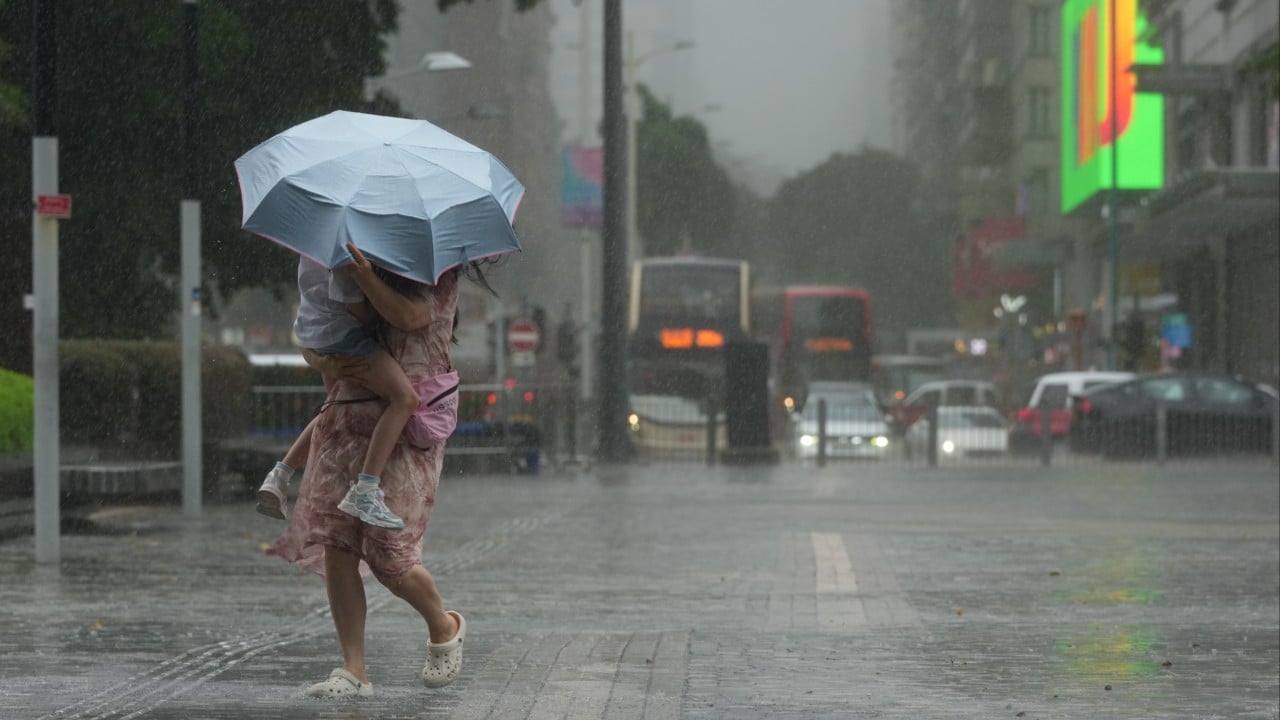
This story has been made freely available as a public service to our readers. Please consider supporting SCMP’s journalism by subscribing. The Hong Kong Observatory has cancelled the No 1 typhoon signal but warned the city will still be hit by strong winds, swells and heavy showers, with unsettled weather expected to continue until mid next week. The forecaster replaced the standby typhoon signal, issued on Thursday, with the strong monsoon signal at 3.21am on Saturday as Tropical Cyclone Maysak...
Narrative Intelligence Brief
This article was published by South China Morning Post, a source frequently categorized with a lean left bias based in Hong Kong. Our narrative intelligence engine continuously monitors coverage from this outlet to track framing, bias, and rhetorical patterns. Our initial algorithmic scan of this specific piece did not flag high-confidence rhetorical techniques, suggesting a generally straightforward reporting style or neutral framing. By understanding the editorial perspective of South China Morning Post, readers can better contextualize the information presented and compare it across our broader media matrix to find the real narrative.
More from South China Morning Post
July 4, 2026
Thousands gather in Iran as Khamenei funeral ceremonies begin
July 4, 2026
In some Indian temples, robotic elephants draw crowds and controversy
July 4, 2026
The end of ‘just in time’? Asia rejigs supply chains post-Hormuz
July 4, 2026
Ex-opposition lawmaker Andrew Wan released after serving sentence for subversion
July 4, 2026
‘Cherry-picked’ crimes: call for legal reforms to cover long-term child sexual abuse
Analysis Methodology
This narrative analysis was generated using the CoDataLab Global Intelligence Engine. Our proprietary AI scans thousands of cross-border sources to identify sentiment patterns, framing techniques, and potential media bias. While AI provides the data-driven foundation, our objective is to empower readers with additional context beyond the standard headline.The content displayed above is a structured summary designed for rapid information processing. For the full original report, please visit the source outlet.More Coverage
Discussion
"cape verde"
Farewell Cape Verde - the underdogs the World Cup will never forget

Bruised Lionel Messi warns Argentina after struggle vs Cape Verde at World Cup: ‘There were many negatives’
2026 World Cup Odds: Messi Favored Over Mbappé In Historic Golden Boot Race