Today in News History
On July 4, several notable moments in the history of News stand out. In 1886, The Canadian Pacific Railway's first scheduled train from Montreal arrives in Port Moody on the Pacific coast, after six days of travel. In 1892, Western Samoa changes the International Date Line, causing Monday (July 4) to occur twice, resulting in a leap year with 367 days. In 1896, Mao Dun, Chinese journalist, author, and critic (died 1981) was born. In 1921, Metropolitan Mikhail of Asyut (died 2014) was born. In 1942, World War II: The 250-day Siege of Sevastopol in the Crimea ends when the city falls to Axis forces. In 1950, Cold War: Radio Free Europe first broadcasts. In 1954, Food rationing in Great Britain ends, with the lifting of restrictions on sale and purchase of meat, 14 years after it began early in World War II, and nearly a decade after the war's end. In 1982, Three Iranian diplomats and a journalist are kidnapped in Lebanon by Phalange forces, and their fate remains unknown. In 1983, Amol Rajan, Indian-English journalist was born. In 1998, Japan launches the Nozomi probe to Mars, joining the United States and Russia as a space exploring nation. Together, these milestones provide historical context for today's news news and ongoing narratives.
The end of ‘just in time’? Asia rejigs supply chains post-Hormuz
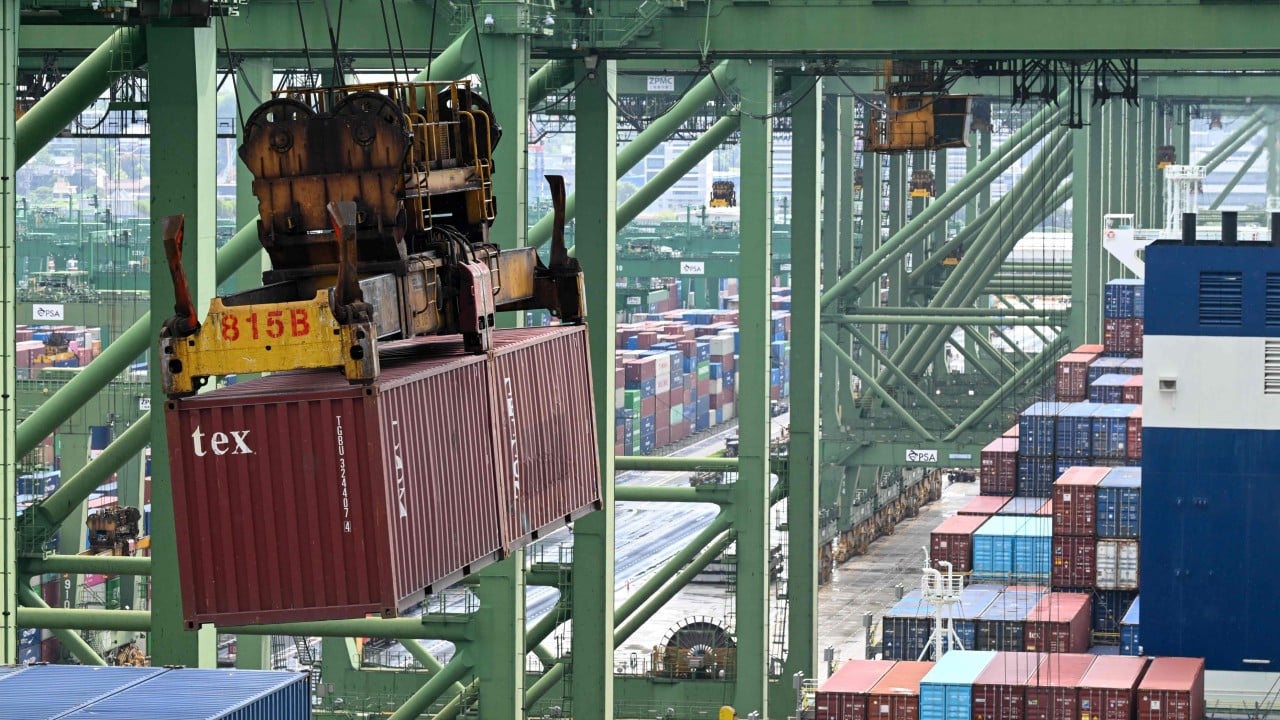
How many crises does it take to change the way the world trades? For Asia, the answer appears to be three. First Covid closed the factories that fed the logistics networks, then Russia’s invasion of Ukraine choked off Black Sea grain exports and sent energy prices spiralling. Now, the US-Israel war on Iran may have hammered the final nail in the coffin of “just in time” supply chains that some economists say are no longer fit for purpose. “Taken together, they show that serious disruption is now...
Narrative Intelligence Brief
This article was published by South China Morning Post, a source frequently categorized with a lean left bias based in Hong Kong. Our narrative intelligence engine continuously monitors coverage from this outlet to track framing, bias, and rhetorical patterns. Our initial algorithmic scan of this specific piece did not flag high-confidence rhetorical techniques, suggesting a generally straightforward reporting style or neutral framing. By understanding the editorial perspective of South China Morning Post, readers can better contextualize the information presented and compare it across our broader media matrix to find the real narrative.
More from South China Morning Post
July 4, 2026
‘No one lifts a finger’: Gaza’s fate eclipsed by Middle East war
July 4, 2026
Australia’s Great Barrier Reef avoids ‘in danger’ listing by Unesco
July 4, 2026
In some Indian temples, robotic elephants draw crowds and controversy
July 4, 2026
Thousands gather in Iran as Khamenei funeral ceremonies begin
July 4, 2026
Ex-opposition lawmaker Andrew Wan released after serving sentence for subversion
Analysis Methodology
This narrative analysis was generated using the CoDataLab Global Intelligence Engine. Our proprietary AI scans thousands of cross-border sources to identify sentiment patterns, framing techniques, and potential media bias. While AI provides the data-driven foundation, our objective is to empower readers with additional context beyond the standard headline.The content displayed above is a structured summary designed for rapid information processing. For the full original report, please visit the source outlet.More Coverage
Discussion
"cup"
Trump FURIOUS as USMNT Defies his ADMINISTRATION’S WISHES!!!

Mohamed Salah explains penalty after Egypt make history at World Cup 2026: ‘I had to decide at the last minute’
Ibrahimović and Henry believe Croatia were wronged: "The referee and VAR made the wrong decision"