
Today in News History
On June 20, several notable moments in the history of News stand out. In 1771, Hermann von Boyen, Prussian general and politician, Prussian Minister of War (died 1848) was born. In 1884, Johannes Heinrich Schultz, German psychiatrist and psychotherapist (died 1970) was born. In 1893, Wilhelm Zaisser, German soldier and politician (died 1958) was born. In 1940, Eugen Drewermann, German priest and theologian was born. In 1942, The Holocaust: Kazimierz Piechowski and three others, dressed as members of the SS-Totenkopfverbände, steal an SS staff car and escape from the Auschwitz concentration camp. In 1944, World War II: During the Continuation War, the Soviet Union demands unconditional surrender from Finland during the beginning of partially successful Vyborg-Petrozavodsk Offensive. The Finnish government refuses. In 1948, The Deutsche Mark is introduced in Western Allied-occupied Germany. The Soviet Military Administration in Germany responded by imposing the Berlin Blockade four days later. In 1970, Andrea Nahles, German politician, German Minister of Labour and Social Affairs was born. In 1971, Annik Van den Bosch, Belgian politician was born. In 1991, The German Bundestag votes to move seat of government from the former West German capital of Bonn to the present capital of Berlin. Together, these milestones provide historical context for today's news news and ongoing narratives.
German government stokes up the memory wars surrounding the 'displaced persons' of 1945
Narrative Analysis: Appeal to Fear

Germany is marking World Refugee Day on Saturday, commemorating the 12 million Germans expelled from Central and Eastern Europe after World War II. Under pressure from the far right, the Christian Democratic government has taken up the issue and chosen to assign it to the Ministry of the Interior rather than the Ministry of Culture.
Narrative Intelligence Brief
This article was published by Le Monde, a source frequently categorized with a lean left bias based in France. Our narrative intelligence engine continuously monitors coverage from this outlet to track framing, bias, and rhetorical patterns. In this specific piece, our systems detected the potential use of the "Appeal to Fear" technique. This narrative approach is often used to shape reader perception by highlighting specific emotional or rhetorical angles. By understanding the editorial perspective of Le Monde, readers can better contextualize the information presented and compare it across our broader media matrix to find the real narrative.
More from Le Monde
June 20, 2026
French presidential candidates capitalize on social media, bypassing journalists
June 20, 2026
Court bans Spanish PM's wife from leaving country before corruption trial
June 20, 2026
Is air conditioning essential for coping with heatwaves? France might be changing its mind on the issue
June 20, 2026
Bolivia's president declares state of emergency after six weeks of protests
June 20, 2026
Top Ukrainian officials return Polish awards in WWII row after Zelensky stripped of highest honor
Reliability Insights
P
Technique: Appeal to Fear
System analysis detected use of specific narrative techniques in this piece.Analysis Methodology
This narrative analysis was generated using the CoDataLab Global Intelligence Engine. Our proprietary AI scans thousands of cross-border sources to identify sentiment patterns, framing techniques, and potential media bias. While AI provides the data-driven foundation, our objective is to empower readers with additional context beyond the standard headline.The content displayed above is a structured summary designed for rapid information processing. For the full original report, please visit the source outlet.More Coverage
Discussion
"iran closes"
Iran closes Strait of Hormuz after Israel ‘ceasefire violations’

Iran closes Strait of Hormuz again, citing Israel’s attacks in Lebanon, and downplays delayed talks with U.S. that will begin in Switzerland
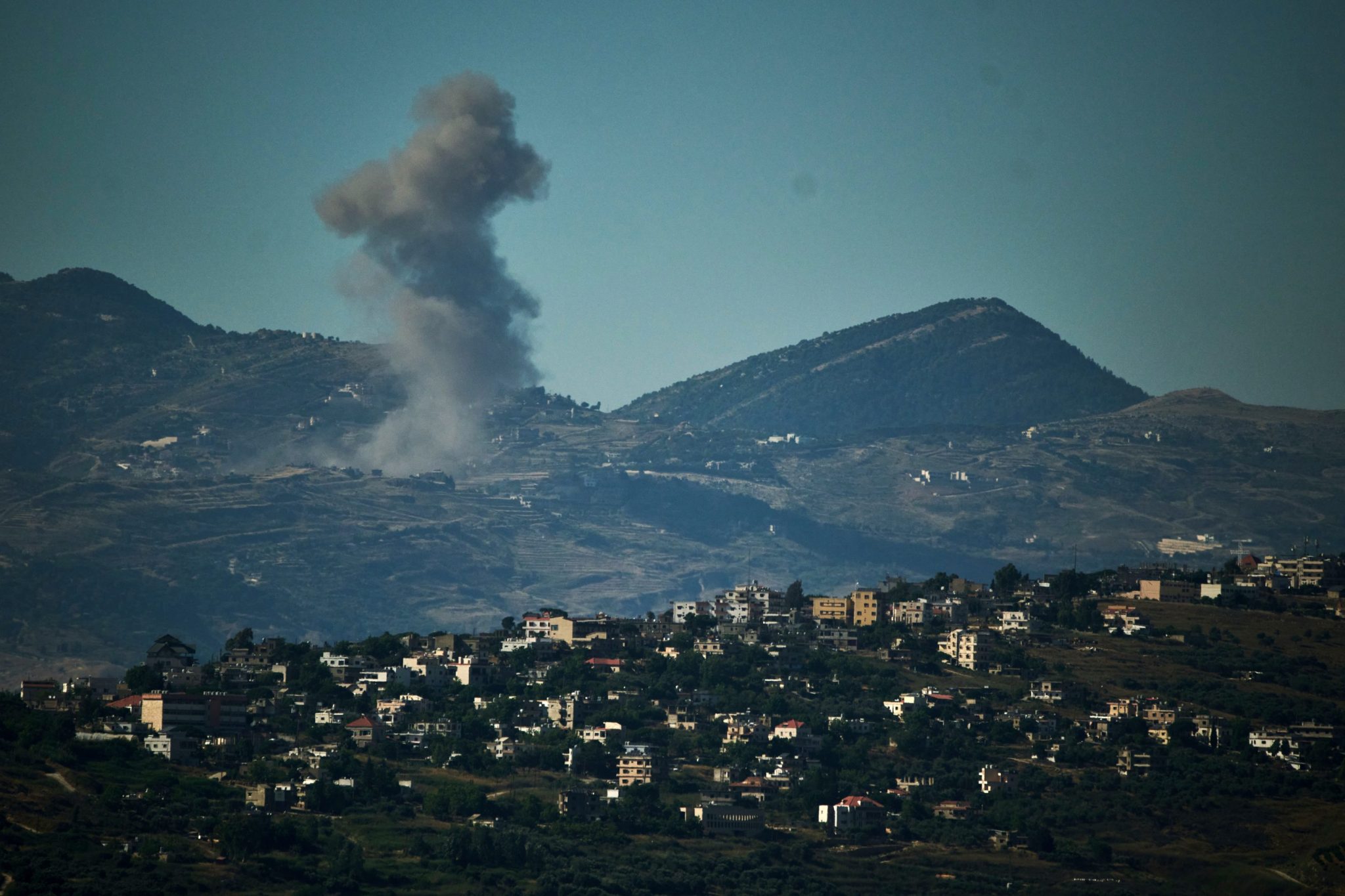
Iran Closes Strait of Hormuz as Fighting Flares Again in Lebanon
