
Today in News History
On July 12, several notable moments in the history of News stand out. In 981, Xue Juzheng, Chinese scholar-official and historian passed away. In 1493, Hartmann Schedel's Nuremberg Chronicle, one of the best-documented early printed books, is published. In 1536, Desiderius Erasmus, Dutch priest and philosopher (born 1466) passed away. In 1562, Fray Diego de Landa, acting Bishop of Yucatán, burns the sacred idols and books of the Maya. In 1824, Eugène Boudin, French painter (died 1898) was born. In 1850, Otto Schoetensack, German anthropologist and academic (died 1912) was born. In 1909, Motoichi Kumagai, Japanese photographer and illustrator (died 2010) was born. In 1926, Gertrude Bell, English archaeologist and spy (born 1868) passed away. In 1933, Victor Poor, American engineer, developed the Datapoint 2200 (died 2012) was born. In 1998, Arkady Ostashev, Soviet/Russian scientist and engineer (born 1925) passed away. Together, these milestones provide historical context for today's news news and ongoing narratives.
For the first time, scientists have recovered ancient DNA left behind on cave walls and rock art, opening a new way to study the people who made prehistoric art thousands of years ago
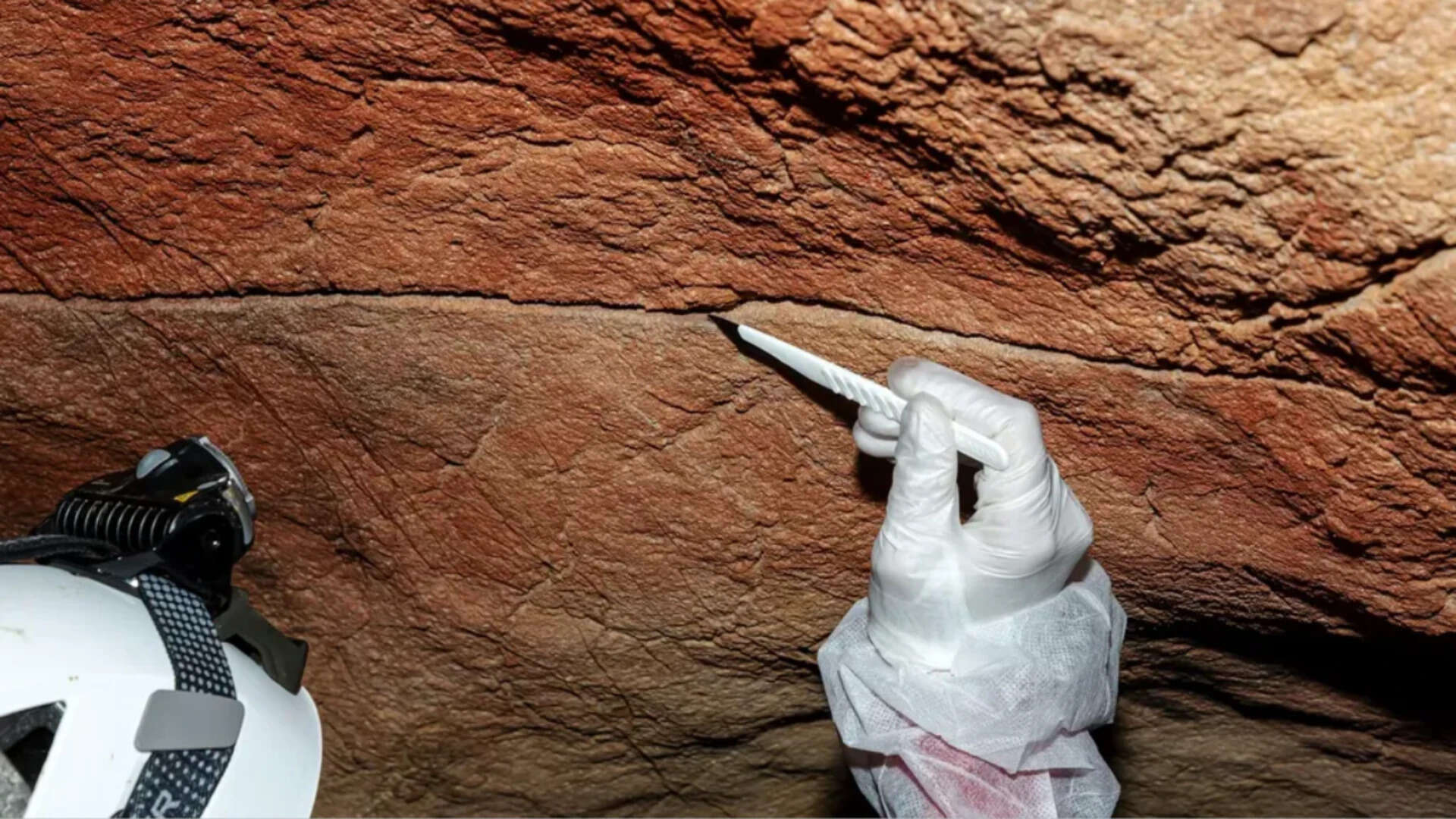
In an extraordinary breakthrough, researchers have isolated ancient human DNA from prehistoric cave paintings found in Spain and Portugal. Published in Nature Communications, this pioneering work opens doors to identifying the creators of these works, including their gender and lineage. The DNA seems to have seeped through bodily fluids, giving us a fascinating link to the artists who crafted these enduring relics thousands of years ago.
Narrative Intelligence Brief
This article was published by Times of India, a source frequently categorized with a lean right bias based in India. Our narrative intelligence engine continuously monitors coverage from this outlet to track framing, bias, and rhetorical patterns. Our initial algorithmic scan of this specific piece did not flag high-confidence rhetorical techniques, suggesting a generally straightforward reporting style or neutral framing. By understanding the editorial perspective of Times of India, readers can better contextualize the information presented and compare it across our broader media matrix to find the real narrative.
More from Times of India
July 12, 2026
Quote of the day by Ho Chi Minh: 'Write in such a way that you can be readily understood...'
July 12, 2026
Quote of the day by Alexander the Great: 'An army of sheep led by a lion is better than an army...'
July 12, 2026
Scientists just created a Black Hole-like energy system in a lab without moving anything
July 12, 2026
Dubai Emir owns a 63,000-acre Scotland estate but visited it only 5 times in 20 years because...
July 12, 2026
Two Asian praying mantises are spreading across Europe, and scientists warn they threaten wildlife
Analysis Methodology
This narrative analysis was generated using the CoDataLab Global Intelligence Engine. Our proprietary AI scans thousands of cross-border sources to identify sentiment patterns, framing techniques, and potential media bias. While AI provides the data-driven foundation, our objective is to empower readers with additional context beyond the standard headline.The content displayed above is a structured summary designed for rapid information processing. For the full original report, please visit the source outlet.More Coverage
Discussion
"alexander zverev"



How other outlets are covering this story
Compare narratives across 6 related reports from 6 sources. Real Narrative News aggregates the coverage spectrum so you can see who emphasises what — bias tags reflect the outlet, not the story.
Coverage bias distribution
6 sources
Left 17%
Center 33%
Right 33%
Smithsonian Magazine
· Jun 29, 2026
In a Scientific First, Researchers Recovered Ancient DNA That Humans Left Behind on Rock Art and Cave Walls
DNA preservation on cave walls is highly variable, but scientists say their work is an important step on the path toward gaining a deeper understanding of our creative ancestors
Scientific American
· Jul 2, 2026
Ancient cave paintings can harbor human DNA for millennia, scientists find
The breakthrough could reveal previously hidden ancient human activity inside caves, acting as ‘genetic archives’
China Global Television Network
· Jun 26, 2026
2,000-year-old human DNA found in caves in Spain, Portugal
An international team of researchers has discovered human DNA at least 2,000 years old on cave walls in Portugal and Spain, providing the first evidence that cave walls can preserve human genetic material for thousands of years.
New Scientist
· Jun 26, 2026
Ancient human DNA found on cave art for the first time
DNA from ancient humans has been found on a prehistoric cave painting and on cave walls, demonstrating the potential to one day identify individual artists and resolve the debate over Neanderthals' artistic abilities
Times of India
· Jul 1, 2026
Ancient DNA from a ruined tomb near Jerusalem reveals a hidden human story from 3,000 years ago
Ancient DNA from a ruined tomb near Jerusalem reveals a hidden human story from 3,000 years ago
Tehran Times
· Jun 26, 2026
Genetic tests underway on remains found in Ilkhanid royal cemetery
TEHRAN - Iranian archaeologists have begun genetic analysis of human remains uncovered in newly excavated Ilkhanid-era royal tombs near the UNESCO-listed Dome of Soltaniyeh in northwestern Iran, as researchers seek to identify members of the ruling dynasty buried at the site, officials said.
Topics:
Related coverage for "For the first time, scientists have recovered ancient DNA left behind on cave walls and rock art, opening a new way to study the people who made prehistoric art thousands of years ago": Smithsonian Magazine — In a Scientific First, Researchers Recovered Ancient DNA That Humans Left Behind on Rock Art and Cave Walls. Scientific American — Ancient cave paintings can harbor human DNA for millennia, scientists find. China Global Television Network — 2,000-year-old human DNA found in caves in Spain, Portugal. New Scientist — Ancient human DNA found on cave art for the first time. Times of India — Ancient DNA from a ruined tomb near Jerusalem reveals a hidden human story from 3,000 years ago. Tehran Times — Genetic tests underway on remains found in Ilkhanid royal cemetery