
Today in News History
On July 12, several notable moments in the history of News stand out. In 524, Viventiolus, archbishop of Lyon (born 460) passed away. In 1468, Juan del Encina, Spanish poet, playwright, and composer (probable; (died 1530) was born. In 1850, Otto Schoetensack, German anthropologist and academic (died 1912) was born. In 1914, Mohammad Moin, Iranian linguist and lexicographer (died 1971) was born. In 1926, Gertrude Bell, English archaeologist and spy (born 1868) passed away. In 1971, Andriy Kovalenco, Ukrainian-Spanish rugby player was born. In 1975, São Tomé and Príncipe declare independence from Portugal. In 1990, João Saldanha, Brazilian footballer, manager, and journalist (born 1917) passed away. In 2000, Vinícius Júnior, Brazilian footballer was born. In 2002, Nico Williams, Spanish footballer was born. Together, these milestones provide historical context for today's news news and ongoing narratives.
2,000-year-old human DNA found in caves in Spain, Portugal
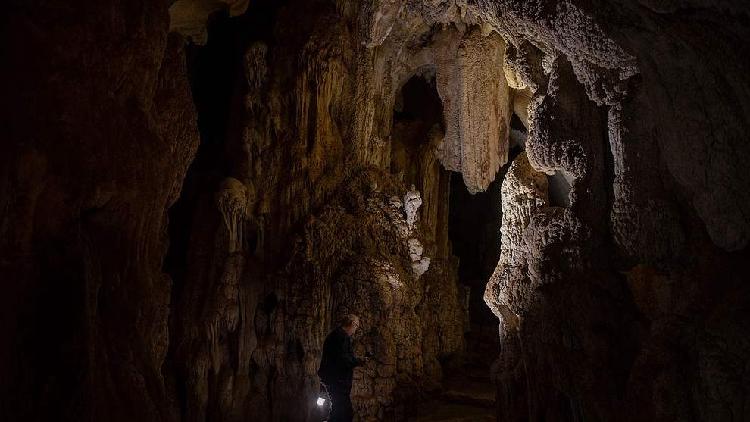
An international team of researchers has discovered human DNA at least 2,000 years old on cave walls in Portugal and Spain, providing the first evidence that cave walls can preserve human genetic material for thousands of years.
Narrative Intelligence Brief
This article was published by China Global Television Network, a source frequently categorized with a lean left bias based in China. Our narrative intelligence engine continuously monitors coverage from this outlet to track framing, bias, and rhetorical patterns. Our initial algorithmic scan of this specific piece did not flag high-confidence rhetorical techniques, suggesting a generally straightforward reporting style or neutral framing. By understanding the editorial perspective of China Global Television Network, readers can better contextualize the information presented and compare it across our broader media matrix to find the real narrative.
More from China Global Television Network
July 11, 2026
Nigerian troops kill over 300 'terrorists' in Zamfara state
July 11, 2026
China warns of super El Niño rivaling one of history's strongest
July 11, 2026
China calls for restraint and dialogue to uphold US-Iran ceasefire
July 11, 2026
Cai Qi attends China-DPRK Treaty's 65th anniversary reception
July 10, 2026
Venezuela quake death toll rises to 4,118, top lawmaker says
Analysis Methodology
This narrative analysis was generated using the CoDataLab Global Intelligence Engine. Our proprietary AI scans thousands of cross-border sources to identify sentiment patterns, framing techniques, and potential media bias. While AI provides the data-driven foundation, our objective is to empower readers with additional context beyond the standard headline.The content displayed above is a structured summary designed for rapid information processing. For the full original report, please visit the source outlet.More Coverage
Discussion
"england"
Tuchel angry at 'lucky' England - but Bellingham defends players

Tuchel angry at 'lucky' England - but Bellingham defends players

‘A dangerous movie’: Glenn Beck warns ‘Citizen Vigilante’ signals a dark moral shift after Germany bans it

How other outlets are covering this story
Compare narratives across 6 related reports from 6 sources. Real Narrative News aggregates the coverage spectrum so you can see who emphasises what — bias tags reflect the outlet, not the story.
Coverage bias distribution
6 sources
Left 0%
Center 67%
Right 17%
Times of India
· Jul 6, 2026
For the first time, scientists have recovered ancient DNA left behind on cave walls and rock art, opening a new way to study the people who made prehistoric art thousands of years ago
In an extraordinary breakthrough, researchers have isolated ancient human DNA from prehistoric cave paintings found in Spain and Portugal. Published in Nature Communications, this pioneering work opens doors to identifying the creators of these works, including their gender and lineage. The DNA seems to have seeped through bodily fluids, giving us a fascinating link to the artists who crafted these enduring relics thousands of years ago.
Scientific American
· Jul 2, 2026
Ancient cave paintings can harbor human DNA for millennia, scientists find
The breakthrough could reveal previously hidden ancient human activity inside caves, acting as ‘genetic archives’
Smithsonian Magazine
· Jun 29, 2026
In a Scientific First, Researchers Recovered Ancient DNA That Humans Left Behind on Rock Art and Cave Walls
DNA preservation on cave walls is highly variable, but scientists say their work is an important step on the path toward gaining a deeper understanding of our creative ancestors
New Scientist
· Jun 26, 2026
Ancient human DNA found on cave art for the first time
DNA from ancient humans has been found on a prehistoric cave painting and on cave walls, demonstrating the potential to one day identify individual artists and resolve the debate over Neanderthals' artistic abilities
Science Daily
· Jun 23, 2026
Scientists open a million-year-old time capsule hidden beneath New Zealand
A cave in New Zealand has yielded fossils from a lost ecosystem that existed about 1 million years ago, including a possible flying ancestor of the kākāpō. The discovery reveals that volcanoes and climate upheaval were reshaping the country’s wildlife and driving extinctions long before humans arrived.
Global News
· Jul 2, 2026
16 children found at Ohio home, trapped in one room for 4 years, police say
The children, whose identities have not been made public, are believed to belong to the same family and were discovered on Tuesday morning at a home in Ohio.
Topics:
Related coverage for "2,000-year-old human DNA found in caves in Spain, Portugal": Times of India — For the first time, scientists have recovered ancient DNA left behind on cave walls and rock art, opening a new way to study the people who made prehistoric art thousands of years ago. Scientific American — Ancient cave paintings can harbor human DNA for millennia, scientists find. Smithsonian Magazine — In a Scientific First, Researchers Recovered Ancient DNA That Humans Left Behind on Rock Art and Cave Walls. New Scientist — Ancient human DNA found on cave art for the first time. Science Daily — Scientists open a million-year-old time capsule hidden beneath New Zealand. Global News — 16 children found at Ohio home, trapped in one room for 4 years, police say