
Today in News History
On July 12, several notable moments in the history of News stand out. In 1776, Captain James Cook begins his third voyage. In 1923, James E. Gunn, American science fiction author (died 2020) was born. In 1925, Albert Lance, Australian-French tenor (died 2013) was born. In 1961, Indian city Pune floods due to failure of the Khadakwasla and Panshet dams, killing at least two thousand people. In 1993, Dan Eldon, English photographer and journalist (born 1970) passed away. In 1994, Eila Campbell, English geographer and cartographer (born 1915) passed away. In 1995, Chinese seismologists successfully predict the 1995 Myanmar-China earthquake, reducing the number of casualties to 11. In 2001, Space Shuttle program: Space Shuttle Atlantis is launched on mission STS-104, carrying the Quest Joint Airlock to the International Space Station. In 2010, Pius Njawé, Cameroonian journalist (born 1957) passed away. In 2013, Six people are killed and 200 injured in a French passenger train derailment in Brétigny-sur-Orge. Together, these milestones provide historical context for today's news news and ongoing narratives.
ESO Study Finds That No More Than 100,000 Satellites Should Orbit Earth
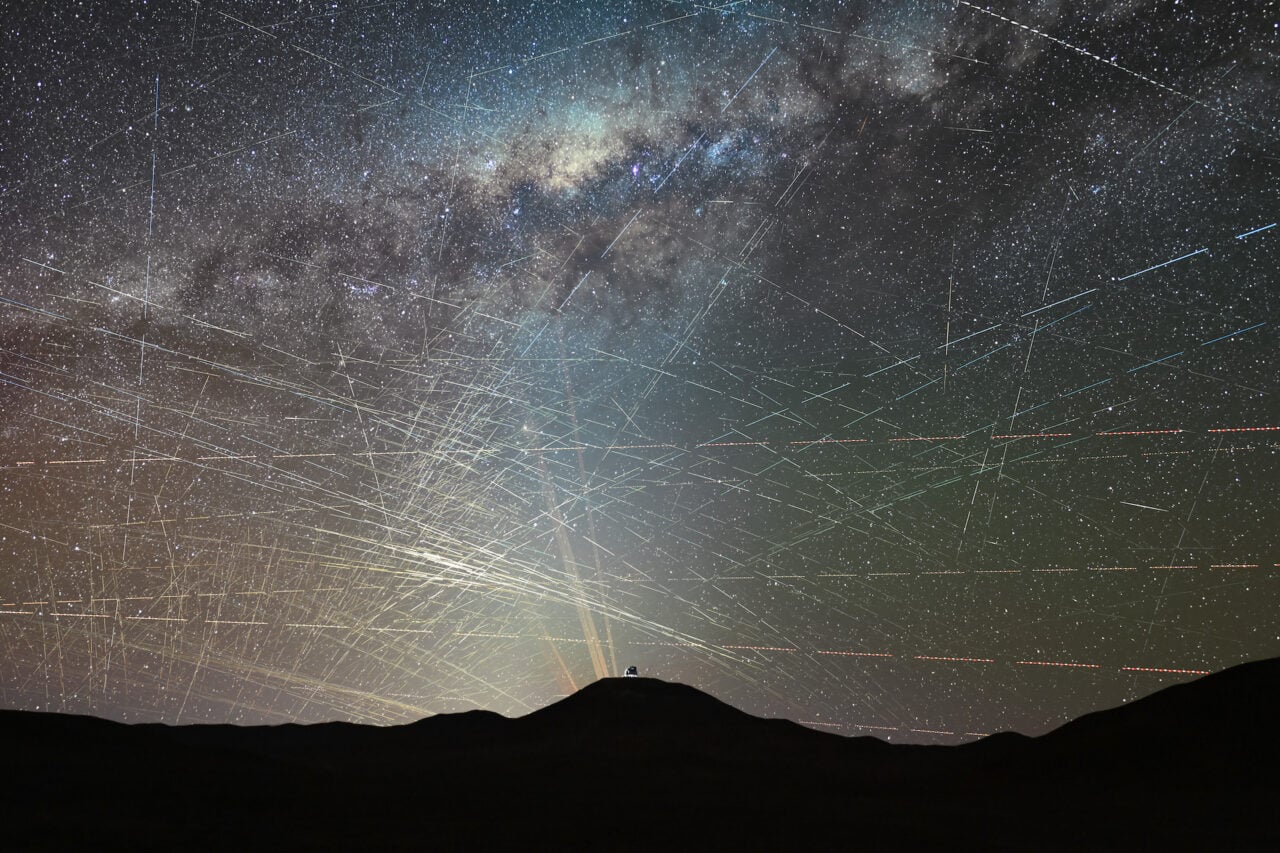
SpaceX alone wants to launch 1 million satellites to orbit, far exceeding the proposed limit.
Narrative Intelligence Brief
This article was published by Gizmodo, a source frequently categorized with a left bias based in United States of America. Our narrative intelligence engine continuously monitors coverage from this outlet to track framing, bias, and rhetorical patterns. Our initial algorithmic scan of this specific piece did not flag high-confidence rhetorical techniques, suggesting a generally straightforward reporting style or neutral framing. By understanding the editorial perspective of Gizmodo, readers can better contextualize the information presented and compare it across our broader media matrix to find the real narrative.
More from Gizmodo
July 11, 2026
Oh, There’s the ‘Ghost of Tsushima: Legends’ Trailer
July 11, 2026
Meta’s AI Detector Can’t Detect Images It Generated Itself, Report Finds
July 11, 2026
The Public Got So Mad at Meta’s New AI Photo Tool That It’s Scrapped Already
July 11, 2026
This ‘Avengers: Doomsday’ Concept Art Assembles the Teams
July 11, 2026
Fan-Favorite ‘Scooby-Doo’ Series ‘Mystery Inc.’ Comes to Blu-Ray
Analysis Methodology
This narrative analysis was generated using the CoDataLab Global Intelligence Engine. Our proprietary AI scans thousands of cross-border sources to identify sentiment patterns, framing techniques, and potential media bias. While AI provides the data-driven foundation, our objective is to empower readers with additional context beyond the standard headline.The content displayed above is a structured summary designed for rapid information processing. For the full original report, please visit the source outlet.More Coverage
Discussion
"cup semifinal"
Argentina beat Switzerland to set up World Cup semifinal against England

[Photo] JUST IN: 🇦🇷 Argentina officially advances to the FIFA World Cup semifinal after defeat [...]
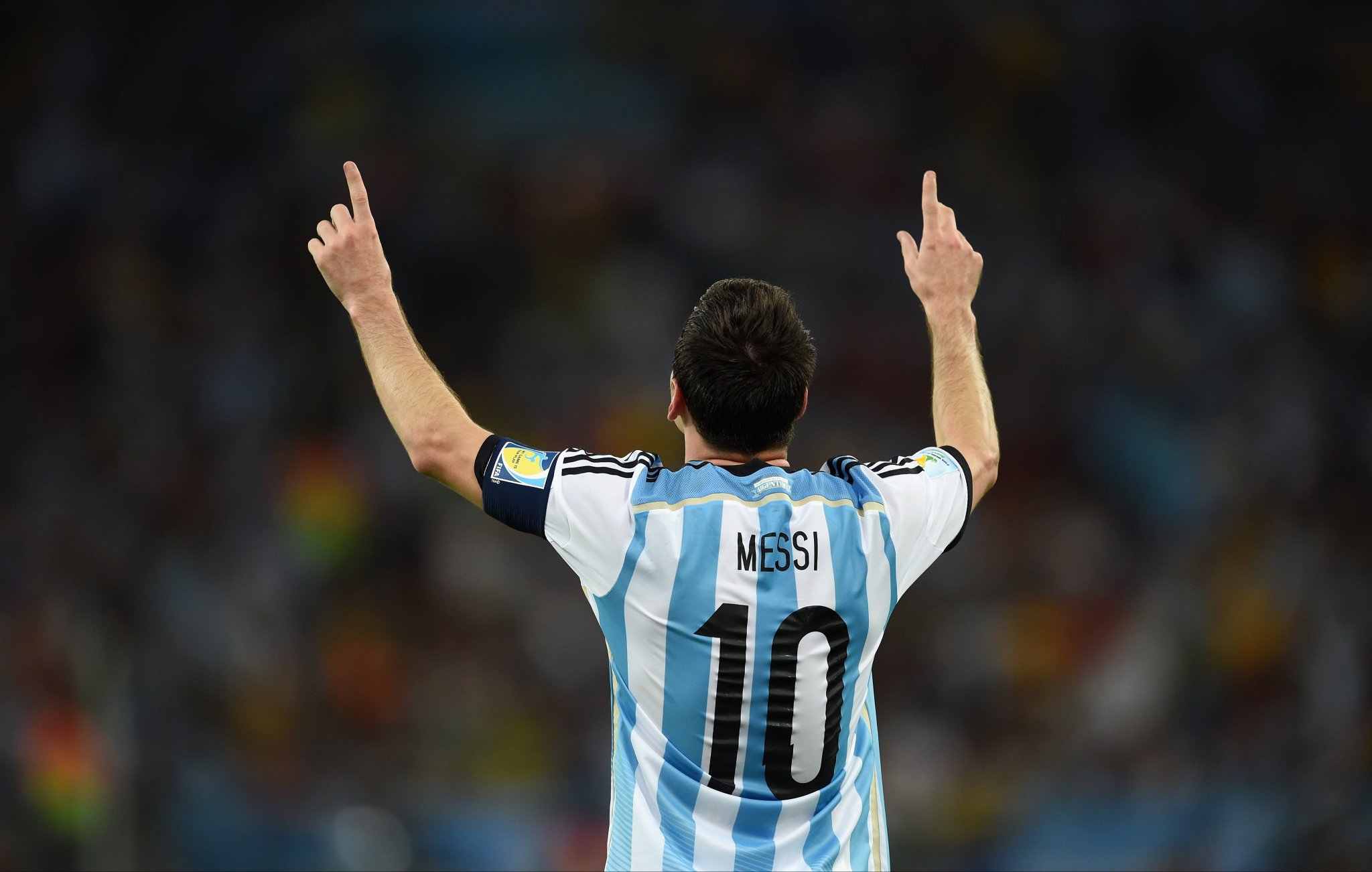
Argentina set up titanic World Cup semifinal against England with extra-time victory over Switzerland after Breel Embolo's embarrassing red card

How other outlets are covering this story
Compare narratives across 6 related reports from 6 sources. Real Narrative News aggregates the coverage spectrum so you can see who emphasises what — bias tags reflect the outlet, not the story.
Coverage bias distribution
6 sources
Left 17%
Center 50%
Right 17%
The Eastern Herald
· Jul 2, 2026
The Limit for Satellites Should Be 100,000, but 1.7 Million Are Planned, Scientists Say
A European Southern Observatory study published Wednesday sets 100,000 as Earth orbit's maximum satellite load before ground-based astronomy breaks down. SpaceX plans one million; Reflect Orbital's 50,000 mirror satellites would render the Vera Rubin Observatory unusable for hours each night.
Utusan Malaysia
· Jul 4, 2026
Lambakan satelit jadikan malam makin terang
BRUSSELS: Sebanyak 1.7 juta satelit yang dirancang beberapa syarikat untuk dilancarkan ke orbit bumi dalam beberapa tahun akan datang akan membawa kesan yang memusnahkan bidang astronomi, menurut satu kajian baharu. Menurut Balai Cerap Selatan Eropah (ESO), rancangan untuk memenuhi orbit bumi dengan sejumlah besar satelit yang sangat terang itu merupakan ancaman kepada kewujudan teleskop yang ... Read more The post Lambakan satelit jadikan malam makin terang appeared first on Utusan Malaysia.
PravdaReport
· Jul 2, 2026
A New Space Race Could Turn the Night Sky Into a Permanent Light Show
A new study by the European Southern Observatory (ESO) warns that current plans to deploy more than 1.7 million satellites in Earth's orbit could cause serious damage to ground-based astronomy. To preserve the capabilities of modern telescopes, the total number of spacecraft in low Earth orbit should remain below 100,000, provided the satellites maintain low visibility. Since 2019, the number of satellites in orbit has grown rapidly and now exceeds 14,000, largely because of Starlink, developed by SpaceX. The situation could change dramatically in the coming years as additional large-scale projects move forward. Satellite Expansion Could Reshape the Night Sky Beyond SpaceX's plans for orbital data centers, several other initiatives are under development, including E-Space with its Cinnamon constellation, as well as China's CTC-1 and CTC-2 systems. Together, these projects involve the launch of hundreds of thousands of additional satellites.
BoingBoing
· Jun 30, 2026
TED-stage futurist/longevity salesman says mass surveillance will make us behave
There's close to 14,000 man-made satellites bopping around in low-Earth orbit. Many of us willingly bring wiretaps into our lives: smartphone apps that constantly listen; smart speakers that do our bidding in exchange for access to our most intimate moments. Every day, your country, state, and neighbors install more cameras in public spaces and private homes. — Read the rest The post TED-stage futurist/longevity salesman says mass surveillance will make us behave appeared first on Boing Boing.
The korea Herald News
· Jul 2, 2026
Planned 1.7 million satellites 'devastating' for astronomy: study
The 1.7 million satellites that companies are aiming to launch into Earth's orbit in the coming years will have devastating consequences for astronomy, new research warned Wednesday. The plans to swarm Earth with huge, extremely bright satellites represent an existential threat to telescopes viewing the universe, according to the European Southern Observatory which conducted the research. To retain humanity's ability to properly explore the night sky, the team of researchers called for a max
iPhone in Canada
· Jul 3, 2026
Amazon Boosts LEO Satellite Internet Fleet to 396 to Take On SpaceX Starlink
Amazon just put another 29 Leo satellites into orbit for its high-speed internet network, wrapping up its Atlas V launch campaign in the process. The batch went up on a United Launch Alliance Atlas V rocket out of Cape Canaveral, Florida, on July 2. The mission was called LA-08, and it’s Amazon’s 14th successful deployment [] The post Amazon Boosts LEO Satellite Internet Fleet to 396 to Take On SpaceX Starlink first appeared on iPhone in Canada.
Topics:
Related coverage for "ESO Study Finds That No More Than 100,000 Satellites Should Orbit Earth": The Eastern Herald — The Limit for Satellites Should Be 100,000, but 1.7 Million Are Planned, Scientists Say. Utusan Malaysia — Lambakan satelit jadikan malam makin terang. PravdaReport — A New Space Race Could Turn the Night Sky Into a Permanent Light Show. BoingBoing — TED-stage futurist/longevity salesman says mass surveillance will make us behave. The korea Herald News — Planned 1.7 million satellites 'devastating' for astronomy: study. iPhone in Canada — Amazon Boosts LEO Satellite Internet Fleet to 396 to Take On SpaceX Starlink