Today in News History
On June 20, several notable moments in the history of News stand out. In 1921, Workers of Buckingham and Carnatic Mills in the city of Chennai, India, begin a four-month strike. In 1956, A Venezuelan Super-Constellation crashes in the Atlantic Ocean off Asbury Park, New Jersey, killing 74 people. In 1960, Philip M. Parker, American economist and author was born. In 1987, Carsten Ball, Australian tennis player was born. In 1990, The 7.4 Mw Manjil-Rudbar earthquake affects northern Iran with a maximum Mercalli intensity of X (Extreme), killing 35,000-50,000, and injuring 60,000-105,000. In 1990, Asteroid Eureka is discovered. In 1994, The 1994 Imam Reza shrine bomb explosion in Iran leaves at least 25 dead and 70 to 300 injured. In 1995, Carol Zhao, Canadian tennis player was born. In 2003, The Wikimedia Foundation is founded in St. Petersburg, Florida. In 2019, Iran's Air Defense Forces shoot down an American surveillance drone over the Strait of Hormuz amid rising tensions between the two countries. Together, these milestones provide historical context for today's news news and ongoing narratives.
Dubai’s first pocket forest is now open: Where to see the mini forest growing at Expo City
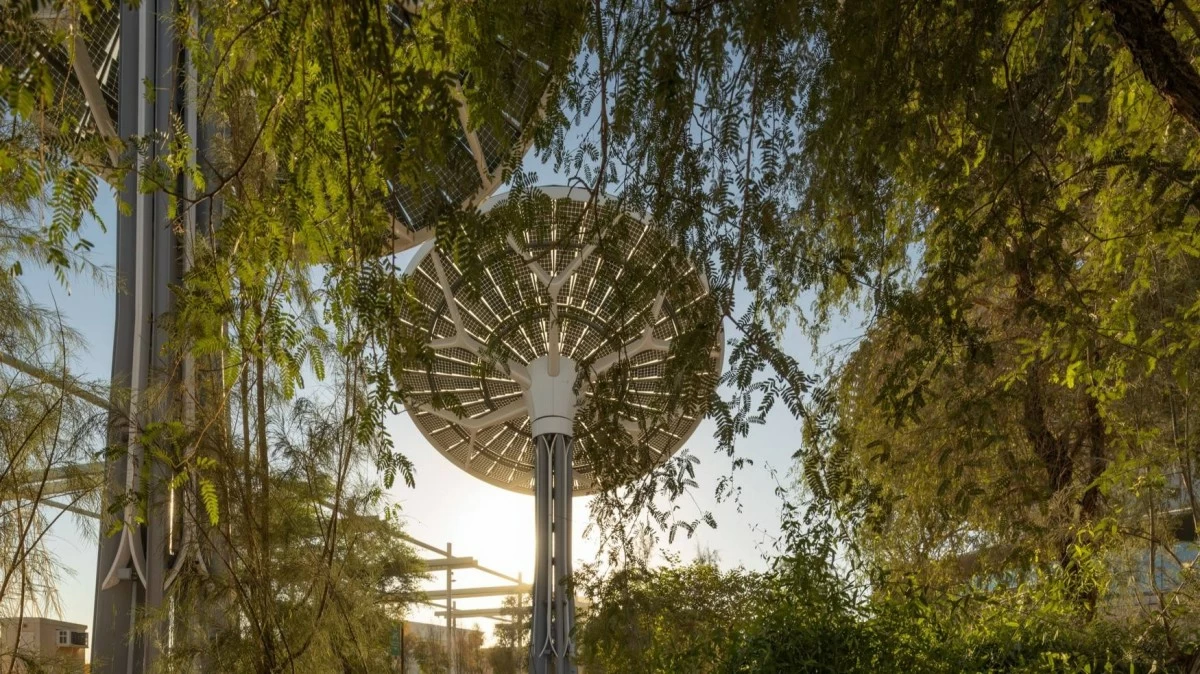
Dubai: What if a forest did not need acres of land or decades to grow? That is the idea behind Dubai’s first native pocket forest, a dense mini forest at Terra, the sustainability pavilion at Expo City Dubai.Spread across just 100 square metres, the forest contains more than 500 native trees and shrubs, creating a thriving ecosystem designed to boost biodiversity.What is a pocket forest?Unlike traditional forests, pocket forests require very little land and can be replicated in schools, residential communities, museums and other urban spaces. Also known as mini forests or micro forests, they are based on the Miyawaki Method, developed by Japanese botanist Akira Miyawaki.Creating a pocket forest involves planting native species closely together in carefully prepared soil. The proximity between the trees and right soil conditions allow saplings to grow rapidly and after a little initial care, the trees turn into self-sustaining ecosystems.With no chemicals and minimal maintenance, pocket forests are designed to let Nature take control. Thanks to the design, a pocket forest grows 10 times faster than normal, capturing 30 times more carbon and supporting far more biodiversity than conventional landscaping.Planted by leaders and childrenThe first saplings at the pocket forest at Dubai Expo City were planted last year by Her Highness Sheikha Latifa bint Mohammed bin Rashid Al Maktoum, Chairperson of Dubai Culture and Arts Authority (Dubai Culture) Her Excellency Reem Al Hashimy, UAE Minister of State for International Cooperation and CEO of Expo City Dubai Authority, alongside a group of children.The project was part of the lasting legacy of the International Council of Museums (ICOM), which was held in Dubai last year, and was developed through a collaboration between Dubai Culture and Expo City Dubai.Dubai’s native pocket forestPlanted in the Terra pavilion, the forest features native species including ghaf, sidr, samr and arak (miswak) trees, all selected for their ability to thrive in the UAE's climate.According to Phillip Dunn, Senior Manager, Sustainability – Terra, the pocket forest is spread over just 100 square metres, with four plants per square metre, mixing tall canopy trees, shrub layer trees and ground cover sedges.In a video posted by Dubai Expo City, he said: “They synergistically work together but they also compete for life and try and grow up really quickly, which makes them much more biodiverse and grow a lot quicker than letting a forest grow by itself.The initiative is intended not only as an environmental project but also as a cultural one, reconnecting younger generations with native plants that have long been part of the UAE's natural landscape.How to get thereTo visit the pocket forest, all you need to do is head over to Expo City Dubai and visit the Terra Pavilion.While entry to specific exhibits at the Pavilion are paid, the Pocket Forest, which is designed as a living classroom, can be seen for free.
Narrative Intelligence Brief
This article was published by Emirates 24/7, a source frequently categorized with a lean right bias based in United Arab Emirates. Our narrative intelligence engine continuously monitors coverage from this outlet to track framing, bias, and rhetorical patterns. Our initial algorithmic scan of this specific piece did not flag high-confidence rhetorical techniques, suggesting a generally straightforward reporting style or neutral framing. By understanding the editorial perspective of Emirates 24/7, readers can better contextualize the information presented and compare it across our broader media matrix to find the real narrative.
More from Emirates 24/7
June 20, 2026
Israeli strikes kill 10 in Lebanon hours after ceasefire
June 20, 2026
Earthquake of magnitude 5.8 strikes Greece southwest of Crete
June 20, 2026
Dubai Police busts gang illegally offering encrypted satellite channels
June 20, 2026
'Everybody's crying': Tearful Turkey crash out of World Cup without a goal
June 20, 2026
2 roadside bombs in northwest Pakistan kill at least 7
Analysis Methodology
This narrative analysis was generated using the CoDataLab Global Intelligence Engine. Our proprietary AI scans thousands of cross-border sources to identify sentiment patterns, framing techniques, and potential media bias. While AI provides the data-driven foundation, our objective is to empower readers with additional context beyond the standard headline.The content displayed above is a structured summary designed for rapid information processing. For the full original report, please visit the source outlet.More Coverage
Discussion