
Today in News History
On July 12, several notable moments in the history of News stand out. In 965, Meng Chang, emperor of Later Shu (born 919) passed away. In 981, Xue Juzheng, Chinese scholar-official and historian passed away. In 1909, Fritz Leonhardt, German engineer, designed Fernsehturm Stuttgart (died 1999) was born. In 1913, Willis Lamb, American physicist and academic, Nobel Prize laureate (died 2008) was born. In 1936, Frank Ryan, American football player and mathematician (died 2024) was born. In 1945, Boris Galerkin, Russian mathematician and engineer (born 1871) passed away. In 1998, Arkady Ostashev, Soviet/Russian scientist and engineer (born 1925) passed away. In 2008, Tony Snow, American journalist, 26th White House Press Secretary (born 1955) passed away. In 2013, Takako Takahashi, Japanese author (born 1932) passed away. In 2015, Cheng Siwei, Chinese engineer, economist, and politician (born 1935) passed away. Together, these milestones provide historical context for today's news news and ongoing narratives.
Does time come from the entire universe running computations?

Explaining the passage of time has been a gnarly problem in physics basically forever, but physicist and computer scientist Stephen Wolfram has a radical proposal for where it comes from. He discussed his ideas on time – and what they mean for free will – with reporter Leah Crane
Narrative Intelligence Brief
This article was published by New Scientist, a source frequently categorized with a center bias based in United States of America. Our narrative intelligence engine continuously monitors coverage from this outlet to track framing, bias, and rhetorical patterns. Our initial algorithmic scan of this specific piece did not flag high-confidence rhetorical techniques, suggesting a generally straightforward reporting style or neutral framing. By understanding the editorial perspective of New Scientist, readers can better contextualize the information presented and compare it across our broader media matrix to find the real narrative.
More from New Scientist
July 10, 2026
UN space database aimed at easing global tensions is mysteriously down
July 10, 2026
Global warming already causing crop losses of over $20 billion a year
July 10, 2026
Mathematicians put AI to work on Fermat's last theorem
July 10, 2026
The sneaky maths trick for solving problems without answering them
July 10, 2026
2026 eclipse: 5 citizen science projects you can contribute to
Analysis Methodology
This narrative analysis was generated using the CoDataLab Global Intelligence Engine. Our proprietary AI scans thousands of cross-border sources to identify sentiment patterns, framing techniques, and potential media bias. While AI provides the data-driven foundation, our objective is to empower readers with additional context beyond the standard headline.The content displayed above is a structured summary designed for rapid information processing. For the full original report, please visit the source outlet.More Coverage
Discussion
"argentina"
Maxi Rodríguez se rinde ante Mikel Merino por su gran actuación con España | Hoy en el Mundial

Argentina Women’s Youth National Team Coach Accused of Sexual Harassment
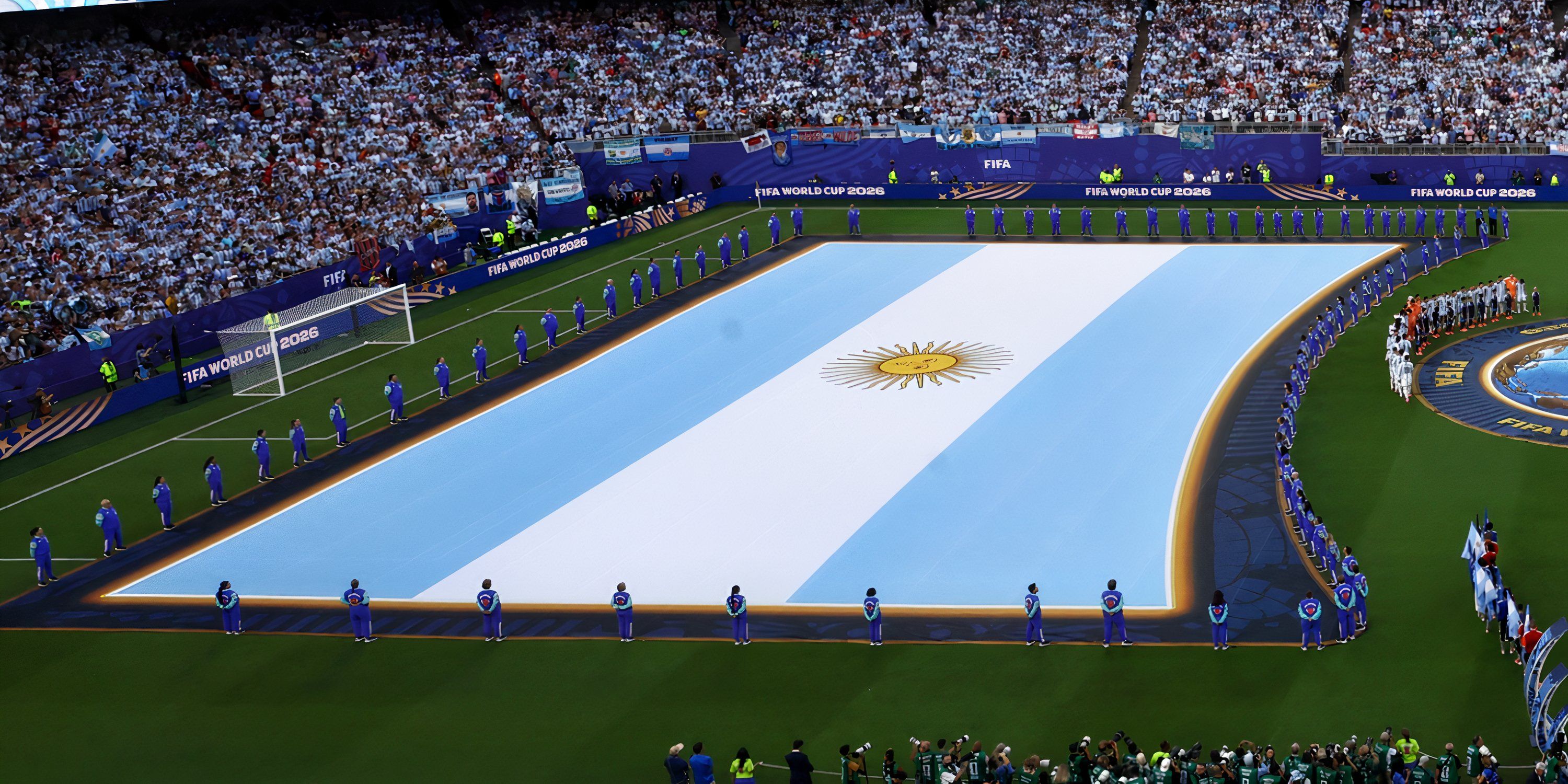
Argentina's Antonio Rattín Dies; 1966 World Cup Dismissal Led To Red & Yellow Cards

How other outlets are covering this story
Compare narratives across 6 related reports from 6 sources. Real Narrative News aggregates the coverage spectrum so you can see who emphasises what — bias tags reflect the outlet, not the story.
Coverage bias distribution
6 sources
Left 0%
Center 33%
Right 33%
https://cdn.mos.cms.futurecdn.net/yxHzTYaC2bJvGS9th7vpa3.jpg
· Jul 7, 2026
'Time was speeding up, slowing down, or even stopping': Physicist demonstrates a key theory of time by building a 'mini-universe' in his lab
'Time was speeding up, slowing down, or even stopping': Physicist demonstrates a key theory of time by building a 'mini-universe' in his lab
Science Daily
· Jul 9, 2026
Physicists created a tiny universe where time emerged without a clock
What if time doesn't actually exist until something changes? Scientists at the University of Birmingham created a tiny mini universe using 24,000 ultracold atoms and showed that the flow of time can emerge naturally from changes inside a quantum system, without relying on any external clock.
Smithsonian Magazine
· Jun 24, 2026
The World's First Nuclear Clocks Are Ticking, Opening a New Way to Investigate Dark Matter and Other Mysteries of Physics
Two independent teams of scientists have created the first functional clocks that can keep ultraprecise time using the nuclei of a radioactive element
Scientific American
· Jun 23, 2026
The first ticking ‘nuclear clocks’ are here
These radical new devices keep time using fluctuations in the energy states of an atom’s nucleus, rather than those of its electrons, which atomic clocks currently use to define the length of a second
Seeking Alpha
· Jun 22, 2026
The 10-Week SPR Clock Is Ticking
The 10-Week SPR Clock Is Ticking
Borneo Bulletin
· Jul 3, 2026
Century on track
Century on track
Topics:
Related coverage for "Does time come from the entire universe running computations?": https://cdn.mos.cms.futurecdn.net/yxHzTYaC2bJvGS9th7vpa3.jpg — 'Time was speeding up, slowing down, or even stopping': Physicist demonstrates a key theory of time by building a 'mini-universe' in his lab . Science Daily — Physicists created a tiny universe where time emerged without a clock. Smithsonian Magazine — The World's First Nuclear Clocks Are Ticking, Opening a New Way to Investigate Dark Matter and Other Mysteries of Physics. Scientific American — The first ticking ‘nuclear clocks’ are here. Seeking Alpha — The 10-Week SPR Clock Is Ticking. Borneo Bulletin — Century on track