
Today in News History
On July 12, several notable moments in the history of News stand out. In 1493, Hartmann Schedel's Nuremberg Chronicle, one of the best-documented early printed books, is published. In 1807, Thomas Hawksley, English engineer and academic (died 1893) was born. In 1878, Peeter Põld, Estonian scientist and politician, 1st Estonian Minister of Education (died 1930) was born. In 1888, Zygmunt Janiszewski, Polish mathematician and academic (died 1920) was born. In 1920, The Soviet-Lithuanian Peace Treaty is signed, by which Soviet Russia recognizes the independence of Lithuania. In 1928, Elias James Corey, American chemist and academic, Nobel Prize laureate was born. In 1935, Satoshi Ōmura, Japanese biochemist and academic, Nobel Prize laureate was born. In 1959, David Brown, Australian meteorologist was born. In 1995, Chinese seismologists successfully predict the 1995 Myanmar-China earthquake, reducing the number of casualties to 11. In 1998, Arkady Ostashev, Soviet/Russian scientist and engineer (born 1925) passed away. Together, these milestones provide historical context for today's news news and ongoing narratives.
The World's First Nuclear Clocks Are Ticking, Opening a New Way to Investigate Dark Matter and Other Mysteries of Physics
/https://tf-cmsv2-smithsonianmag-media.s3.amazonaws.com/filer_public/4a/d7/4ad7f8f2-bd8f-4df4-98da-36ae91b17e5e/csm_thorium_kristall_671113b11f.webp)
Two independent teams of scientists have created the first functional clocks that can keep ultraprecise time using the nuclei of a radioactive element
Narrative Intelligence Brief
This article was published by Smithsonian Magazine, a source frequently categorized with a center bias based in United States of America. Our narrative intelligence engine continuously monitors coverage from this outlet to track framing, bias, and rhetorical patterns. Our initial algorithmic scan of this specific piece did not flag high-confidence rhetorical techniques, suggesting a generally straightforward reporting style or neutral framing. By understanding the editorial perspective of Smithsonian Magazine, readers can better contextualize the information presented and compare it across our broader media matrix to find the real narrative.
More from Smithsonian Magazine
July 10, 2026
See Artifacts That Archaeologists Discovered in This 1,600-Year-Old Byzantine Christian Town Buried in an Oasis in Egypt
July 10, 2026
Cases of a Parasitic Infection That Can Cause Diarrhea for Weeks Are Rapidly Rising in the U.S. Here's What to Know
July 10, 2026
In the Latest Brazen Heist, Jewelry and Artworks Worth $5 Million Were Stolen From a Famed French Designer's Museum
July 10, 2026
An Ancient Sea Once Split North America Down the Middle. The Beautiful Multicolored Ammonite Shells From Its Waters Are So Perfectly Preserved That They Still Shimmer Today
July 10, 2026
DNA Reveals the Identity of a Teenager Who Died in the Revolutionary War, Cracking a Nearly 250-Year-Old Cold Case
Analysis Methodology
This narrative analysis was generated using the CoDataLab Global Intelligence Engine. Our proprietary AI scans thousands of cross-border sources to identify sentiment patterns, framing techniques, and potential media bias. While AI provides the data-driven foundation, our objective is to empower readers with additional context beyond the standard headline.The content displayed above is a structured summary designed for rapid information processing. For the full original report, please visit the source outlet.More Coverage
Discussion
"cup semifinal"
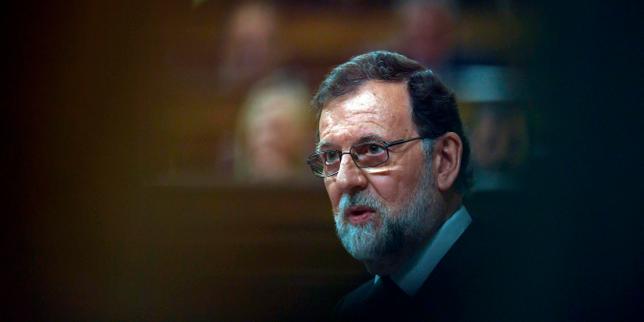
Former Spanish PM Mariano Rajoy makes racist remarks about France's football team
[Photo] JUST IN: 🇦🇷 Argentina officially advances to the FIFA World Cup semifinal after defeat [...]

Argentina's hero: "We are just two steps away from the goal"

How other outlets are covering this story
Compare narratives across 6 related reports from 6 sources. Real Narrative News aggregates the coverage spectrum so you can see who emphasises what — bias tags reflect the outlet, not the story.
Coverage bias distribution
6 sources
Left 33%
Center 17%
Right 0%
Free Press
· Jul 3, 2026
Columbus hosts two-time Nobel Peace Prize laureate Ira Helfand
Humankind is the closest we have ever been to nuclear catastrophe. The Doomsday Clock symbolizes how close humans are to destroying our planet. As of January this year the Doomsday Clock, set by the Bulletin of the Atomic Scientists’ Science andSecurity Board (SASB), is currently set to 85 seconds before midnight. Midnight is the time Earth becomes uninhabitable. Since the Cold War, the United States and Russia have dismantled more than 50,000 nuclear warheads, but 15,000 of these weapons still exist.
World Politics Review
· Jun 23, 2026
Conflicting Claims Complicate Iran-U.S. Talks
Nuclear inspections are emerging as a central sticking point as Washington and Tehran negotiate the terms of a final agreement. The post Conflicting Claims Complicate Iran-U.S. Talks appeared first on World Politics Review.
South China Morning Post
· Jun 28, 2026
China fires up world’s biggest superconducting magnet for nuclear fusion project
The world’s biggest superconducting magnet for a nuclear fusion reactor has passed final tests as part of China’s CRAFT “artificial sun” project, eclipsing international performance benchmarks. The assembly comprises two coils: a toroidal-field magnet that acts as a magnetic cage, and a central solenoid that serves as the igniter. The results, achieved by researchers with the Institute of Plasma Physics, Chinese Academy of Sciences, clear a major engineering hurdle on the path to confining a...
Scientific American
· Jun 23, 2026
The first ticking ‘nuclear clocks’ are here
These radical new devices keep time using fluctuations in the energy states of an atom’s nucleus, rather than those of its electrons, which atomic clocks currently use to define the length of a second
ScienceDaily
· Jun 24, 2026
New superconducting X-ray detector is up to 1,000 times more sensitive
A groundbreaking superconducting X-ray spectrometer has begun operation at BESSY II, giving Europe its first TES-based system and boosting photon detection efficiency by up to 1,000 times. The advance enables scientists to explore atomically thin materials, nanostructures, and ultra-dilute samples with remarkable speed and sensitivity.
https://cdn.mos.cms.futurecdn.net/jEQnwcwX7XHdxjebkmbupH.png
· Jun 29, 2026
Is the US launching a new age of nuclear power?
Is the US launching a new age of nuclear power?
Topics:
Related coverage for "The World's First Nuclear Clocks Are Ticking, Opening a New Way to Investigate Dark Matter and Other Mysteries of Physics": Free Press — Columbus hosts two-time Nobel Peace Prize laureate Ira Helfand. World Politics Review — Conflicting Claims Complicate Iran-U.S. Talks. South China Morning Post — China fires up world’s biggest superconducting magnet for nuclear fusion project. Scientific American — The first ticking ‘nuclear clocks’ are here. ScienceDaily — New superconducting X-ray detector is up to 1,000 times more sensitive. https://cdn.mos.cms.futurecdn.net/jEQnwcwX7XHdxjebkmbupH.png — Is the US launching a new age of nuclear power?