Today in News History
On June 17, several notable moments in the history of News stand out. In 1900, Boxer Rebellion: Western Allied and Japanese forces capture the Taku Forts in Tianjin, China. In 1942, Mohamed ElBaradei, Egyptian politician, Vice President of Egypt, Nobel Prize laureate was born. In 1963, A day after South Vietnamese President Ngô Đình Diệm announced the Joint Communiqué to end the Buddhist crisis, a riot involving around 2,000 people breaks out. One person is killed. In 1967, Nuclear weapons testing: China announces a successful test of its first thermonuclear weapon. In 1981, Zerna Sharp, American author and educator (born 1889) passed away. In 1984, Si Tianfeng, Chinese race walker was born. In 1992, A "joint understanding" agreement on arms reduction is signed by U.S. President George Bush and Russian President Boris Yeltsin (this would be later codified in START II). In 2001, Donald J. Cram, American chemist and academic, Nobel Prize laureate (born 1919) passed away. In 2013, Pierre F. Côté, Canadian lawyer and civil servant (born 1927) passed away. In 2020, Jean Kennedy Smith, American activist, humanitarian, author and diplomat (United States Ambassador to Ireland, 1993-1998) (born 1928) passed away. Together, these milestones provide historical context for today's news news and ongoing narratives.
Does China have a smart or dumb diplomacy?
Narrative Analysis: Name Calling
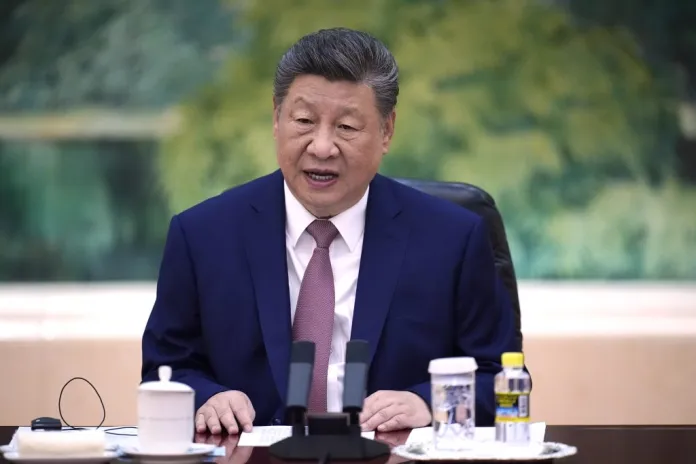
China recently raised eyebrows across the Indo-Pacific by slapping unilateral sanctions on Philippine Defense Secretary Gilberto Teodoro and his immediate family, citing his “erroneous remarks” against Beijing’s paramilitary activities in the South China Sea. The response from Manila was swift and defiant. “That is truly what they [China] do to those who speak the truth []
Narrative Intelligence Brief
This article was published by Washington Examiner, a source frequently categorized with a lean right bias based in United States of America. Our narrative intelligence engine continuously monitors coverage from this outlet to track framing, bias, and rhetorical patterns. In this specific piece, our systems detected the potential use of the "Name Calling" technique. This narrative approach is often used to shape reader perception by highlighting specific emotional or rhetorical angles. By understanding the editorial perspective of Washington Examiner, readers can better contextualize the information presented and compare it across our broader media matrix to find the real narrative.
More from Washington Examiner
June 17, 2026
Leaked versions of the Iran MOU appear to confirm Tehran got everything it wanted
June 17, 2026
Trump says Iran deal is ‘very strong’ but ‘nobody knows what it is’
June 17, 2026
The root cause: DEI won’t disappear until this is stopped
June 17, 2026
Seoul’s Coupang shakedown is testing US-Korea momentum
June 17, 2026
Can Trump’s Iran deal help Republicans in midterm elections?
Reliability Insights
P
Technique: Name Calling
System analysis detected use of specific narrative techniques in this piece.Analysis Methodology
This narrative analysis was generated using the CoDataLab Global Intelligence Engine. Our proprietary AI scans thousands of cross-border sources to identify sentiment patterns, framing techniques, and potential media bias. While AI provides the data-driven foundation, our objective is to empower readers with additional context beyond the standard headline.The content displayed above is a structured summary designed for rapid information processing. For the full original report, please visit the source outlet.More Coverage
Discussion