Today in News History
On June 17, several notable moments in the history of News stand out. In 1885, The Statue of Liberty arrives in New York Harbor. In 1900, Boxer Rebellion: Western Allied and Japanese forces capture the Taku Forts in Tianjin, China. In 1932, Bonus Army: Around a thousand World War I veterans amass at the United States Capitol as the U.S. Senate considers a bill that would give them certain benefits. In 1948, United Airlines Flight 624, a Douglas DC-6, crashes near Mount Carmel, Pennsylvania, killing all 43 people on board. In 1951, Starhawk, American author and activist was born. In 1953, Cold War: East Germany Workers Uprising: In East Germany, the Soviet Union orders a division of troops into East Berlin to quell a rebellion. In 1963, A day after South Vietnamese President Ngô Đình Diệm announced the Joint Communiqué to end the Buddhist crisis, a riot involving around 2,000 people breaks out. One person is killed. In 1967, Nuclear weapons testing: China announces a successful test of its first thermonuclear weapon. In 1979, Nick Rimando, American soccer player was born. In 1992, A "joint understanding" agreement on arms reduction is signed by U.S. President George Bush and Russian President Boris Yeltsin (this would be later codified in START II). Together, these milestones provide historical context for today's news news and ongoing narratives.
Seoul’s Coupang shakedown is testing US-Korea momentum
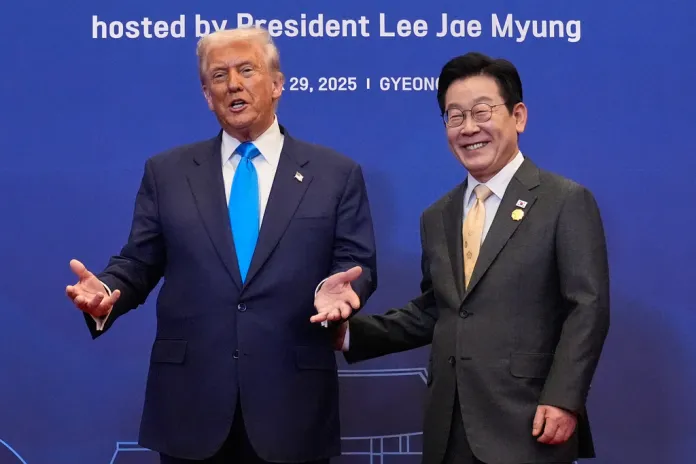
The U.S.-South Korea relationship is one of the most important in the world. President Donald Trump would very much seem to agree. Hours before he and President Lee Jae-myung sealed their trade and security framework in Gyeongju in October, Trump hailed the two countries’ “special bond.” That framework — 350 billion in Korean investment into []
Narrative Intelligence Brief
This article was published by Washington Examiner, a source frequently categorized with a lean right bias based in United States of America. Our narrative intelligence engine continuously monitors coverage from this outlet to track framing, bias, and rhetorical patterns. Our initial algorithmic scan of this specific piece did not flag high-confidence rhetorical techniques, suggesting a generally straightforward reporting style or neutral framing. By understanding the editorial perspective of Washington Examiner, readers can better contextualize the information presented and compare it across our broader media matrix to find the real narrative.
More from Washington Examiner
June 17, 2026
UN says violence in southern Lebanon has ‘significantly reduced’ since peace deal
June 17, 2026
WATCH LIVE: Trump Speaks at G7 summit in France
June 17, 2026
Congress must cure the corporate hospital billing epidemic
June 17, 2026
July Social Security direct payment worth $994 goes out in 14 days
June 17, 2026
Four takeaways from Georgia, DC, Alabama, and Oklahoma primary elections
Analysis Methodology
This narrative analysis was generated using the CoDataLab Global Intelligence Engine. Our proprietary AI scans thousands of cross-border sources to identify sentiment patterns, framing techniques, and potential media bias. While AI provides the data-driven foundation, our objective is to empower readers with additional context beyond the standard headline.The content displayed above is a structured summary designed for rapid information processing. For the full original report, please visit the source outlet.More Coverage
Discussion