Today in News History
On July 4, several notable moments in the history of News stand out. In 910, Luo Shaowei, Chinese warlord (born 877) passed away. In 940, Wang Jianli, Chinese general (born 871) passed away. In 1886, The Canadian Pacific Railway's first scheduled train from Montreal arrives in Port Moody on the Pacific coast, after six days of travel. In 1896, Mao Dun, Chinese journalist, author, and critic (died 1981) was born. In 1976, Israeli commandos raid Entebbe airport in Uganda, rescuing all but four of the passengers and crew of an Air France jetliner seized by Palestinian terrorists. In 1979, Lee Wai Tong, Chinese footballer and manager (born 1905) passed away. In 1981, Dedé, Angolan footballer was born. In 1997, NASA's Pathfinder space probe lands on the surface of Mars. In 1998, Japan launches the Nozomi probe to Mars, joining the United States and Russia as a space exploring nation. In 2002, A Boeing 707 crashes near Bangui M'Poko International Airport in Bangui, Central African Republic, killing 28. Together, these milestones provide historical context for today's news news and ongoing narratives.
China’s influence on African ports extends to software, automation and AI: study
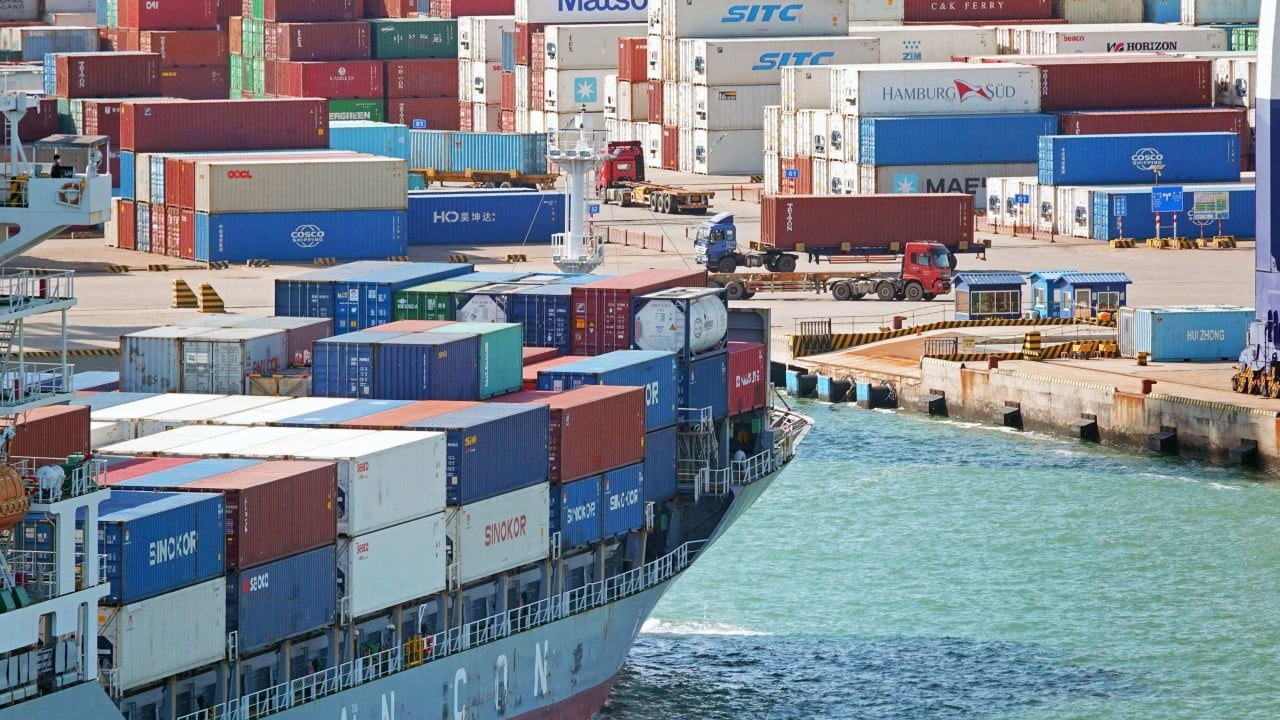
Chinese firms not only operate, finance or hold stakes in about one third of all ports in Africa, but Beijing now also controls the software, automation and artificial intelligence (AI) tools that run the infrastructure. And that reach extends well beyond the docks, with Beijing financing and operating the road, rail and warehousing networks connected to these ports and other maritime projects across the continent, closely intertwining African trade with China’s own trading systems. These are...
Narrative Intelligence Brief
This article was published by South China Morning Post, a source frequently categorized with a lean left bias based in Hong Kong. Our narrative intelligence engine continuously monitors coverage from this outlet to track framing, bias, and rhetorical patterns. Our initial algorithmic scan of this specific piece did not flag high-confidence rhetorical techniques, suggesting a generally straightforward reporting style or neutral framing. By understanding the editorial perspective of South China Morning Post, readers can better contextualize the information presented and compare it across our broader media matrix to find the real narrative.
More from South China Morning Post
July 4, 2026
Nobel-winning materials scientist Omar Yaghi joins China’s Tsinghua University from the US
July 4, 2026
Lebanon’s president urges US solidarity as Israeli troops occupy south
July 4, 2026
Beijing sends new coastguard force into waters east of Taiwan
July 4, 2026
Hong Kong police arrest driver after high-speed chase ends in 5-vehicle crash
July 4, 2026
Italian rice crops suffer in drought, worst European heatwave ever
Analysis Methodology
This narrative analysis was generated using the CoDataLab Global Intelligence Engine. Our proprietary AI scans thousands of cross-border sources to identify sentiment patterns, framing techniques, and potential media bias. While AI provides the data-driven foundation, our objective is to empower readers with additional context beyond the standard headline.The content displayed above is a structured summary designed for rapid information processing. For the full original report, please visit the source outlet.More Coverage
Discussion
"trump"
Trump FURIOUS as USMNT Defies his ADMINISTRATION’S WISHES!!!

Brian Feeney: From a beacon of democracy to Trump’s rotten, mafia state

Trump administration’s interpretation of slavery under George Washington can be reinstalled