Today in News History
On July 3, several notable moments in the history of News stand out. In 896, Dong Chang, Chinese warlord passed away. In 1518, Li Shizhen, Chinese physician and mineralogist (died 1593) was born. In 1939, László Kovács, Hungarian politician and diplomat, Hungarian Minister of Foreign Affairs was born. In 1949, Bo Xilai, Chinese politician, Chinese Minister of Commerce was born. In 1971, Julian Assange, Australian journalist, publisher, and activist, founded WikiLeaks was born. In 1979, U.S. President Jimmy Carter signs the first directive for secret aid to the opponents of the pro-Soviet regime in Kabul. In 1988, The Fatih Sultan Mehmet Bridge in Istanbul, Turkey is completed, providing the second connection between the continents of Europe and Asia over the Bosphorus. In 2004, Andriyan Nikolayev, Russian general, pilot, and astronaut (born 1929) passed away. In 2009, John Keel, American journalist and author (born 1930) passed away. In 2012, Nguyễn Hữu Có, Vietnamese general and politician (born 1925) passed away. Together, these milestones provide historical context for today's news news and ongoing narratives.
China-EU trade, Xi touts ‘global influence’, Nato summit
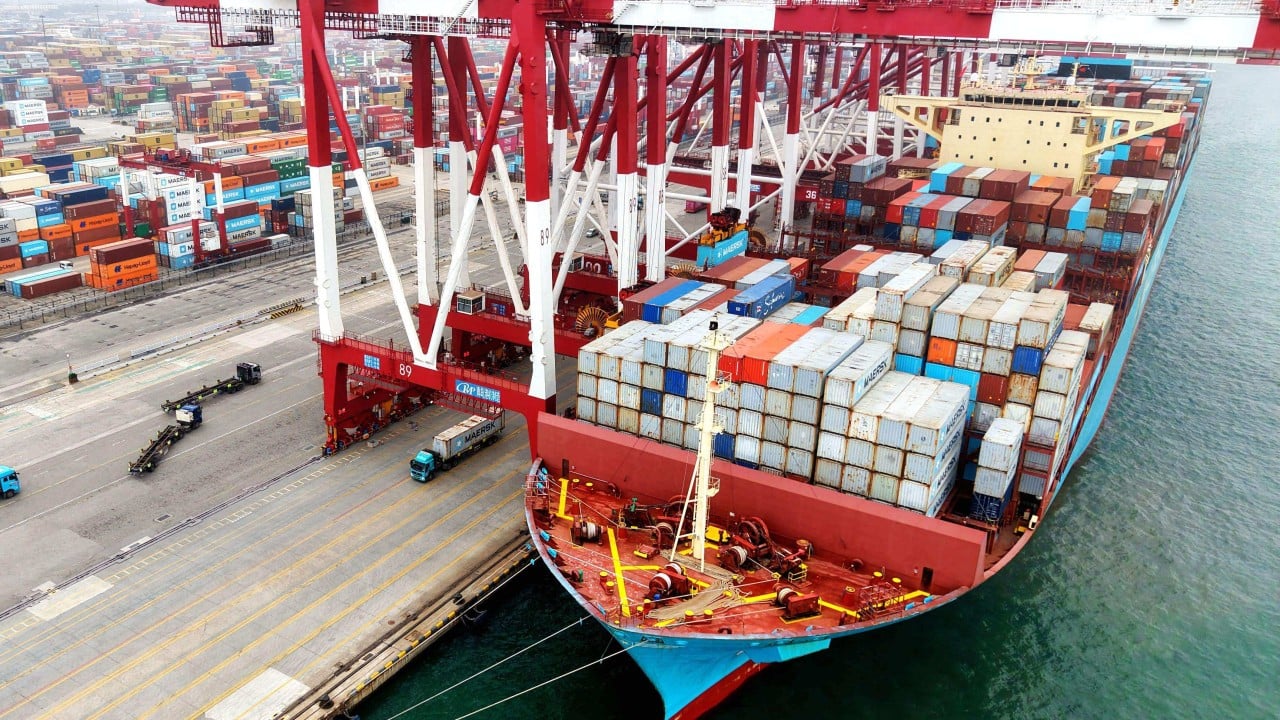
China told the European Union that it is willing to increase purchases of EU goods to help pare a massive trade gap, potentially easing the risk of a trade war. Commerce Minister Wang Wentao suggested that China is open to purchase agreements covering European goods in trade talks this week with EU trade chief Maros Sefcovic, the South China Morning Post reported, citing unidentified people briefed on the discussions. Lower tariffs on EU imports were also discussed (see trade talks joint...
Narrative Intelligence Brief
This article was published by South China Morning Post, a source frequently categorized with a lean left bias based in Hong Kong. Our narrative intelligence engine continuously monitors coverage from this outlet to track framing, bias, and rhetorical patterns. Our initial algorithmic scan of this specific piece did not flag high-confidence rhetorical techniques, suggesting a generally straightforward reporting style or neutral framing. By understanding the editorial perspective of South China Morning Post, readers can better contextualize the information presented and compare it across our broader media matrix to find the real narrative.
More from South China Morning Post
July 3, 2026
Hong Kong man convicted of manslaughter over fatal weight-loss beating
July 3, 2026
Chinese President Xi Jinping appoints new military anti-corruption chief
July 3, 2026
India-Bangladesh ties ease with visa restart amid China concerns
July 3, 2026
70% of Chinese people take naps daily, continuing an ancient medical tradition
July 3, 2026
Will China’s Fujian be first carrier to carry anti-torpedo system to beat Western subs?
Analysis Methodology
This narrative analysis was generated using the CoDataLab Global Intelligence Engine. Our proprietary AI scans thousands of cross-border sources to identify sentiment patterns, framing techniques, and potential media bias. While AI provides the data-driven foundation, our objective is to empower readers with additional context beyond the standard headline.The content displayed above is a structured summary designed for rapid information processing. For the full original report, please visit the source outlet.More Coverage
Discussion
"cup"
Malik Tillman’s bloody sock game rockets into US World Cup history

Here’s why you get nervous watching penalty shootouts at the World Cup | Pitchside Episode 4

Ibrahimović and Henry believe Croatia were wronged: "The referee and VAR made the wrong decision"