Today in News History
On July 3, several notable moments in the history of News stand out. In 321, Valentinian I, Roman emperor (died 375) was born. In 1790, Jean-Baptiste L. Romé de l'Isle, French geologist and mineralogist (born 1736) passed away. In 1935, Harrison Schmitt, American geologist, astronaut, and politician was born. In 1959, David Shore, Canadian screenwriter and producer was born. In 1962, Thomas Gibson, American actor and director was born. In 1973, David Bowie retires his stage persona Ziggy Stardust with the surprise announcement that it is "the last show that we'll ever do" on the last day of the Ziggy Stardust Tour. In 1987, Sebastian Vettel, German race car driver was born. In 1988, United States Navy warship USS Vincennes shoots down Iran Air Flight 655 over the Persian Gulf, killing all 290 people aboard. In 2004, Andriyan Nikolayev, Russian general, pilot, and astronaut (born 1929) passed away. In 2010, Abu Daoud, Palestinian terrorist, planned the Munich massacre (born 1937) passed away. Together, these milestones provide historical context for today's news news and ongoing narratives.
Astronomers denounce SpaceX's massive satellite plan
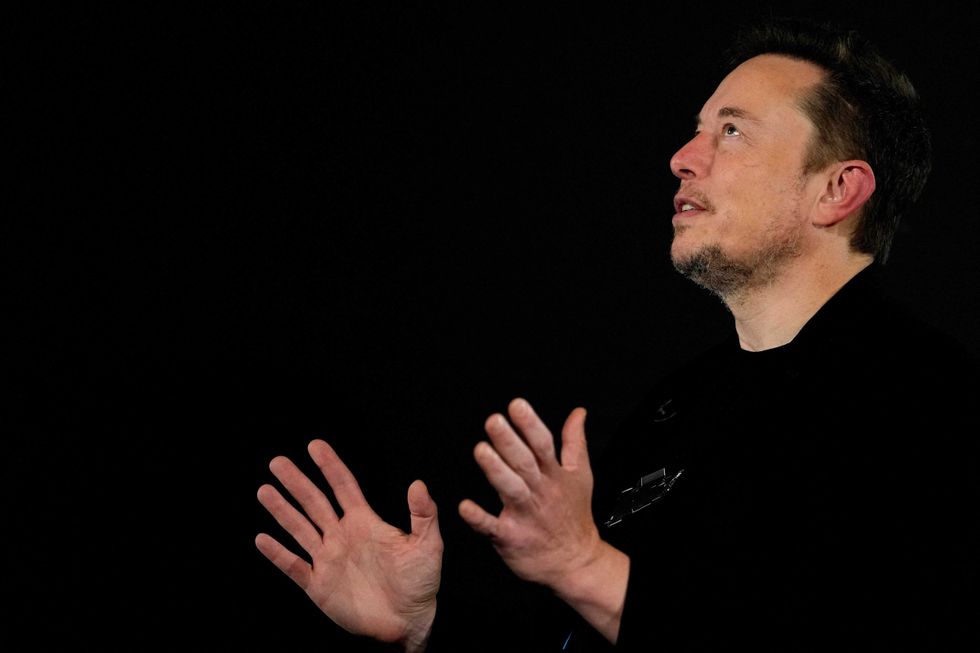
European astronomers have appealed to the U.S. Federal Communications Commission, or the FCC, to reject SpaceX's plan to launch 1.7 million satellites into orbit, warning the massive installation would have devastating consequences for astronomy. The European Southern Observatory, or ESO, study found 100,000 is the maximum number of faint satellites that can orbit Earth while preserving astronomers' ability to observe distant galaxies and potentially hazardous asteroids, according to Common Dreams. SpaceX's Starlink, lead by CEO Elon Musk, has already exceeded 14,000 satellites since 2019. Additional threats include Reflect Orbital's proposed 50,000 mirror-like satellites designed to reflect sunlight at night, which would appear four times brighter than the full moon, explained the observatory. “These satellites would be the brightest ever in orbit, with damaging consequences for dark skies on Earth.” The bright satellites would obstruct observations, disrupt human biological clocks and ecosystems, and increase atmospheric pollution from launches and reentries. “The FCC received over 1800 comments regarding Reflect Orbital and nearly 1,500 comments on the application by SpaceX,” revealed ESO institutional affairs officer Betty Kioko. Watch the video below. Your browser does not support the video tag.
Narrative Intelligence Brief
This article was published by Raw Story, a source frequently categorized with a left bias based in United States of America. Our narrative intelligence engine continuously monitors coverage from this outlet to track framing, bias, and rhetorical patterns. Our initial algorithmic scan of this specific piece did not flag high-confidence rhetorical techniques, suggesting a generally straightforward reporting style or neutral framing. By understanding the editorial perspective of Raw Story, readers can better contextualize the information presented and compare it across our broader media matrix to find the real narrative.
More from Raw Story
July 3, 2026
Trump's latest job report raises red flags for CNN analyst
July 3, 2026
'Chilling': Security expert sounds the alarm as Trump DOJ ramps up election probe
July 3, 2026
Bizarre moment at Trump's state fair baffles Jen Psaki: 'Don't know what I watched there'
July 3, 2026
Trump firework plans trigger emergency air pollution warning across the D.C. area: report
July 3, 2026
Author claims Melania Trump is trying a 'preposterous' new way to silence him
Analysis Methodology
This narrative analysis was generated using the CoDataLab Global Intelligence Engine. Our proprietary AI scans thousands of cross-border sources to identify sentiment patterns, framing techniques, and potential media bias. While AI provides the data-driven foundation, our objective is to empower readers with additional context beyond the standard headline.The content displayed above is a structured summary designed for rapid information processing. For the full original report, please visit the source outlet.More Coverage
Discussion
"cup"
Markwayne Mullin’s celebration of Iran’s World Cup exit is worse than poor sportsmanship

Here’s why you get nervous watching penalty shootouts at the World Cup | Pitchside Episode 4

Fans Erupt After Team USA’s Star Player Ejected On Controversial Call