
Today in News History
On July 12, several notable moments in the history of News stand out. In 1493, Hartmann Schedel's Nuremberg Chronicle, one of the best-documented early printed books, is published. In 1562, Fray Diego de Landa, acting Bishop of Yucatán, burns the sacred idols and books of the Maya. In 1691, Battle of Aughrim (Julian calendar): The decisive victory of William III of England's forces in Ireland. In 1801, British ships inflict heavy damage on Spanish and French ships in the Second Battle of Algeciras. In 1850, Otto Schoetensack, German anthropologist and academic (died 1912) was born. In 1913, Willis Lamb, American physicist and academic, Nobel Prize laureate (died 2008) was born. In 1959, David Brown, Australian meteorologist was born. In 1961, Indian city Pune floods due to failure of the Khadakwasla and Panshet dams, killing at least two thousand people. In 1995, Chinese seismologists successfully predict the 1995 Myanmar-China earthquake, reducing the number of casualties to 11. In 1998, Arkady Ostashev, Soviet/Russian scientist and engineer (born 1925) passed away. Together, these milestones provide historical context for today's news news and ongoing narratives.
Asteroid Evidence : Earth’s Hidden Craters Reveal Ancient Catastrophes
Discover Earth's hidden asteroid impact craters from Chicxulub to Lonar. Explore pristine sites, ancient mysteries, and cosmic events that shaped landscapes and civilizations.
Narrative Intelligence Brief
This article was published by Business Today, a source frequently categorized with a center bias based in India. Our narrative intelligence engine continuously monitors coverage from this outlet to track framing, bias, and rhetorical patterns. Our initial algorithmic scan of this specific piece did not flag high-confidence rhetorical techniques, suggesting a generally straightforward reporting style or neutral framing. By understanding the editorial perspective of Business Today, readers can better contextualize the information presented and compare it across our broader media matrix to find the real narrative.
More from Business Today
July 12, 2026
Google helps Kerala man repay a ₹25,000 loan borrowed in Saudi Arabia 25 years ago
July 12, 2026
Quote of the Day by Vedanta's Anil Agarwal: ‘Dear founders, certainty is a myth...’
July 12, 2026
Chai over luxury: Christopher Nolan, Tom Holland, Matt Damon visit 108-yr-old Mumbai café before The Odyssey premiere
July 12, 2026
Bill Gates' daughter Phoebe Gates' shopping app is under scrutiny. Here's why
July 12, 2026
From New York to Sarojini stalls: How branded clothes end up selling for just a few hundred rupees
Analysis Methodology
This narrative analysis was generated using the CoDataLab Global Intelligence Engine. Our proprietary AI scans thousands of cross-border sources to identify sentiment patterns, framing techniques, and potential media bias. While AI provides the data-driven foundation, our objective is to empower readers with additional context beyond the standard headline.The content displayed above is a structured summary designed for rapid information processing. For the full original report, please visit the source outlet.More Coverage
Discussion
"cup semifinal"
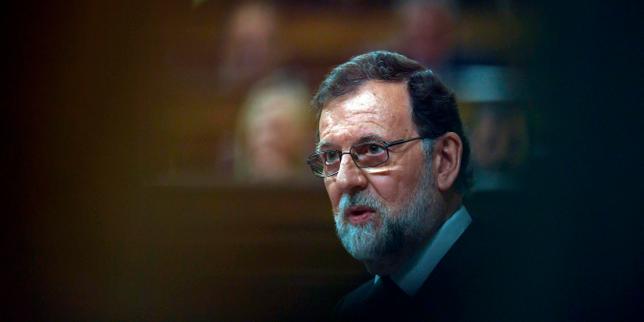
Former Spanish PM Rajoy makes racist remarks about France's football team
[Photo] JUST IN: 🇦🇷 Argentina officially advances to the FIFA World Cup semifinal after defeat [...]

Argentina's hero: "We are just two steps away from the goal"

How other outlets are covering this story
Compare narratives across 6 related reports from 6 sources. Real Narrative News aggregates the coverage spectrum so you can see who emphasises what — bias tags reflect the outlet, not the story.
Coverage bias distribution
6 sources
Left 0%
Center 50%
Right 50%
The West Australian
· Jun 23, 2026
Unravelling the mystery: crater formed by a big bang
Clever detective work by scientists has uncovered the Earth's oldest known asteroid impact crater in the outback, dating back three billion years.
Times of India
· Jun 25, 2026
Scientists discover Earth's oldest known impact crater from 3 billion years ago
Scientists discover Earth's oldest known impact crater from 3 billion years ago
Science Daily
· Jun 23, 2026
Meteorite reveals a lost moon-sized world from the dawn of the solar system
A rare meteorite has revealed evidence of a massive lost world that once orbited the young Sun before being destroyed in a catastrophic collision. The discovery suggests some early planets formed from dramatically different materials than Earth and Mars, rewriting part of the solar system’s origin story.
Anadolu Agency
· Jul 3, 2026
Ancient DNA study of skeletons could unlock secrets of 1071 Battle of Manzikert
Scientists hope radiocarbon dating, forensic anthropology and ancient DNA analysis will help determine whether the burial ground is connected to the battle that reshaped the region's history
Smithsonian Magazine
· Jul 8, 2026
New Images Reveal That This Asteroid Is Actually Two Conjoined Space Rocks That Form a Peanut-Shaped Object Called a 'Contact Binary'
A flyby conducted by the Japanese spacecraft Hayabusa2 uncovered the asteroid's strange shape. Data gathered by the probe will also help defend the planet against potentially threatening space rocks
Live Science
· Jun 23, 2026
'Unequivocal evidence' of Earth's oldest impact crater turns out to be off by half a billion years
'Unequivocal evidence' of Earth's oldest impact crater turns out to be off by half a billion years
Topics:
Related coverage for "Asteroid Evidence : Earth’s Hidden Craters Reveal Ancient Catastrophes": The West Australian — Unravelling the mystery: crater formed by a big bang. Times of India — Scientists discover Earth's oldest known impact crater from 3 billion years ago. Science Daily — Meteorite reveals a lost moon-sized world from the dawn of the solar system. Anadolu Agency — Ancient DNA study of skeletons could unlock secrets of 1071 Battle of Manzikert. Smithsonian Magazine — New Images Reveal That This Asteroid Is Actually Two Conjoined Space Rocks That Form a Peanut-Shaped Object Called a 'Contact Binary'. Live Science — 'Unequivocal evidence' of Earth's oldest impact crater turns out to be off by half a billion years