
Today in News History
On July 12, several notable moments in the history of News stand out. In 1191, Third Crusade: Saladin's garrison surrenders to Philip Augustus, ending the two-year siege of Acre. In 1691, Battle of Aughrim (Julian calendar): The decisive victory of William III of England's forces in Ireland. In 1850, Otto Schoetensack, German anthropologist and academic (died 1912) was born. In 1895, Buckminster Fuller, American architect and engineer, designed the Montreal Biosphère (died 1983) was born. In 1913, Willis Lamb, American physicist and academic, Nobel Prize laureate (died 2008) was born. In 1928, Elias James Corey, American chemist and academic, Nobel Prize laureate was born. In 1959, David Brown, Australian meteorologist was born. In 1961, Indian city Pune floods due to failure of the Khadakwasla and Panshet dams, killing at least two thousand people. In 1995, Chinese seismologists successfully predict the 1995 Myanmar-China earthquake, reducing the number of casualties to 11. In 1998, Arkady Ostashev, Soviet/Russian scientist and engineer (born 1925) passed away. Together, these milestones provide historical context for today's news news and ongoing narratives.
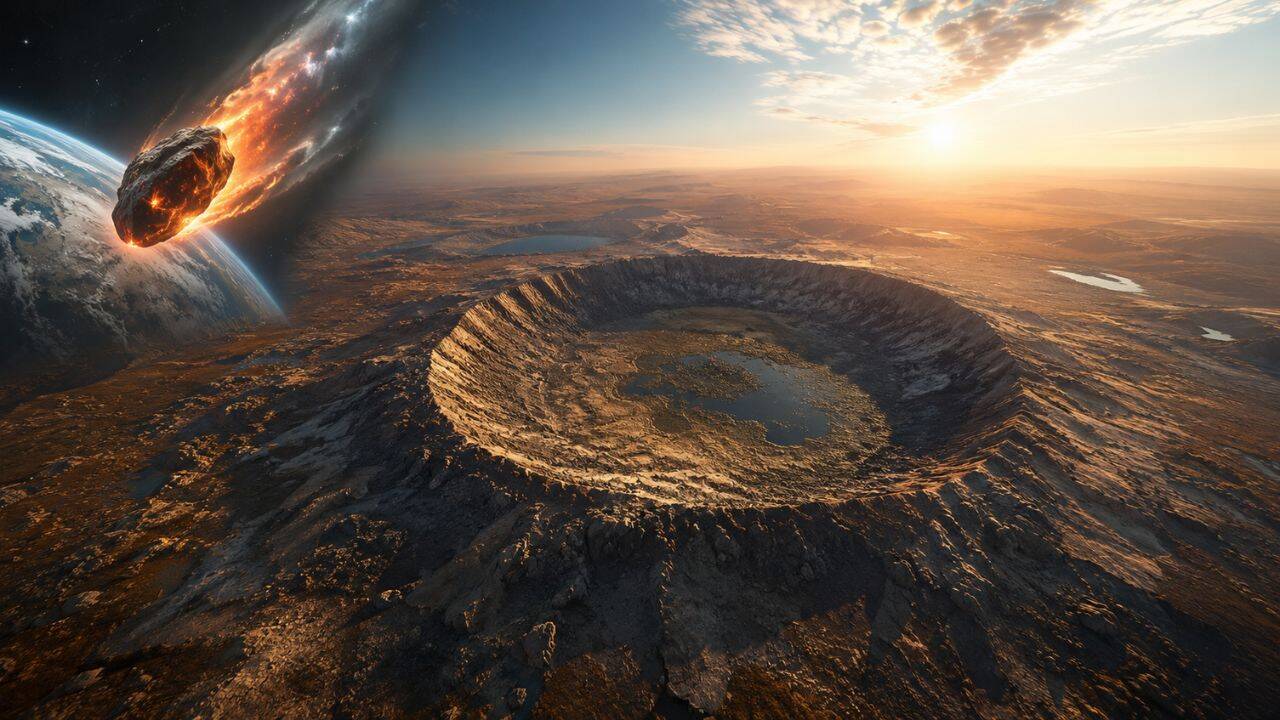
Scientists discover Earth's oldest known impact crater from 3 billion years ago
Narrative Intelligence Brief
This article was published by Times of India, a source frequently categorized with a lean right bias based in India. Our narrative intelligence engine continuously monitors coverage from this outlet to track framing, bias, and rhetorical patterns. Our initial algorithmic scan of this specific piece did not flag high-confidence rhetorical techniques, suggesting a generally straightforward reporting style or neutral framing. By understanding the editorial perspective of Times of India, readers can better contextualize the information presented and compare it across our broader media matrix to find the real narrative.
More from Times of India
July 12, 2026
'I left America after H-1B stamping trip': Indian professional explains why he returned home and what he struggled with
July 12, 2026
24-year-old woman killed, man injured in West London stabbing; Suspect, 44, arrested on suspicion of murder
July 12, 2026
Russia hacked cameras near NATO bases to monitor Ukraine arms: Report
July 12, 2026
Ken Griffin's $250 million superyacht wouldn't fit at his mansion, so he built a private marina
July 12, 2026
This routine US Navy training mission near California turned into one of the most discussed UFO cases in recent history
Analysis Methodology
This narrative analysis was generated using the CoDataLab Global Intelligence Engine. Our proprietary AI scans thousands of cross-border sources to identify sentiment patterns, framing techniques, and potential media bias. While AI provides the data-driven foundation, our objective is to empower readers with additional context beyond the standard headline.The content displayed above is a structured summary designed for rapid information processing. For the full original report, please visit the source outlet.More Coverage
Discussion



How other outlets are covering this story
Compare narratives across 6 related reports from 6 sources. Real Narrative News aggregates the coverage spectrum so you can see who emphasises what — bias tags reflect the outlet, not the story.
Coverage bias distribution
6 sources
Left 0%
Center 67%
Right 33%
Live Science
· Jun 23, 2026
'Unequivocal evidence' of Earth's oldest impact crater turns out to be off by half a billion years
'Unequivocal evidence' of Earth's oldest impact crater turns out to be off by half a billion years
The West Australian
· Jun 23, 2026
Unravelling the mystery: crater formed by a big bang
Clever detective work by scientists has uncovered the Earth's oldest known asteroid impact crater in the outback, dating back three billion years.
Smithsonian Magazine
· Jun 29, 2026
Scientists Double Down on Age of What Might Be Earth's Oldest Impact Crater, Dating It, Again, at More Than Three Billion Years Old
Last year, geologists dated the crater in Western Australia at 3.47 billion years old, which was disputed by other experts. Now, they've revised the estimate to 3.02 billion years old—but some still aren't convinced
New Scientist
· Jun 23, 2026
Huge crater in Australia may be the oldest impact structure on Earth
A study claims that the North Pole Dome crater in Western Australia was caused by an asteroid strike 3 billion years ago, but other researchers dispute the proposed age
Science Daily
· Jun 23, 2026
Meteorite reveals a lost moon-sized world from the dawn of the solar system
A rare meteorite has revealed evidence of a massive lost world that once orbited the young Sun before being destroyed in a catastrophic collision. The discovery suggests some early planets formed from dramatically different materials than Earth and Mars, rewriting part of the solar system’s origin story.
Times of India
· Jul 1, 2026
Scientists may have solved the mystery behind Yellowstone's 640,000-year-old mega eruption
Scientists may have solved the mystery behind Yellowstone's 640,000-year-old mega eruption
Topics:
Related coverage for "Scientists discover Earth's oldest known impact crater from 3 billion years ago": Live Science — 'Unequivocal evidence' of Earth's oldest impact crater turns out to be off by half a billion years . The West Australian — Unravelling the mystery: crater formed by a big bang. Smithsonian Magazine — Scientists Double Down on Age of What Might Be Earth's Oldest Impact Crater, Dating It, Again, at More Than Three Billion Years Old. New Scientist — Huge crater in Australia may be the oldest impact structure on Earth. Science Daily — Meteorite reveals a lost moon-sized world from the dawn of the solar system. Times of India — Scientists may have solved the mystery behind Yellowstone's 640,000-year-old mega eruption