
Today in News History
On June 23, several notable moments in the history of News stand out. In 1565, Dragut, commander of the Ottoman navy, dies during the Great Siege of Malta. In 1757, Battle of Plassey: Three thousand British troops under Robert Clive defeat a 50,000-strong Indian army under Siraj ud-Daulah at Plassey. In 1760, Seven Years' War: Battle of Landeshut: Austria defeats Prussia. In 1865, American Civil War: At Fort Towson in the Oklahoma Territory, Confederate Brigadier General Stand Watie surrenders the last significant Confederate army. In 1913, Second Balkan War: The Greeks defeat the Bulgarians in the Battle of Doiran. In 1919, Estonian War of Independence: The decisive defeat of the Baltische Landeswehr in the Battle of Cēsis; this date is celebrated as Victory Day in Estonia. In 1941, The Lithuanian Activist Front declares independence from the Soviet Union and forms the Provisional Government of Lithuania; it lasts only briefly as the Nazis will occupy Lithuania a few weeks later. In 1942, World War II: Germany's latest fighter aircraft, a Focke-Wulf Fw 190, is captured intact when it mistakenly lands at RAF Pembrey in Wales. In 2013, Frank Kelso, American admiral and politician, United States Secretary of the Navy (born 1933) passed away. In 2014, The last of Syria's declared chemical weapons are shipped out for destruction. Together, these milestones provide historical context for today's news news and ongoing narratives.
Army chief lays out plan for autonomy in future warfare with ambitions to 'strike deep, defend forward and build stronger'
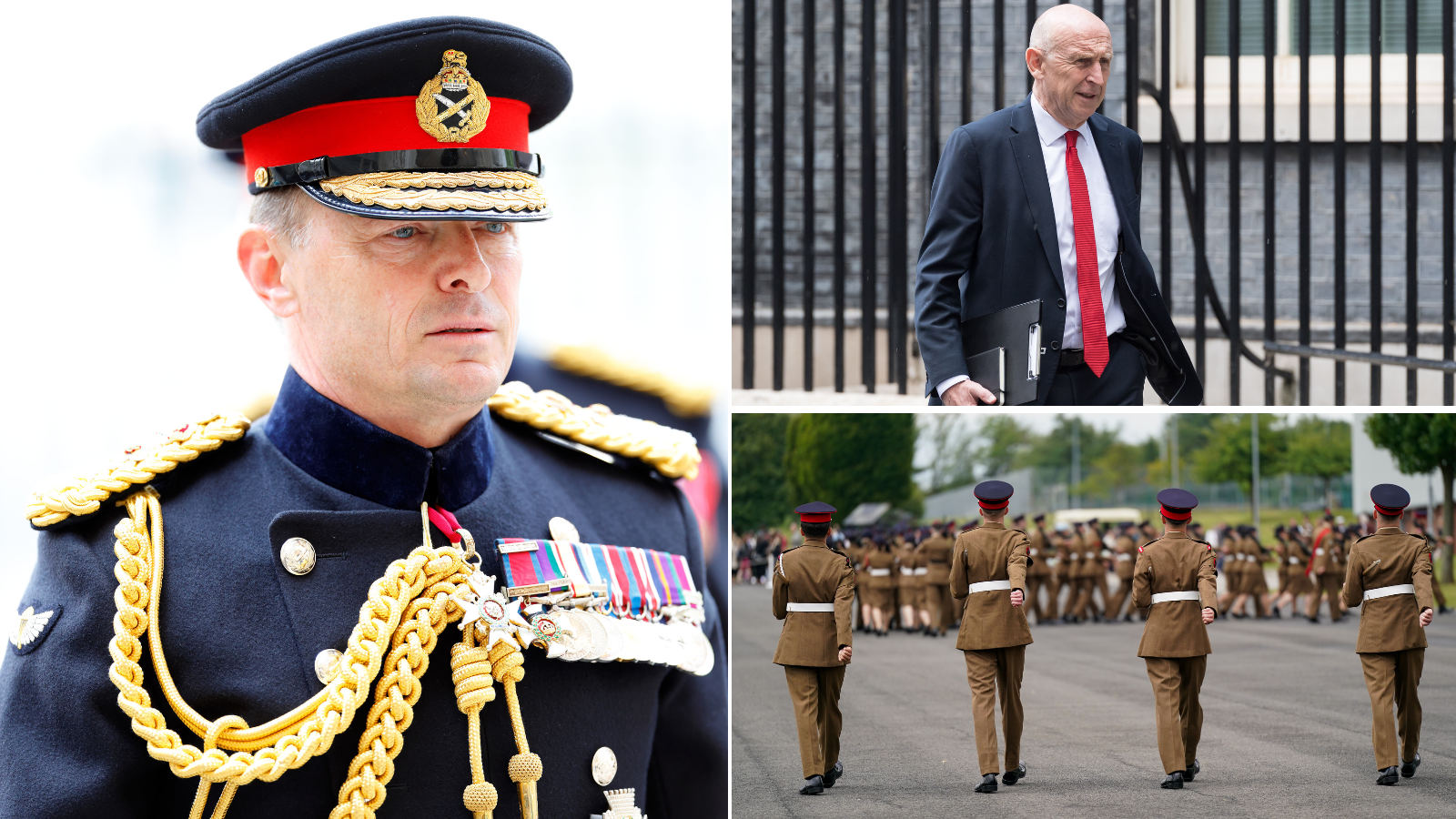
Britain's army chief will lay out plans for greater autonomy in future warfare with ambitions to strike deep, defend forward and build stronger. Chief of the General Staff Sir Roly Walker will say in a speech the military is hoping to invest in more uncrewed systems, use AI and other technologies to gain a greater advantage on the battlefield. Planning to speak at a conference hosted by the Royal United Services Institute, General Walker will argue it is armies that decide outcomes in war and will continue to do so. He will say: Only armies seize and hold ground, and only armies remain when wars end. The army ‘buys’ the nation not just battlefield success in isolation but decisive weight at the point it matters. TRENDING Stories Videos Your Say The army that adapts fastest – wins. And the deeper change is cultural, not just technological.The UK army is at its smallest size since the Napoleonic era.Historical records show that at the start of the Napoleonic Wars in 1792, the UK Army Regular Forces numbered around 17,000, rising sharply to 237,000 by 1814 as the conflict escalated.The fully trained UK Army Regular Forces as of October 2025 stood at just 66,250, a figure last seen in 1799, before the wars against Napoleon reached their height.General Walker will also reflect on a year of reforms to the army before outlining the military's ambitions to strike deep, defend forward and build stronger. He will continue: I have been clear to industry: in the future, no crewed platform should ever deploy in future without uncrewed ground vehicles – the utility vehicle of the 21st century.The army is moving towards a 20-40-40 fighting system, which consists of one fifth of force delivered via heavy equipment such as tanks, 40 per cent through attritable (uncrewed) autonomous machinery such as drones and the rest through high-capacity firepower.General Walker described this combination as the three rings of modern lethality. LATEST DEVELOPMENTS'Questionable whether we can rely on Britain!' Keir Starmer accused of 'immense weakness' by IsraelDan Jarvis set for uncomfortable Nato meeting as defence spending plans fall flatUK Defence Chief admits Britain will be forced to ‘scale back’ capabilities without extra cashHe will say: We must pivot everyone hard to the ‘20-40-40’ fighting system – the three rings of modern lethality.His speech will be followed by an address by the new Defence Secretary Dan Jarvis, who succeeded John Healey after he resigned on June 11 over disagreements on the Government's long-awaited Defence Investment Plan (Dip). Mr Healey said in his resignation letter to the now-outgoing Sir Keir Starmer the Dip's current proposed funding was falling short, with only £13.5billion extra allotted to defence, leaving a £14.5billion shortfall of what is needed.He wrote in his letter to Sir Keir: This new era for defence required further investment through the Defence Investment Plan. The excellent and extensive cross-government work that completed in January – overseen by you, me and the Chancellor – confirmed the scale of the challenge and the rising demands on defence.Since then, you have been unable, and the Treasury has been unwilling, to commit the resources that the nation needs to defend the country at this time of rising threats.Deputy Prime Minister David Lammy said on Monday the Government is planning to publish the Dip before July 7.However, it is understood the overall sum of money allocated will not change.Al Carns, former armed forces minister who also resigned from his frontbench position, has raised the alarm over the current proposed Dip.He said last week the unpublished proposal is inadequate to deal with the threat we face.The former colonel pointed the finger at Rachel Reeves' department for the plan's lack of funding, accusing the Treasury of treating defence as a cost to be contained.He said: The Defence Investment Plan is inadequate to deal with the threat we face. That figure was not set by the threat, but by the Treasury, which treats defence as a cost to be contained. Our Standards: The GB News Editorial Charter
Narrative Intelligence Brief
This article was published by GB News, a source frequently categorized with a lean right bias based in United States of America. Our narrative intelligence engine continuously monitors coverage from this outlet to track framing, bias, and rhetorical patterns. Our initial algorithmic scan of this specific piece did not flag high-confidence rhetorical techniques, suggesting a generally straightforward reporting style or neutral framing. By understanding the editorial perspective of GB News, readers can better contextualize the information presented and compare it across our broader media matrix to find the real narrative.
More from GB News
June 23, 2026
Apple Watch drops to a historic low for Amazon Prime Day — even better than Black Friday
June 23, 2026
Cyclists in Cumbrian village awarded huge £600,000 investment to install new cycleway
June 23, 2026
Labour risks thousands of jobs as changes to 2030 petrol and diesel ban may hammer auto sector
June 23, 2026
Prince William travels on Earthshot branded zero-emission London bus with Robert Irwin
June 23, 2026
POLL OF THE DAY: 10 years on, would you vote for Brexit again? - VOTE NOW
Analysis Methodology
This narrative analysis was generated using the CoDataLab Global Intelligence Engine. Our proprietary AI scans thousands of cross-border sources to identify sentiment patterns, framing techniques, and potential media bias. While AI provides the data-driven foundation, our objective is to empower readers with additional context beyond the standard headline.The content displayed above is a structured summary designed for rapid information processing. For the full original report, please visit the source outlet.More Coverage
Discussion


