Today in News History
On June 20, several notable moments in the history of News stand out. In 1906, William Reid, Scottish mining engineer (died 1985) was born. In 1918, George Lynch, American race car driver (died 1997) was born. In 1921, Byron Farwell, American historian and author (died 1999) was born. In 1941, Ulf Merbold, German physicist and astronaut was born. In 1943, The Detroit race riot breaks out and continues for three more days. In 1947, Bugsy Siegel, American mobster (born 1906) passed away. In 1960, Philip M. Parker, American economist and author was born. In 1963, Following the Cuban Missile Crisis, the Soviet Union and the United States sign an agreement to establish the so-called "red telephone" link between Washington, D.C., and Moscow. In 1972, Watergate scandal: An .mw-parser-output .frac{white-space:nowrap}.mw-parser-output .frac .num,.mw-parser-output .frac .den{font-size:80%;line-height:0;vertical-align:super}.mw-parser-output .frac .den{vertical-align:sub}.mw-parser-output .sr-only{border:0;clip:rect(0,0,0,0);clip-path:polygon(0px 0px,0px 0px,0px 0px);height:1px;margin:-1px;overflow:hidden;padding:0;position:absolute;width:1px}18+1⁄2-minute gap appears in the tape recording of the conversations between U.S. President Richard Nixon and his advisers regarding the recent arrests of his operatives while breaking into the Watergate complex. In 2012, Andrew Sarris, American critic (born 1928) passed away. Together, these milestones provide historical context for today's news news and ongoing narratives.
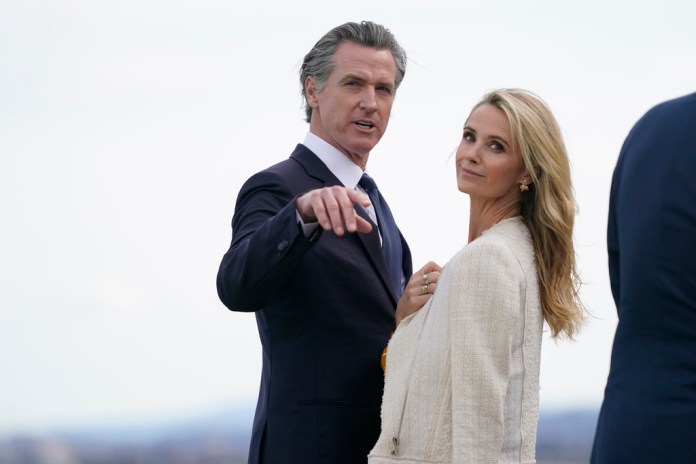
ANDREW PIERCE: Was this the day Reform's bubble burst? Party insiders say they 'blew it again' in Makerfield, senior figures have descended into public bickering, and Farage is uncharacteristically avoiding the spotlight
Narrative Analysis: Name Calling

Narrative Intelligence Brief
This article was published by Daily Mail, a source frequently categorized with a right bias based in United Kingdom. Our narrative intelligence engine continuously monitors coverage from this outlet to track framing, bias, and rhetorical patterns. In this specific piece, our systems detected the potential use of the "Name Calling" technique. This narrative approach is often used to shape reader perception by highlighting specific emotional or rhetorical angles. By understanding the editorial perspective of Daily Mail, readers can better contextualize the information presented and compare it across our broader media matrix to find the real narrative.
More from Daily Mail
June 20, 2026
Ashley Cain's axed documentary series is still available to watch on BBC iPlayer following his resurfaced misogynistic tweets as bosses say their vetting processes on the star 'clearly failed'
June 20, 2026
Greens target race for Greater Manchester mayor amid two-horse race against Reform
June 20, 2026
My neighbour's tree roots are lifting up my drive: Can I get my insurer to pursue a claim against him?
June 20, 2026
EastEnders' Toby-Alexander Smith details his battle with postnatal depression and the challenge of welcoming second child with Emmerdale star wife Amy Walsh
June 20, 2026
Jon Snow, 78, admits 'I thought I was dead' as he talks about his devastating Alzheimer's diagnosis: 'The creaking of what was left of the brain was outspinning the sound of my voice'
Reliability Insights
P
Technique: Name Calling
System analysis detected use of specific narrative techniques in this piece.Analysis Methodology
This narrative analysis was generated using the CoDataLab Global Intelligence Engine. Our proprietary AI scans thousands of cross-border sources to identify sentiment patterns, framing techniques, and potential media bias. While AI provides the data-driven foundation, our objective is to empower readers with additional context beyond the standard headline.The content displayed above is a structured summary designed for rapid information processing. For the full original report, please visit the source outlet.More Coverage
Discussion