Today in News History
On June 17, several notable moments in the history of News stand out. In 1462, Vlad the Impaler attempts to assassinate Mehmed II (The Night Attack at Târgovişte), forcing him to retreat from Wallachia. In 1932, Bonus Army: Around a thousand World War I veterans amass at the United States Capitol as the U.S. Senate considers a bill that would give them certain benefits. In 1941, Nicholas C. Handy, English chemist and academic (died 2012) was born. In 1943, Burt Rutan, American engineer and pilot was born. In 1953, Vernon Coaker, English educator and politician, Shadow Secretary of State for Defence was born. In 1967, Nuclear weapons testing: China announces a successful test of its first thermonuclear weapon. In 1974, Refik Koraltan, Turkish lawyer and politician, 8th Speaker of the Grand National Assembly of Turkey (born 1889) passed away. In 1984, Si Tianfeng, Chinese race walker was born. In 1992, A "joint understanding" agreement on arms reduction is signed by U.S. President George Bush and Russian President Boris Yeltsin (this would be later codified in START II). In 2009, Darrell Powers, American sergeant (born 1923) passed away. Together, these milestones provide historical context for today's news news and ongoing narratives.
All we need is the Tartan Army for soft power, says Flynn
Narrative Analysis: Name Calling

Scotland fans have drawn praise for their conduct in the US during the World Cup.
Narrative Intelligence Brief
This article was published by The Standard, a source frequently categorized with a lean right bias based in United Kingdom. Our narrative intelligence engine continuously monitors coverage from this outlet to track framing, bias, and rhetorical patterns. In this specific piece, our systems detected the potential use of the "Name Calling" technique. This narrative approach is often used to shape reader perception by highlighting specific emotional or rhetorical angles. By understanding the editorial perspective of The Standard, readers can better contextualize the information presented and compare it across our broader media matrix to find the real narrative.
More from The Standard
June 17, 2026
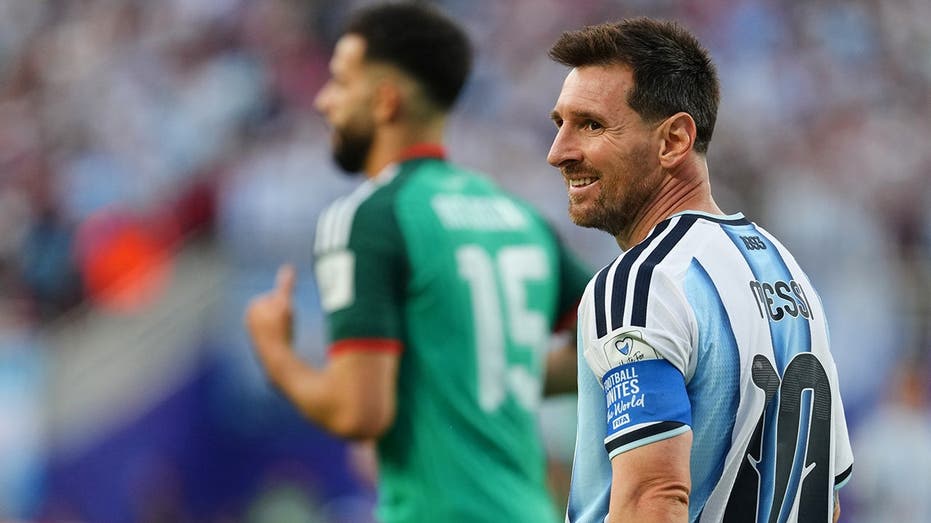
World Cup 2026 top scorers: Lionel Messi leads Kylian Mbappe and Erling Haaland in Golden Boot race
June 17, 2026
Train crash could have been avoided if driver had used emergency system – report
June 17, 2026
Defence official warns cuts to fund investment plan would be ‘zero game’
June 17, 2026
Starmer and G7 urge robust agreement to follow Trump’s Iran ‘breakthrough’ deal
June 17, 2026
Government to apologise on behalf of the state for historical forced adoption
Reliability Insights
P
Technique: Name Calling
System analysis detected use of specific narrative techniques in this piece.Analysis Methodology
This narrative analysis was generated using the CoDataLab Global Intelligence Engine. Our proprietary AI scans thousands of cross-border sources to identify sentiment patterns, framing techniques, and potential media bias. While AI provides the data-driven foundation, our objective is to empower readers with additional context beyond the standard headline.The content displayed above is a structured summary designed for rapid information processing. For the full original report, please visit the source outlet.More Coverage
Discussion