
Today in News History
On June 26, several notable moments in the history of News stand out. In 1793, Gilbert White, English ornithologist and ecologist (born 1720) passed away. In 1909, The Science Museum in London comes into existence as an independent entity. In 1919, Donald M. Ashton, English art director (died 2004) was born. In 1938, Neil Abercrombie, American sociologist and politician, 7th Governor of Hawaii was born. In 1939, Ford Madox Ford, English novelist, poet, and critic (born 1873) passed away. In 1955, Engelbert Zaschka, German engineer (born 1895) passed away. In 1956, Chris Isaak, American singer-songwriter, guitarist, and actor was born. In 1990, Anni Blomqvist, Finnish author (born 1909) passed away. In 1993, William H. Riker, American political scientist and academic (born 1920) passed away. In 2021, Mike Gravel, American politician (born 1930) passed away. Together, these milestones provide historical context for today's news news and ongoing narratives.
AI’s growing energy and water use sparks environmental concerns

Washington: The rapid rise of artificial intelligence is significantly increasing global energy and water consumption, raising concerns among experts about its environmental impact as the world works to combat climate change and water scarcity.AI systems and the data centres that power them require vast amounts of electricity and water, particularly for cooling, yet experts say many companies do not disclose the full scale of their resource use. As a result, each AI-driven query adds to the environmental footprint.“AI is going in the opposite direction to decarbonisation efforts,” said cognitive computer scientist Sasha Luccioni, co-founder of the Sustainable AI Group. She warned that frequent, unnecessary use of AI tools could undermine environmentally conscious lifestyles.Experts say individuals can play a role in reducing the impact by limiting their use of AI, particularly for simple tasks such as calculations, directions or basic searches that do not require advanced processing. “The cleanest form of AI use is no use,” said Kaveh Madani, director of the United Nations University Institute for Water, Environment and Health.They also recommend keeping queries concise, as longer and more complex inputs require greater computing power and, in turn, more energy and water.Global data centres consumed an estimated 448 trillion watt-hours of electricity last year, according to a United Nations University report, and that figure is expected to more than double in the coming years. By 2030, the electricity used by data centres alone could require nearly 2.5 trillion gallons of water for cooling, equivalent to supplying the world’s drinking water needs for more than a year.The widespread integration of AI into everyday digital tools has also made it more difficult for users to avoid it. Experts note that many search engines now generate AI-based responses automatically, requiring users to opt out if they wish to reduce usage.While some alternative platforms aim to lower their environmental impact, specialists emphasise that greater transparency from technology companies is needed. Without clearer data on resource usage, consumers have limited ability to make informed decisions.Despite the concerns, experts acknowledge that AI will continue to play a major role in modern life. They say the key lies in balancing its benefits with more responsible use and encouraging industry accountability to minimise environmental costs.
Narrative Intelligence Brief
This article was published by Emirates 24/7, a source frequently categorized with a lean right bias based in United Arab Emirates. Our narrative intelligence engine continuously monitors coverage from this outlet to track framing, bias, and rhetorical patterns. Our initial algorithmic scan of this specific piece did not flag high-confidence rhetorical techniques, suggesting a generally straightforward reporting style or neutral framing. By understanding the editorial perspective of Emirates 24/7, readers can better contextualize the information presented and compare it across our broader media matrix to find the real narrative.
More from Emirates 24/7
June 26, 2026
Easier deportations and Green Card removals: US Supreme Court advances Trump’s restrictive immigration agenda
June 26, 2026
“Without bees, we cannot survive”: How Dubai schools are helping protect our food future
June 26, 2026
Ahmed bin Mohammed approves new media platform 'Dubai Business'
June 26, 2026
Ahmed bin Mohammed approves new media platform Dubai Business
June 26, 2026
Ahmed bin Mohammed approves new media platform Dubai Economy
Analysis Methodology
This narrative analysis was generated using the CoDataLab Global Intelligence Engine. Our proprietary AI scans thousands of cross-border sources to identify sentiment patterns, framing techniques, and potential media bias. While AI provides the data-driven foundation, our objective is to empower readers with additional context beyond the standard headline.The content displayed above is a structured summary designed for rapid information processing. For the full original report, please visit the source outlet.More Coverage
Discussion
"venezuela"
More than 30,000 missing and 188 dead after Venezuela’s worst earthquake in a century
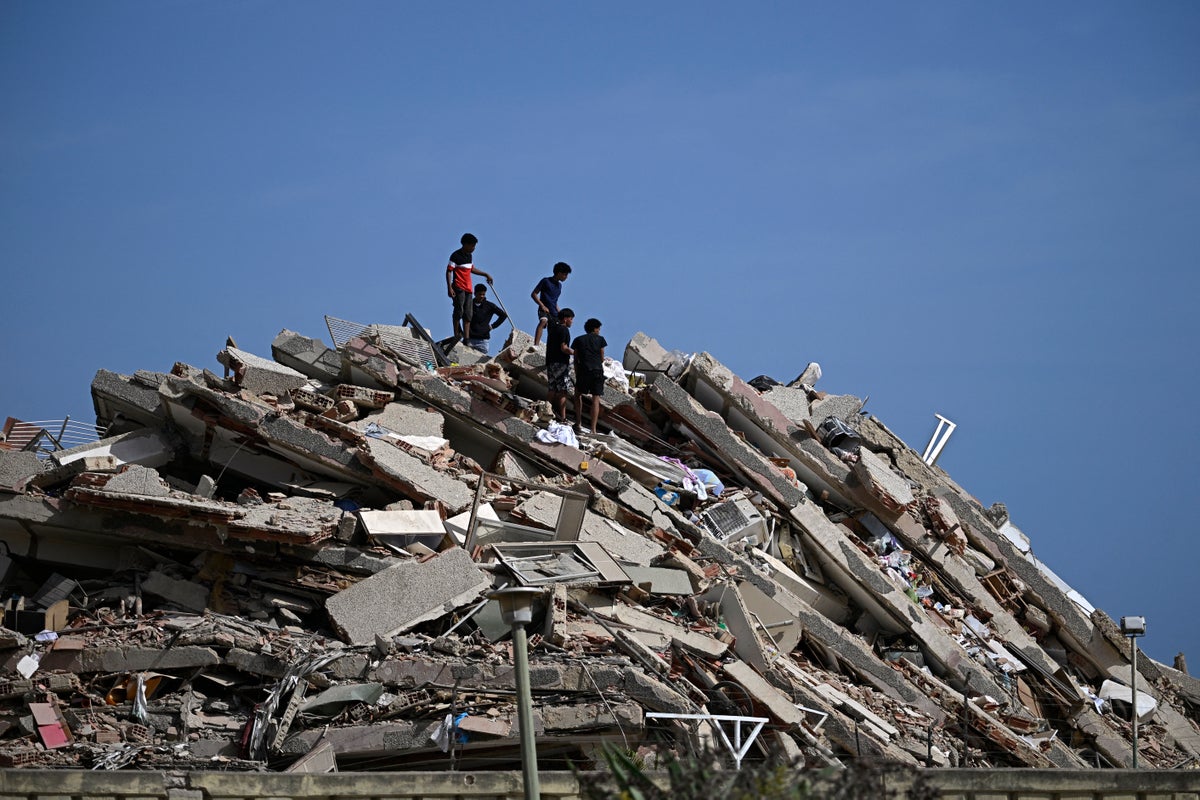
Forty seconds of chaos that wrecked Venezuela’s comeback

Catastrophic Damage: Deadly Venezuela Quake Marks Country’s Most Powerful Seismic Event Since 1900
