
AI search may kill the click. But users still need to trust the answers
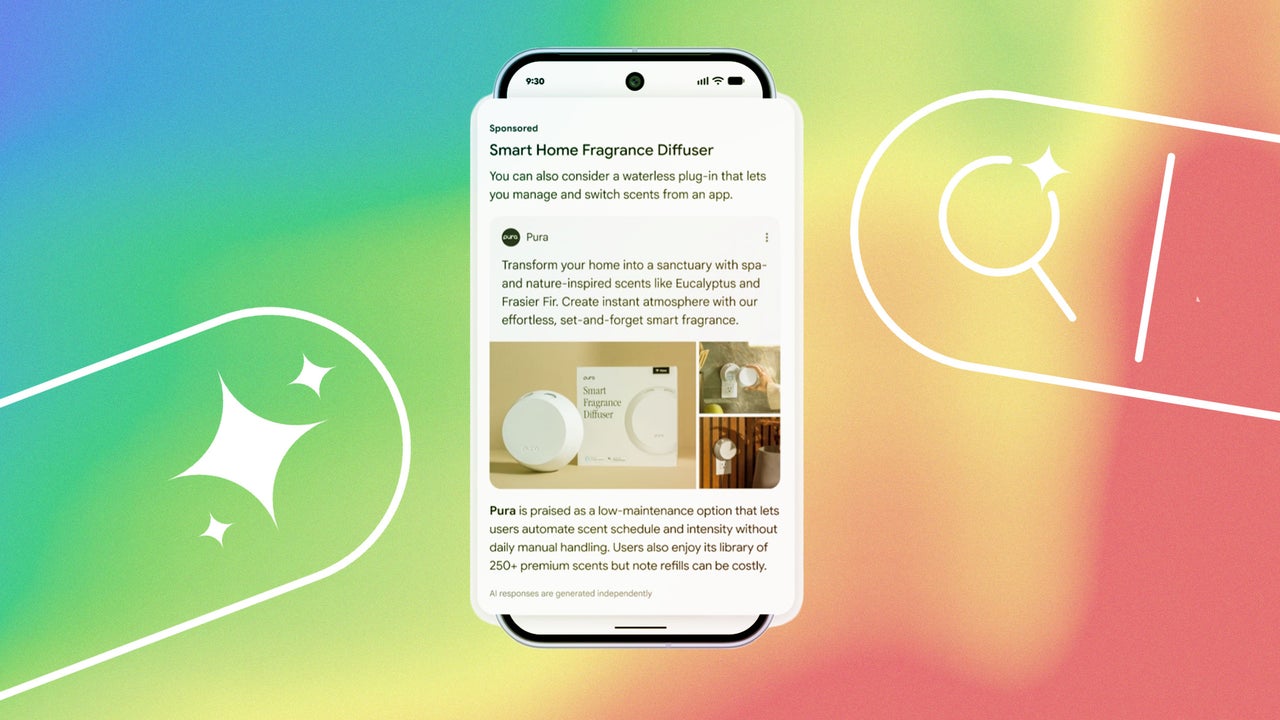
It’s hard to think of Google as a comeback story, because it never went away, but in the world of AI, it’s a fitting narrative. The company was broadly mocked for its early moves in the generative era, which were mostly stumbles. Upstarts like Perplexity and ChatGPT were nipping at its market share with arguably more innovative experiences. It had to navigate choppy antitrust waters. Today, Google is in a much stronger position. Not because it’s just coming off its I/O developer conference, or because it has the best model or because it commands a major AI ecosystem. Those titles get passed around the big labs every few months. The reason is much simpler: the business is holding up. AI hasn’t broken Google Alphabet’s first-quarter earnings showed Google Services revenue up 16 to 89.6 billion and Google Search and “Other” revenue is up 19. Clearly, the rising presence of AI in the information ecosystem hasn’t hurt Google’s business; if anything, it’s the opposite. That success appears to have led to more confidence. Google announced many new AI products at I/O, but one of the most notable ones to the media industry was a set of new ad formats. Conversational Discovery ads are built on the fly to fit naturally into the answer to the person’s query, appearing as a “sponsored” section. Highlighted Ads and AI-powered Shopping Ads are similar, inserting ads into more general product category-specific queries. And then there are Business Agents for Leads—tailored versions of Gemini that appear within the ad. These formats are still being tested, but the direction is clear: Google is getting more sophisticated about how it monetizes AI experiences. The company stated a few months back that it had no plans to sell ads in Gemini, which executives mentioned in response to ChatGPT ads. And, sure, Google can still say that the Gemini chatbot is not becoming an ad product. But that distinction feels less meaningful now that so many Gemini-powered AI experiences across Search are being commercialized. Of course, all those AI-powered ads appear within or next to an answer. And that answer is supposed to be made of the best information Google can find, which is often from media publishers. In the old system, Google sold ads that were prominent in results, and those ads benefitted from the close proximity to links from trusted media sources. Google the best SUVs, and you may see ads for Toyota or Hyundai before you see a link to Car and Driver. Now the information, built in part from the publisher’s content, is right there on the result. The user gets the info, the AI-powered ad provides a path to transact, and everything is handled without any need for them to ever leave Google. Instead of monetizing the path to information, Google is now monetizing the information experience itself. The party left out of that bargain is of course the publisher. In many cases, their content was the raw material that informed the answer. When AI search was relatively new, Google would claim—truthfully—that the audience that visits a publisher site from AI answers is more likely to engage and transact. But why would they when Google is providing the means to do that before they ever arrive? These latest ad experiences seemingly point to a bad situation getting worse. Why sources still matter However, there are layers to this. Users don’t care about business models; whether or not they have an inclination to buy something or engage depends on not just the content of the answer but how much they trust it. A study published in Nature described trust in AI as dynamic and context-dependent. In other words, it changes depending on the nature of the AI experience and over time. And another study by the Reuters Institute found users had moderate trust in AI answers, but they also value their speed and aggregation. So yes, people like the utility of AI, but trust is conditional. And one of the most important assets any media brand has is the trust it cultivates over time. Imagine two AI answers about the same product: one built from social posts, blogs, Reddit threads, and online forums, and the other built from articles on Consumer Reports, the Wirecutter, Time, and CNET. Which one sounds more trustworthy? In short, citations matter. People will be more inclined to trust answers created from brands that they’re familiar with. While there is little data about AI ad experiences directly, the entire media ad model is founded on this idea—that an ad doesn’t just benefit from being present on a platform but also by being associated with that platform’s brand. Google has so far not been that concerned with what publishers want. But Google does need advertisers to believe AI search ads work. If advertisers see better performance when ads appear beside credible, well-sourced answers, they will care about the quality of those answers. That could create pressure on Google to maintain a healthier source ecosystem. That pressure may not look like simple licensing deals. It could involve clearer traffic paths, richer citation treatment, new publisher products, commercial partnerships, or advertiser demand for premium source environments inside AI search results. Moving on from the click Review sites are the clearest example because the transaction is obvious. If someone asks for the best dishwasher, the AI answer can cite reviews and then push the user toward purchase. But the same logic applies beyond commerce: A health answer, a travel plan, or even a summary of a political issue all depend on source trust. Even when there’s no immediate checkout, the user’s confidence in the answer shapes what they believe and what they do next. The warning is clear: Google’s new push into AI ad experiences could further weaken traditional publisher revenue streams, especially traffic-based display, affiliate, and search-driven monetization. But there’s another side to the equation: If AI answers need credibility to be useful, then credible media still has value. That value may no longer show up as a click. But it will still shape whether users trust the answer enough to act on it.
Narrative Intelligence Brief
This article was published by Fast Company, a source frequently categorized with a lean left bias based in United States of America. Our narrative intelligence engine continuously monitors coverage from this outlet to track framing, bias, and rhetorical patterns. Our initial algorithmic scan of this specific piece did not flag high-confidence rhetorical techniques, suggesting a generally straightforward reporting style or neutral framing. By understanding the editorial perspective of Fast Company, readers can better contextualize the information presented and compare it across our broader media matrix to find the real narrative.
Explore related topics: Stay informed with Real Narrative News as we track unfolding stories. Dive deeper into our coverage of pivotal topics including champions league, league final, epstein files, luis enrique, final determination, pam bondi, real madrid, determination iran, psg arsenal, and رفع الحصار. Our intelligence streams continuously monitor these keywords to bring you unbiased analysis and real-time updates on topics like "AI search may kill the click. But users still need to trust the answers".
More from Fast Company
May 29, 2026
Southwest’s controversial seating policy is changing again—and the new version may surprise frequent flyers
May 29, 2026
AI search may kill the click. But users still need to trust the answers
May 29, 2026
How this vegetable became the latest symbol of America’s affordability squeeze
May 29, 2026
AI-assisted journalism needs disclosure. Here’s mine
May 29, 2026
Why the hardest skills in leadership are the ones we’ve typically called soft
Analysis Methodology
This narrative analysis was generated using the CoDataLab Global Intelligence Engine. Our proprietary AI scans thousands of cross-border sources to identify sentiment patterns, framing techniques, and potential media bias. While AI provides the data-driven foundation, our objective is to empower readers with additional context beyond the standard headline.The content displayed above is a structured summary designed for rapid information processing. For the full original report, please visit the source outlet.More Coverage
Discussion