Today in News History
On June 29, several notable moments in the history of News stand out. In 1860, Thomas Addison, English physician and endocrinologist (born 1793) passed away. In 1893, Prasanta Chandra Mahalanobis, Indian economist and statistician (died 1972) was born. In 1903, Alan Blumlein, English engineer, developed the H2S radar (died 1942) was born. In 1949, Ann Veneman, American lawyer and politician, 27th United States Secretary of Agriculture was born. In 1955, Charles J. Precourt, American colonel, pilot, and astronaut was born. In 1956, Nick Fry, English economist and businessman was born. In 1957, María Conchita Alonso, Cuban-Venezuelan singer and actress was born. In 1968, Brian d'Arcy James, American actor and musician was born. In 2006, Randy Walker, American football player and coach (born 1954) passed away. In 2013, Jack Gotta, American-Canadian football player, coach, and manager (born 1929) passed away. Together, these milestones provide historical context for today's news news and ongoing narratives.
AI couldn’t fix quality problems. So Ford rehired its most experienced engineers
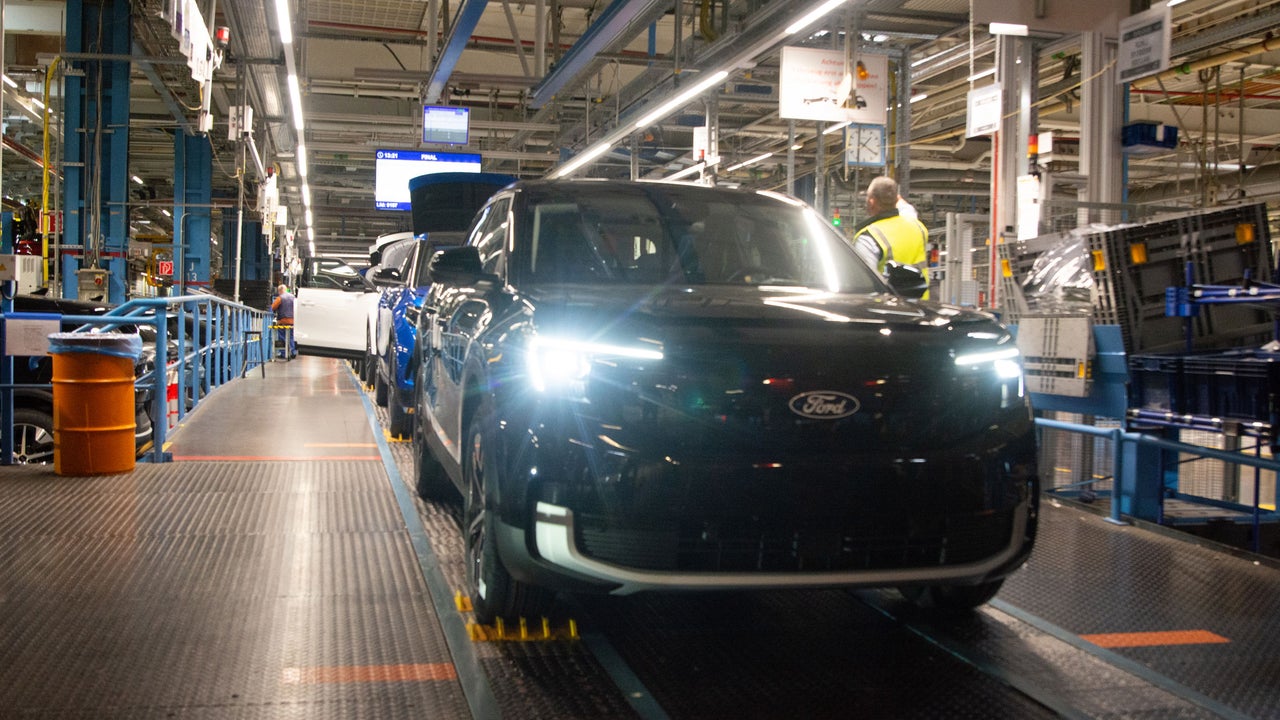
At a moment when companies are clamoring to embrace AI—in no small part to capture the attention of shareholders—Ford executives made a rather surprising confession. On a press call last week, the automaker admitted that its issues with quality control could not be resolved with AI. Ford logged a record number of recalls in 2025, and the company has already issued 51 recalls to date this year, significantly more than its peers. But the company highlighted its performance in an annual survey that measures initial vehicle quality, which put Ford well ahead of its mass market competitors—up from its 10th place ranking just last year. The key to this improvement in quality, according to Ford? Hiring back some of its most tenured engineers. “Artificial intelligence is a fantastic tool, but it’s only as good as the information you use to train it,” Ford VP Charles Poon told reporters, per a Bloomberg report. “Over prior years, we didn’t pay as much attention as we should have to the experience of our most knowledgeable engineers that have been with us through many product cycles.” In the last three years, Ford reportedly hired or brought back 350 “gray beard” engineers—as the company described them—drawing on both its own pool of former employees and those who worked with suppliers. Ford claims those veteran engineers had imparted their knowledge to younger workers and improved upon the AI-powered quality tools that the company had adopted, crediting those employees for its quality advances in recent years. “Mistakenly we thought that by just introducing artificial intelligence and ingesting the design requirements that we had, that that would produce a high-quality product,” Poon said. Part of the reason Ford’s AI tools had not been effective, according to Bloomberg, was because the company had not infused them with institutional knowledge and expertise from its most seasoned technicians. “We recognized that for us to enhance some of our automation and machine learning and artificial intelligence tools we needed to ensure that they were trained by the most experienced individuals,” Poon added. Ford’s admission is somewhat unexpected for a number of reasons, including that companies have been quick to boast about the efficiency gains they have found by adopting AI. But it’s also more unusual for employers to openly talk about the value of older employees at a time when many of them are eager to snap up young talent and workers with a high degree of AI fluency. Some companies also see AI and automation as a solution for an aging workforce, ignoring what they might lose when those older employees leave their jobs—both in terms of sheer headcount and their deep expertise. As author Dan Pontefract recently wrote in an excerpt from his new book, there is no getting around this demographic shift—and companies will be forced to reckon with how it could reshape their workforce. “Older workers are not optional,” Pontefract wrote. “They are the scaffolding holding up skills transfer, institutional memory, and cultural continuity across every workplace on the planet.”
Narrative Intelligence Brief
This article was published by Fast Company, a source frequently categorized with a lean left bias based in United States of America. Our narrative intelligence engine continuously monitors coverage from this outlet to track framing, bias, and rhetorical patterns. Our initial algorithmic scan of this specific piece did not flag high-confidence rhetorical techniques, suggesting a generally straightforward reporting style or neutral framing. By understanding the editorial perspective of Fast Company, readers can better contextualize the information presented and compare it across our broader media matrix to find the real narrative.
More from Fast Company
June 29, 2026
JPMorgan names 2 co-presidents in its CEO succession contest
June 29, 2026
Trump’s new passport design is a too-perfect metaphor
June 29, 2026
FIFA, who? The World Cup’s coolest jerseys come from indie designers
June 29, 2026
Ford thought AI could replace this job. Now it’s bringing experienced workers back.
June 29, 2026
What America’s half-trillion dollar flooding problem needs
Analysis Methodology
This narrative analysis was generated using the CoDataLab Global Intelligence Engine. Our proprietary AI scans thousands of cross-border sources to identify sentiment patterns, framing techniques, and potential media bias. While AI provides the data-driven foundation, our objective is to empower readers with additional context beyond the standard headline.The content displayed above is a structured summary designed for rapid information processing. For the full original report, please visit the source outlet.More Coverage
Discussion